Kenya vs Tanzania Safari: Which Is Better for Your African Safari?

Last updated: November 2026.
Kenya or Tanzania? It is the first big decision on most East African safari plans. Both countries have excellent wildlife. They differ in parks, logistics, cost and how you experience the Great Wildebeest Migration.
Short answer is neither country is better for everyone. Kenya suits shorter trips, easier logistics and Maasai Mara river crossings from July to October. Tanzania suits longer trips, bigger landscapes, Ngorongoro Crater and calving season in the southern Serengeti from January to March. With 10 days or more, combining both is a strong option.
The right choice depends on your travel month, budget, trip length and safari style. This guide compares the two on those points so you can decide with real numbers.
Quick Comparison: Kenya and Tanzania at a Glance
Kenya is usually simpler and shorter to plan. Tanzania is usually larger in scale and needs more days.
| Factor | Kenya | Tanzania |
|---|---|---|
| Overall experience | Compact, accessible, strong for first safaris | Vast, remote feel, strong for longer trips |
| Famous parks | Maasai Mara, Amboseli, Samburu, Tsavo, Lake Nakuru | Serengeti, Ngorongoro, Tarangire, Lake Manyara, Nyerere |
| Great Migration | Mara River crossings, roughly July to October | Calving (Jan to Mar), Grumeti, Mara River crossings in the north |
| Wildlife | Big Five, predators, Amboseli elephants | Big Five, huge plains game herds, crater wildlife |
| Pricing | Often lower for mid-range trips, but Mara fees are high in peak season | Often higher daily rates, with per-night concession fees |
| Accommodation | Budget to luxury, plus private conservancy camps | Budget to luxury, plus remote mobile and tented camps |
| Private safaris | Widely available | Widely available |
| Accessibility | Short flights or drives from Nairobi | Fly into Arusha or Kilimanjaro, then long drives or light aircraft |
| Families | Shorter drives suit children | Possible, but travel distances are longer |
| Luxury | Strong, especially in Mara conservancies | Strong, especially in the Serengeti |
| Culture | Maasai, Samburu, coastal Swahili heritage | Maasai, Hadzabe, Datoga, Zanzibar Swahili heritage |
| Beach extensions | Diani, Watamu, Malindi, Lamu, Mombasa | Zanzibar, Pemba, mainland coast |
Wildlife Viewing Across the Two Countries
Both countries offer the Big Five: lion, leopard, elephant, buffalo and rhino. Sightings depend on season, location, weather and animal movement. No operator can guarantee a sighting.
Kenya highlights:
- Maasai Mara National Reserve: strong predator viewing, open grassland, the Mara River.
- Amboseli National Park: large elephant herds, with Mount Kilimanjaro in view on clear days.
- Samburu National Reserve: northern species such as Grevy’s zebra, reticulated giraffe and gerenuk.
- Tsavo East and Tsavo West: large, less crowded parks with red-dust elephants.
- Lake Nakuru National Park: flamingos when conditions allow, plus rhino sanctuary areas.
Tanzania highlights:
- Serengeti National Park: huge plains, big cat viewing, migration movements.
- Ngorongoro Conservation Area: the crater floor holds dense wildlife in a small area.
- Tarangire National Park: large elephant herds and baobab trees, strongest in the dry season.
- Lake Manyara National Park: tree-climbing lions are sometimes reported, plus birdlife.
- Nyerere National Park: boat and walking safaris in the south, reached by flight.
Cheetahs, giraffes, zebra and wildebeest live in both countries. Birdlife is strong in both. Kenya packs more variety into shorter distances. Tanzania’s northern circuit stretches over longer distances.
Maasai Mara or Serengeti: Which Suits You?
They are one ecosystem split by a border. Neither is better for everyone. The Mara is smaller and easier to reach from Nairobi. The Serengeti is far larger and gives you more regions to choose from.
| Factor | Maasai Mara (Kenya) | Serengeti (Tanzania) |
|---|---|---|
| Size | About 1,510 square kilometres (reserve) | Much larger, divided into regions |
| Management | Narok County Government | TANAPA, Tanzania National Parks Authority |
| Access | About 270 km from Nairobi, by road or short flight | Fly into Arusha or Kilimanjaro, then drive or fly to airstrips |
| Migration presence | Roughly July to October | Most of the year, moving between regions |
| River crossings | Mara River, July to October | Grumeti (about June to July), Mara River in the north (July to October) |
| Private conservancies | Yes, bordering the reserve, often with fewer vehicles | Private concession areas exist, often with a nightly fee |
| Best for | Short trips, predator viewing, easy access | Longer trips, scale, choosing a migration region |
Serengeti regions:
- Southern Serengeti and Ndutu: calving season, roughly January to March.
- Central Serengeti (Seronera): year-round wildlife and big cats.
- Western Serengeti: Grumeti River activity.
- Northern Serengeti: Mara River crossings.
The migration is a year-round loop across the wider Mara-Serengeti ecosystem. The herds spend most of the year in Tanzania and part of the year in Kenya. Timing varies with rainfall.
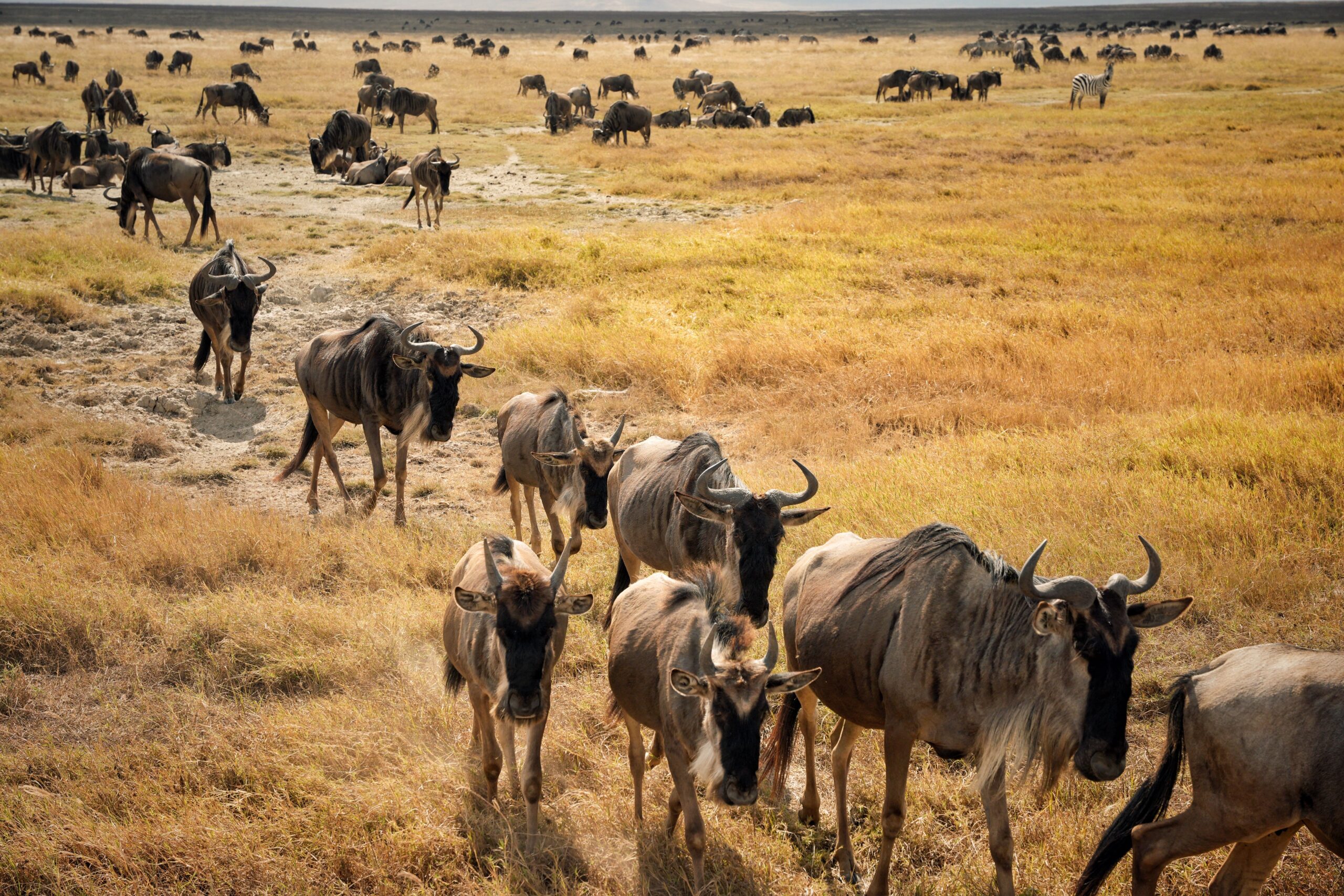
The Great Wildebeest Migration: Where and When
For calving, go to Tanzania. For the famous Mara River crossings, go to the northern Serengeti or the Maasai Mara between July and October.
The general cycle:
- January to March: herds gather in the southern Serengeti and Ndutu for calving.
- April to June: herds move north through the central and western Serengeti.
- June to July: Grumeti River movement in the western Serengeti.
- July to October: northern Serengeti and Maasai Mara, with Mara River crossings.
- November to December: herds return south as the short rains arrive.
Both countries hold part of the same system. The herds do not stay in one country. They can split across both sides of the border, and the pattern changes year to year.
River crossings are the least predictable part. Do not book on a promise of a specific crossing. Plan several nights in the right region and allow flexibility.
| Travel month | Where to focus |
|---|---|
| January to March | Tanzania: southern Serengeti and Ndutu |
| June to July | Tanzania: western and northern Serengeti |
| August to September | Northern Serengeti or Maasai Mara |
| October | Northern Serengeti and Mara, often with fewer vehicles |
| November to December | Tanzania: central and southern plains |
Safari Costs: Which Country Is Cheaper?
Kenya is often cheaper for mid-range trips of similar length, but not always. Maasai Mara fees double in peak season. Tanzania has lower daily park fees but charges per-night concession fees in many parks, plus a vehicle fee for the crater. Compare full itineraries, not single line items.
Published park fees for non-resident adults, in USD, indicative for 2026 to 2027:
| Country | Park or area | Indicative fee | Notes |
|---|---|---|---|
| Kenya | Maasai Mara National Reserve | $100 per day (Jan to Jun), $200 per day (Jul to Dec) | Set by Narok County. Children aged 9 to 17 commonly $50 per day. |
| Kenya | Amboseli National Park | About $90 per day | KWS-managed |
| Kenya | Lake Nakuru National Park | About $90 per day | KWS-managed |
| Kenya | Tsavo East and Tsavo West | About $80 per day | KWS-managed |
| Tanzania | Serengeti National Park | About $82.60 per 24 hours incl. VAT | Some sources list lower seasonal rates |
| Tanzania | Ngorongoro Conservation Area | About $70.80 per 24 hours | Also charged when driving through to the Serengeti |
| Tanzania | Ngorongoro Crater descent | $295 per vehicle | Per descent, not per person |
| Tanzania | Tarangire and Lake Manyara | About $53 to $59 per day | Varies by season |
| Tanzania | Concession fee, sleeping inside Serengeti or Ngorongoro | About $59 to $71 per adult per night | Sources vary |
Mara conservancy and community fees are extra and vary by property. Fees change. These figures come from published operator guides and lodge rate sheets. Confirm them at the time of booking.
| Country | Category | Indicative price per person per day | Accommodation | Typical inclusions | Main cost drivers |
|---|---|---|---|---|---|
| Kenya | Budget | $250 to $350 | Basic camps, budget lodges | Vehicle, guide, meals. Park fees often extra. | Season, group size |
| Kenya | Mid-range | $350 to $600 | Tented camps, mid-range lodges | Vehicle, guide, meals, game drives | Mara fee, location, flights |
| Kenya | Luxury | $700 to $1,500+ | Luxury camps, conservancy properties | Often all-inclusive, drinks, activities | Conservancy fees, fly-in transfers |
| Tanzania | Budget | $300 to $450 | Basic camps, budget lodges | Vehicle, guide, meals. Park fees often extra. | Season, group size |
| Tanzania | Mid-range | $450 to $800 | Tented camps, mid-range lodges | Vehicle, guide, meals, game drives | Concession fees, longer drives |
| Tanzania | Luxury | $800 to $1,800+ | Luxury and mobile camps | Often all-inclusive | Remote locations, flights, concession fees |
What changes the price most:
- National park and Mara reserve fees.
- Conservancy and concession fees.
- Accommodation level and location.
- Private or shared vehicle.
- Domestic flights versus road transfers.
- Number of travellers. Cost per person drops as the group grows.
- Season. July to October is the most expensive period in both countries.
- Trip length. Longer trips spread transfer costs.
Rule of thumb: January to June is cheaper in the Mara. July to October is peak in both countries.
Accommodation and Lodges
Both countries offer budget camps, mid-range tented camps, luxury lodges, premium tented camps and exclusive private camps.
Where you stay changes price and experience:
- National park or reserve: you are close to the action, and park fees apply every day.
- Private conservancy: often fewer vehicles and more flexible activities, with an added conservancy fee.
- Park border: lower rates, with longer drives to the best wildlife areas.
In Kenya, conservancies around the Mara are a major draw. In Tanzania, camps inside the Serengeti and Ngorongoro carry concession fees. Mobile camps follow the herds in some seasons.
Neither country has universally better accommodation. Compare properties in the same category and location.
Private Safari or Group Safari
A private safari means a dedicated 4×4 and a professional driver-guide for your party. A group safari shares the vehicle and schedule with other travellers.
| Private safari | Group safari | |
|---|---|---|
| Schedule | Flexible game-drive times | Fixed departures |
| Pace | Longer stops at sightings | Set by the group |
| Route | Custom routes and accommodation | Set itinerary |
| Cost | Higher per person, especially for solo travellers and couples | Lower per person |
| Best for | Families, photographers, couples | Solo travellers, tighter budgets |
For families and small groups, the cost gap narrows.
Silent Plains Africa Safaris is a Nairobi-based operator that plans tailor-made private safaris across Kenya and Tanzania. If you want a custom route, you can request an itinerary and quotation directly.
Best Choice for First-Time Safari Travellers
Kenya is often the easier first safari. Tanzania is a good first safari if you have more time and want scale.
| Kenya may suit you if you | Tanzania may suit you if you | |
|---|---|---|
| Time | Have 5 to 8 days | Have 8 to 12 days |
| Logistics | Want shorter transfers from Nairobi | Are comfortable with long drives or light aircraft |
| Wildlife goal | Want strong predator viewing in one park | Want the Serengeti and Ngorongoro Crater |
| Budget | Prefer a lower daily cost | Can budget for higher daily rates |
| Season | Travel July to October for Mara crossings | Travel January to March for calving |
Both countries support customized first-time itineraries. Ask about airport arrival, transfers, rest days and driver-guide experience.
Families and Couples
Families:
- Kenya often has shorter distances between Nairobi and the Mara or Amboseli.
- Look for family rooms, child age rules and flexible private game drives.
- Park fees for children are lower in both countries.
- A private vehicle lets you rest and adjust the schedule.
- Both countries offer educational wildlife and cultural activities.
- Ask each camp about minimum child ages. They vary.
Couples and honeymooners:
- Private safaris and luxury tented camps are widely available in both countries.
- Mara conservancies and the Serengeti both have exclusive camps.
- Add a beach extension in Diani, Watamu or Zanzibar.
- Shorter transfers favour Kenya. Remoteness favours Tanzania.
Cultural Experiences
| Kenya | Tanzania |
|---|---|
| Maasai cultural experiences near the Mara and Amboseli | Maasai cultural experiences near Ngorongoro and the Serengeti |
| Samburu cultural experiences in the north | Hadzabe experiences around Lake Eyasi |
| Beadwork and craft visits | Datoga experiences, where arranged respectfully |
| Community-led tourism programmes | Community-led tourism programmes |
| Swahili heritage in Lamu, Mombasa and the coast | Swahili heritage in Zanzibar and coastal towns |
Choose community-led visits where hosts set the terms and benefit directly. Ask your operator how the community is involved and paid. Treat these visits as meetings, not photo stops.
Beach Extensions
| Kenya | Tanzania | |
|---|---|---|
| Destinations | Diani Beach, Watamu, Malindi, Lamu, Mombasa | Zanzibar, Pemba Island, mainland coast |
| Character | Diani and Watamu: resorts and marine activities. Lamu: historic island. | Zanzibar: Stone Town heritage and wide resort choice. Pemba: quieter, strong for diving. |
| Best paired with | Mara, Amboseli, Tsavo | Serengeti, Ngorongoro, Tarangire |
A beach stay of 3 to 5 nights fits most safaris of 7 days or more. Fly or drive to the coast depending on the route.
Best Time to Go
| Period | Kenya | Tanzania |
|---|---|---|
| January to March | Warm and dry, good wildlife viewing | Calving in the southern Serengeti and Ndutu |
| April to May/June | Long rains, lower rates, some camps close. Mara fees stay lower until June. | Wettest period (April to May), quiet parks, some camps close |
| June/July to October | Dry season, peak demand, Mara River crossings | Dry season, strong wildlife viewing, peak demand |
| November to December | Short rains, green landscapes | Short rains, herds moving south |
Conditions vary by region. The best time depends on which park and which wildlife experience you want. Book peak months early. Roads and camp access change in wet periods.
Can You Combine Both Countries in One Safari?
Yes. It takes planning. A combined trip works best with at least 8 days. Ten to 12 days is more comfortable.
These are illustrative route concepts. They are not confirmed bookable packages.
| Option | Route |
|---|---|
| Classic safari | Nairobi, Maasai Mara, Serengeti, Ngorongoro |
| Great Migration safari | Nairobi, Maasai Mara, northern Serengeti, central Serengeti, Ngorongoro |
| Family safari | Amboseli, Maasai Mara, Serengeti, Ngorongoro |
| Safari and beach | Maasai Mara, Amboseli, Serengeti, then Zanzibar or the Kenyan coast |
Logistics to plan for:
- Border crossing: common land crossings are Namanga (between Amboseli and Arusha) and Isebania–Sirari (between the Mara and the Serengeti).
- Vehicles: safari vehicles are registered by country. Expect a vehicle and driver-guide handover at the border. Confirm this in advance.
- Road time: Mara to Serengeti via Isebania–Sirari can take 8 to 10 hours or more, depending on border formalities and road conditions.
- Flights: a common alternative is flying from the Mara to Migori, crossing at Isebania, then flying from Tarime into the Serengeti. This saves time and costs more.
- No direct crossing between the two reserves. The Bologonja crossing is reported closed.
- Entry requirements: check current visa or electronic travel authorisation rules for both countries before you travel.
- Fees: you pay park and conservancy fees in each country. Add domestic flights and transfers.
- Accommodation: standards and rates differ across the border. Compare properties in the same category.
How to Choose
| Your priority | Suggested destination |
|---|---|
| Wildlife experience | Both are strong. Choose by park and season. |
| Great Migration | Tanzania for calving (Jan to Mar). Northern Serengeti or Maasai Mara for river crossings (Jul to Oct). |
| Short safari (4 to 6 days) | Kenya, because of shorter transfers |
| Luxury safari | Both. Compare camps by location and fees. |
| Family safari | Kenya for shorter distances. Tanzania works with more time. |
| Cultural experiences | Depends on the communities you want to visit |
| Safari and beach holiday | Kenya coast or Zanzibar, depending on route |
| Multi-country safari | Kenya and Tanzania together |
Both countries have excellent safari opportunities. Choose based on your dates, budget and how much time you have.
Frequently Asked Questions
1. Is Kenya or Tanzania better for safari?
Neither is better for everyone. Kenya suits shorter, simpler trips. Tanzania suits longer trips and bigger landscapes. Your travel month and budget decide.
2. Is Kenya cheaper than Tanzania for safari?
Often, for mid-range trips of similar length. But Maasai Mara fees rise to $200 per adult per day from July to December. Compare full itineraries.
3. Which country has more wildlife, Kenya or Tanzania?
Both have rich wildlife and the Big Five. Sightings depend on season and location, not country.
4. Is the Serengeti better than the Maasai Mara?
They are parts of one ecosystem. The Serengeti is much larger and has more regions. The Mara is smaller and easier to reach from Nairobi.
5. Which country is best for the Great Wildebeest Migration?
Both. Tanzania hosts the herds for most of the year, including calving. Kenya’s Mara hosts the herds roughly July to October.
6. Can I visit Kenya and Tanzania on one safari?
Yes. Plan for border handovers, flights or long drives, and fees in both countries.
7. How many days do you need for a Kenya and Tanzania safari?
At least 8 days. Ten to 12 days is more comfortable.
8. Which country is better for a first-time safari?
Kenya is often easier for shorter first trips. Tanzania suits first-timers with more time.
9. Is Kenya or Tanzania better for a luxury safari?
Both offer luxury camps. Compare location, conservancy or concession fees and inclusions.
10. Which country is better for families?
Kenya often has shorter transfers. Check camp child-age rules in both countries.
11. What is the best month to visit Kenya and Tanzania?
July to October is peak for wildlife and prices. January to March suits calving in Tanzania. Shoulder months are cheaper.
12. Is a private Kenya and Tanzania safari worth the cost?
It costs more per person. It gives you flexible game drives, your own vehicle and a custom route. Families and photographers often value that most.
Silent Plains Africa Safaris
Silent Plains Africa Safaris is a Nairobi-based safari tour company planning Kenya and Tanzania safaris around you. We run private and group trips to the Maasai Mara, Amboseli, Tsavo East and Tsavo West, the Serengeti and beyond, with beach extensions on the Kenyan coast if you want them. Every itinerary is tailored to your dates, budget and travel style, from budget camping to luxury lodges. We arrange your 4x4 safari vehicle, an experienced local driver-guide, park fees, accommodation and airport transfers. Couples, families and small groups are all welcome.
Plan Your Kenya and Tanzania Safari with us today. Get Free Quote