Lake Nakuru National Park
A shallow soda lake in the Great Rift Valley, ringed by acacia woodland and rocky viewpoints, and home to Kenya's best-known rhino sanctuary, Rothschild's giraffes and over 400 bird species, just three hours from Nairobi.
Lake Nakuru National Park sits on the floor of the Great Rift Valley in Nakuru County, about three hours by road from Nairobi. It is known for its rhino sanctuary, its Rothschild's giraffes, its birdlife and a shallow soda lake framed by woodland, cliffs and viewpoints.
Everything below, from getting there and park fees to safari costs, timing, flamingos and wildlife, is the detail we work through with you when we build a Lake Nakuru itinerary. Open any section to read more.
Lake Nakuru National Park is in Nakuru County, in the Great Rift Valley of central Kenya. It covers about 188 km² and lies just south of Nakuru town, roughly 160 km northwest of Nairobi. The park is known for its rhino sanctuary, Rothschild's giraffes, rich birdlife and a shallow soda lake.
| Official name | Lake Nakuru National Park |
| Country and county | Kenya, Nakuru County |
| Location | Rift Valley, about 4 km south of Nakuru town |
| Park area | about 188 km² |
| Altitude | roughly 1,750 to 1,900 m above sea level |
| Managed by | Kenya Wildlife Service (KWS) |
| Status | bird sanctuary in 1961, national park in 1968, enlarged in 1974, rhino sanctuary in 1987 |
| Wetland status | Ramsar site |
| Fencing | the whole park is fenced |
| Park hours | 6 am to 6 pm |
Where It Is
Lake Nakuru National Park sits on the floor of the Rift Valley. Nakuru town lies just to the north of the park, so the town is close to the park boundary. The park is about 3 hours from Nairobi by road on the A104 highway. It lies between the Rift Valley lakes of Naivasha and Elementaita to the south and Lake Bogoria to the north.
The word Nakuru means "dusty place" in the Maasai language, according to one source.
The Lake and Landscape
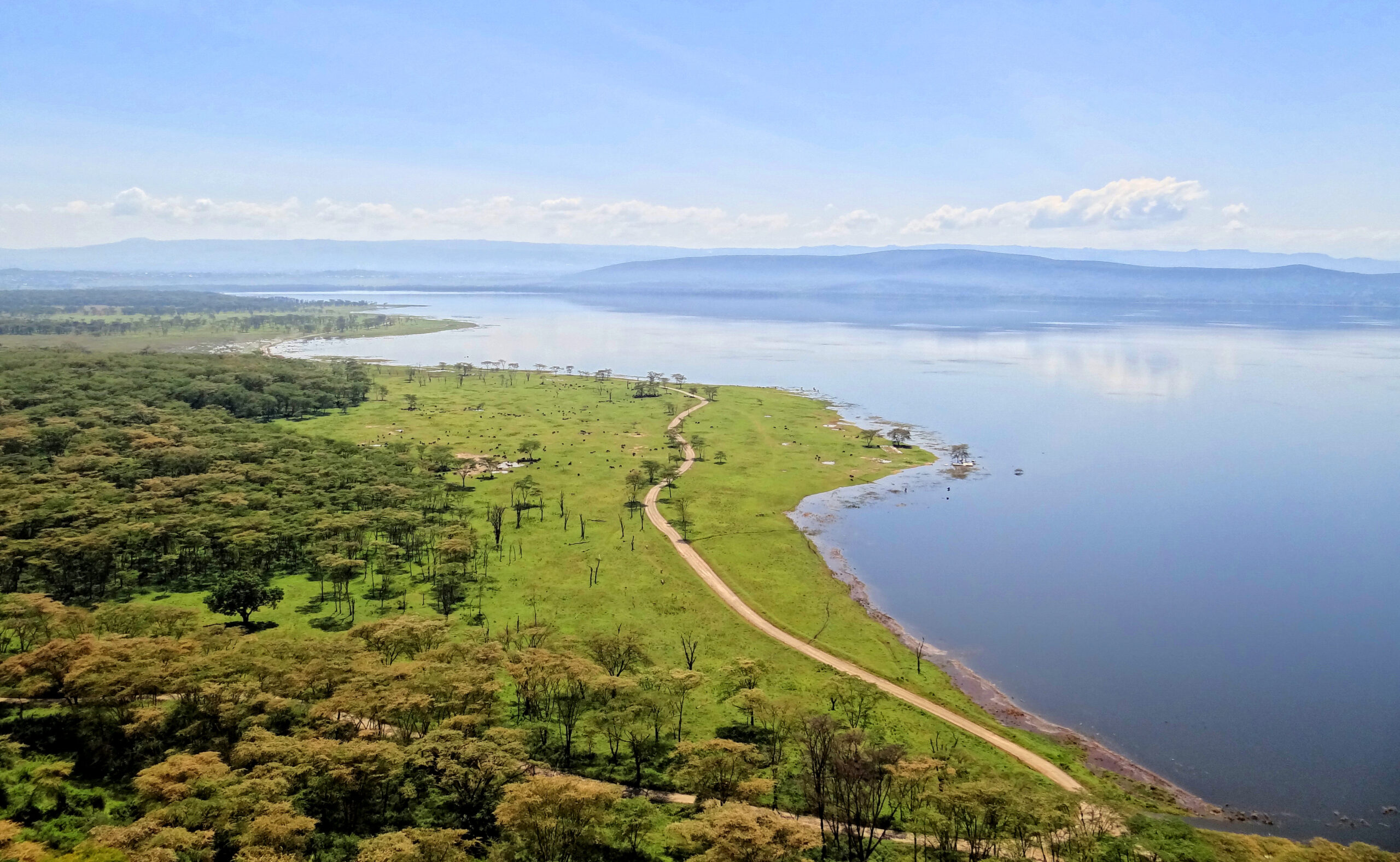
The park is built around Lake Nakuru, a shallow, alkaline soda lake with no outflow. The lake changes size a lot. Historically it ranged from about 5 km² to 45 km². It has grown since about 2010, reaching around 68 km² by 2020, and it has stayed high. KWS reports that the lake's surface area is about 70% above its 1984 to 2009 average.
Around the lake, the park has:
- Open grassland and lakeshore
- Acacia woodland, including yellow-barked fever trees
- A forest of tall euphorbia candelabra trees on the escarpment
- Rocky ridges and viewpoints, including Baboon Cliff, Lion Hill and Out of Africa
- Makalia Falls near the southern end
Lake Nakuru National Park and the Wider Nakuru Ecosystem
The national park is the protected area around the lake. The wider ecosystem includes the Mau Escarpment catchment that feeds the lake, Nakuru town and the farmland around it. Rivers such as the Njoro, Makalia, Nderit and Naishi carry water from the catchment into the park. What happens upstream and in the town affects the lake.
The park's fence separates wildlife from the town and farms. Wildlife does not move freely in and out of the park, unlike Amboseli or the Maasai Mara. See the Ecosystem section for more.
World Heritage and Ramsar Status
Lake Nakuru is a Ramsar wetland of international importance. It is also part of the Kenya Lake System in the Great Rift Valley, together with Lake Bogoria and Lake Elementaita.
Lake Nakuru National Park is about 160 km from Nairobi. The drive usually takes about 3 hours, with a range of 2.5 to 4. Most visitors arrive by road. Charter flights can land at Naishi Airstrip inside the park. Many travellers include Lake Nakuru on a route between Nairobi, Naivasha and the Maasai Mara.
| Measure | Typical range |
|---|---|
| Driving time | road time from the starting point to the park gate. About 3 hours from Nairobi. |
| Flight time | air time only. About 25 to 60 minutes from Nairobi, depending on aircraft and routing. |
| Total journey time | includes airport transfers, gate formalities and the drive to your camp. By road from central Nairobi, allow 3 to 4 hours to your lodge. By charter flight, allow 1.5 to 2 hours, including transfers. |
Published distances from Nairobi range from about 140 km to 216 km. The shorter figures measure to Nakuru town. The longer ones follow different routes or measure to a far gate. A distance of about 160 km to the Main Gate is the most commonly used figure. Drive times vary with Nairobi traffic, road works, weather, stops, the gate you use and the location of your lodge.
From Nairobi
By road
Distance: about 160 km to the Main Gate or Lanet Gate.
Route: Nairobi, the A104 highway through Naivasha and Gilgil, then Nakuru. The road is tarmac the whole way. It goes down the Rift Valley escarpment past Mount Longonot and Lake Naivasha.
Gates
- Main Gate: about 4 km south of Nakuru town. The most commonly used gate.
- Lanet Gate: on the northeastern side, close to the Nairobi–Nakuru highway. Often used by tours from Nairobi.
- Nderit Gate: in the southeast. Used by travellers coming from Naivasha, Elementaita or the Maasai Mara.
What affects drive time
- Nairobi traffic. Leaving before 7 am helps.
- Road works on the Nairobi–Nakuru highway. One operator reported delays near Rironi in 2026. Check with your operator.
- Heavy trucks on the A104.
- Stops for fuel, food or views of the Rift Valley.
- The gate and your lodge location.
Road options
- Private transfer or private safari vehicle: the most common choice. Your driver-guide takes you to the gate and drives you inside the park.
- Shared or group-joining vehicle: lower cost, with a fixed pick-up time and itinerary.
- Self-drive: possible on good tarmac up to the park. You pay a separate vehicle fee at the gate.
- Public transport: matatus and buses run from Nairobi to Nakuru town. From town you need a taxi or pre-arranged transfer to the gate, about 4 km away. Private vehicles are normally needed for game drives, so most visitors use a tour vehicle.
- Train: the SGR does not serve Nakuru directly.
By air
- Departure airport: Wilson Airport (WIL), Nairobi. International flights land at Jomo Kenyatta International Airport (JKIA), a separate airport.
- Airstrip: Naishi Airstrip inside the park serves charter flights. One source also mentions an airstrip near Nakuru town, so confirm which strip your flight uses.
- Flights: sources describe charter service. We did not find a reliable regular scheduled service. Ask your operator.
- Flight time: quoted from about 25 minutes to just over an hour.
Fly or Drive?
The distance is short, so most visitors drive. A charter flight saves road time but costs much more, so it suits small groups with limited time.
From Mombasa
There is no direct route from Mombasa to Lake Nakuru. The trip has two parts: the coast to Nairobi, then Nairobi to Nakuru.
- Coast to Nairobi: a flight takes about 1 to 1.5 hours. The SGR takes roughly 5 hours. By road it is a long day of 8 to 9 hours.
- Nairobi to Lake Nakuru: about 3 hours by road.
Most coast visitors overnight in Nairobi, or fly to Nairobi and drive on the same day, then add a Nakuru stop to a longer Rift Valley or Maasai Mara route.
From Diani Beach
Diani is south of Mombasa. Ukunda Airstrip (UKA) serves Diani, and flights to Nairobi take about 1 hour. From Nairobi, drive to Lake Nakuru, about 3 hours. Allow a full day for the journey and check flight timetables.
From Watamu
Watamu is about 110 km north of Mombasa, a drive of 2 to 3 hours. Malindi Airport (MYD) is about 20 km away and has had flights to Nairobi. Fly to Nairobi, then drive to Nakuru. The trip takes most of a day.
From Malindi
Malindi is about 120 km north of Mombasa, roughly 2.5 hours by road. Flights from Malindi to Nairobi operate on some schedules, which changes by season. The alternative is to travel to Mombasa and then fly or take the SGR to Nairobi. Confirm current schedules with your operator.
Non-resident adults pay USD 90 per 24 hours to enter Lake Nakuru National Park. Children and students pay USD 45. These rates come from the KWS tariff that took effect on 1 October 2025. Lake Nakuru is one of the two KWS premium parks, with Amboseli, and charges the highest KWS rate.
| Category | Fee |
|---|---|
| Non-resident adult | USD 90 |
| Non-resident child or student | USD 45 |
| African citizen (non-East African) adult | USD 50 |
| African citizen child or student | USD 25 |
| Kenya resident adult (non-citizen with valid permit) | KES 2,025 |
| East African citizen adult | KES 1,500 |
Children: the non-resident child category is quoted as ages 5 to 17 by some sources and 3 to 17 by others. Confirm the age limits and the age for free entry with KWS.
Ticket Validity
The fee is per person, per 24 hours, not per calendar day. A ticket bought at noon covers you until noon the next day. A two-night trip often needs two tickets. The park is open from 6 am to 6 pm.
Payment
KWS fees are paid through the KWS eCitizen payment system (KWSPay). The park uses cashless entry, so pay in advance or ask your operator to arrange it. Non-residents pay in US dollars. Residents and citizens pay in Kenyan shillings. Carry a passport, national ID or residence permit.
Vehicle Charges
KWS charges vehicle fees on top of per-person fees. One source gives about KES 600 for a small private car. Safari vehicle rates are higher, and We have not confirmed them. Ask your operator whether vehicle fees are in your quote.
Seasonal Pricing
Lake Nakuru charges the same rate all year. This differs from the Maasai Mara, which charges more in peak months.
Park Fee and Total Safari Cost
The park fee is one part of your cost. You also pay for accommodation, transport, guide, fuel, meals and any activities. See the Costs section.
Why Some Websites Show Different Fees
- Before 1 October 2025, the non-resident adult rate was USD 60 and the child rate was USD 35. Pages from 2024 and early 2025 still show these figures. Some operators still quote about USD 60.
- Some pages mix in fees from other parks.
- Resident and citizen rates differ between older and newer tariffs.
Camping and Other Charges
Campsites inside the park charge separate camping fees on top of the entry fee. Confirm current camping rates with KWS.
Published 2026 prices for a Lake Nakuru National Park safari range from about USD 135 to 450 per person per day for most standard trips. Short trips from Nairobi are among the lower-cost safaris in Kenya, but the entry fee of USD 90 per adult makes up a large share of the cost. The figures below are operator-published ranges, not firm quotes.
Park entry is USD 90 per adult per 24 hours. Since the October 2025 fee increase, Lake Nakuru is no longer a low-cost add-on, according to one operator.
What Decides the Price
- Accommodation. This is the largest factor. Budget camps, mid-range lodges and luxury camps sit in different price bands.
- Number of travellers. Vehicle, driver-guide and fuel are shared. Solo travellers pay more per person.
- Private or shared vehicle. A private vehicle costs more and gives control over timing.
- Road transfer or flight. Most trips use the road, which is short. Charter flights add a large cost.
- Park fees. USD 90 per adult per 24 hours.
- Number of nights and parks. Combining Nakuru with Naivasha, Hell's Gate or the Maasai Mara changes the total.
- Activities. Most activities inside the park are included in the game drive.
- Meals and drinks. Full board is common. Drinks may be extra.
Check the Basis of Every Quote
For each price, check whether it is per person, per couple, per vehicle or a total, and whether park fees, transfers and Nairobi pick-ups are included.
| Style | Indicative rate |
|---|---|
| Budget | about USD 135 to 350. Camp or simple lodge, shared or semi-private vehicle. |
| Mid-range | about USD 280 to 600. Lodge or tented camp, private vehicle, full board. |
| Luxury | about USD 600 to 950. Premium lodge or camp with lake or valley views. |
| Trip | Published range |
|---|---|
| 2 days / 1 night | about USD 445 to 1,135 per person on one operator's 2026 rate sheet, falling as group size rises. Private 4x4 packages with two sharing are quoted from about USD 700 to 1,100, with some combining Lake Nakuru and Hell's Gate. |
| 3 days / 2 nights | budget packages are quoted from about USD 890 to 1,200. |
| 4 days | a mid-range Nakuru and Naivasha package is quoted at about USD 1,300 to 1,600. |
| 5 days | luxury Rift Valley packages are quoted from about USD 2,000 to 2,450 or more. Luxury packages overall range from about USD 1,800 to 4,500. |
| With the Maasai Mara | 5-day combinations are quoted from about USD 1,820 for budget to over USD 3,900 for luxury. |
Why Two Similar Packages Can Differ So Much
- Some quotes assume older park fees of USD 60 or less. Check that USD 90 is included.
- A private vehicle for two costs far more per person than a shared van for six.
- Accommodation inside the park, such as Sarova Lion Hill or The Cliff, costs more than a lodge in Nakuru town or near Naivasha.
- Drinks, extra parks and Nairobi transfers may or may not be included.
Park Fees in Practice
For two adults on a 2-day, 1-night trip with two 24-hour tickets, park fees come to 2 x 2 x USD 90 = USD 360 in total. A single-day entry costs USD 180. Your entry time decides how many tickets you need, so ask your operator.
Safari Styles
- Camping: lowest cost. Campsites inside the park have basic facilities.
- Lodge safaris: fixed buildings with a pool and restaurant. Often mid-range.
- Tented camps: permanent tents. Mid-range to luxury.
- Private safari: your own vehicle and guide. More flexible and more expensive.
- Shared or group-joining safari: you travel with other guests. Lower cost and a fixed schedule.
Trip Length
- 1 day: possible from Nairobi, with about 6 hours of driving. Gives one morning or afternoon game drive plus a viewpoint stop. A long day.
- 2 days: the most common choice. It gives two game drives and a viewpoint stop, with an overnight in or near the park.
- 3 days: allows time to add Naivasha, Hell's Gate or Lake Bogoria.
- 4 days and longer: suits travellers who combine Nakuru with the Maasai Mara or a wider Rift Valley circuit.
Lake Nakuru accommodation falls into three groups: lodges and camps inside the national park, lodges near the park gates, and hotels in Nakuru town and around Lake Naivasha. The right choice depends on budget, gate access, views and how much driving you want to do.
Types
- Lodges: fixed buildings with a restaurant, pool and larger capacity. Often mid-range.
- Tented camps: permanent tents, usually en-suite. Mid-range to luxury.
- Campsites: inside the park, with basic facilities. Budget.
- Budget guesthouses and eco-camps: outside the park, often in Nakuru town or on the road to the gates.
Main Options
Names are as listed by operators. Confirm the exact location and gate with your operator.
- Inside or at the edge of the park: Sarova Lion Hill Game Lodge, Lake Nakuru Lodge (near the Main Gate), Lake Nakuru Sopa Lodge (near Nderit Gate), The Cliff Nakuru (a tented camp inside the park), Flamingo Hill Tented Camp.
- Near the gates and in Nakuru town: Kambi Amani Eco Camp and a range of budget and mid-range hotels in town.
- Along the route: lodges around Naivasha and Elementaita, which suit travellers combining several Rift Valley stops.
- Campsites inside the park, including Makalia Falls and other designated sites.
- Published nightly rate ranges
- Figures are per person per night and vary between sources.
- Budget: about USD 50 to 150
- Main lodges: starting rates of about USD 94 (Sopa), USD 116 (Sarova Lion Hill) and USD 131 (Lake Nakuru Lodge) per person per night, higher in peak season
- Mid-range lodges and camps: about USD 250 to 450 per night on some operator listings
- Luxury: from about USD 600 per night
Inside the Park or Outside
- Park fee: staying in the park means the 24-hour KWS ticket applies. Staying outside the park means you pay it each day you enter.
- Time: a lodge inside the park saves transit time and lets you start a game drive at 6 am.
- Cost: lodges inside the park often cost more than hotels in town.
- Atmosphere: the park is close to a busy town, so it does not feel remote.
- Night: the park is very quiet at night, and night drives are not normally permitted.
Location and Access
- Gate: check which gate your lodge is near. Main Gate and Lanet Gate suit arrivals from Nairobi. Nderit Gate suits travellers arriving from Naivasha, Elementaita or the Maasai Mara.
- Airstrip: confirm which strip serves your lodge if you fly.
- Views: lodges on the hillside give lake views. Ask your operator about the view from your room.
Families and Couples
Lodges with pools suit families. Hillside lodges suit couples who want views. Check child policies if you travel with young children.
How to Choose
- Set your budget per night.
- Decide whether you want to sleep inside the park.
- Check the gate and travel time from your arrival point or next stop.
- Check what is included: meals, drinks and park fees.
- Check the lodge's view and facilities.
- Check the child policy if you travel with children.
There is no single best month for Lake Nakuru. The dry months, June to October and January to February, give the easiest driving and clear wildlife viewing. The rains, March to May, are the greenest and quietest. The park fee is the same all year, and the fenced park keeps wildlife in the park during the rains.
The Seasons
- Long dry season: June to October
- Short dry season: January to February
- Long rains: March to May (April is usually the wettest)
- Short rains: November to December
Altitude keeps the park cool. Days are mild and mornings and evenings are cold.
By Month
- January: dry and warm. Good game viewing and clear skies.
- February: dry. Similar to January.
- March: the long rains begin. Green landscape and fewer visitors. Some tracks soften.
- April: usually the wettest month. Quiet. Game drives can be slower on wet tracks.
- May: rain continues. Green and quiet.
- June: drying out. Roads improve and wildlife is easy to spot.
- July: dry. Good conditions. Busier, because many travellers pair Nakuru with the Maasai Mara.
- August: dry. Similar to July.
- September: dry. Good game viewing.
- October: dry, with the short rains starting late in the month.
- November: short rains with afternoon showers. Green and quieter.
- December: short rains, usually light. Holiday travel can raise demand at some lodges.
Best Time by Goal
- Best time for wildlife: June to October and January to February, when roads are dry. Because the park is fenced, the wet season does not scatter the animals.
- Rhinos and giraffes: present all year. White rhinos are often seen grazing in the open.
- Flamingos: no month can be relied on. Numbers depend on lake water levels and algae, not on the calendar. See the Flamingos section.
- Birdwatching: November to April, when migratory birds are present. The lake attracts pelicans and other water birds in many months.
- Photography: dry months for clear light and viewpoints. The wetter months give green scenery and dramatic skies.
- Makalia Falls: best flowing after the rains, so April to June in many years.
- Lower visitor numbers: March to May and November.
- Different budgets: lodge rates are often lower in the green months. The park fee does not change.
Pricing and Availability
Park fees stay at USD 90 for non-residents all year. Lodge rates and availability change with the season. Book early for July to September and for the holiday period.
Road Conditions
Rain slows the dirt tracks inside the park. The A104 highway is tarmac throughout the year.
Lake Nakuru is best known for its rhinos, Rothschild's giraffes, lions, leopards, buffalo and birds. Elephants are not found in the park. The park has more than 400 bird species, with about 450 listed by KWS.
Rhinos
Lake Nakuru was set up as a rhino sanctuary in 1987, when only a couple of black rhinos remained. The park now holds both black and white rhinos in a fenced area, protected by armed rangers.
Population estimates vary. A 2009 count gave more than 25 black rhinos and about 70 white rhinos. More recent sources describe about 100 to 150 rhinos in total, with most being white rhinos. Counts differ by year and method, so treat all numbers as estimates.
- White rhinos: grazers that feed in open grassland. They are often easy to spot.
- Black rhinos: browsers that spend more time in thick bush. They are harder to find.
Rhino sightings are likely but never guaranteed.
Other Mammals
- Rothschild's giraffe: translocated to the park in the 1970s. Lake Nakuru is one of the few places where this subspecies lives.
- Lion: resident. Lions in the park are known to rest in trees, especially in the woodland near Lion Hill and Flamingo Hill.
- Leopard: resident, often seen in the forest at the southern end. Sightings are possible but not guaranteed.
- Buffalo: common, in large herds on the grassland.
- Spotted hyena: resident.
- Hippo: found in the lake and in pools.
- Waterbuck, impala, Thomson's gazelle, zebra, eland and reedbuck: widespread.
- Warthog: common.
- Olive baboon and vervet monkey: common. Baboons are bold at picnic sites.
- Black-and-white colobus monkey: found in the forest.
- Pythons: seen occasionally in the forest.
Not found: elephants. The park is too small and fenced.
Birdlife
KWS lists about 450 bird species. Other sources say more than 400. The lake and shore attract:
- Lesser and greater flamingos, in variable numbers
- White pelicans and cormorants
- African fish eagle and Verreaux's eagle
- Goliath heron, grey heron, egrets and spoonbills
- Kingfishers and jacanas
- Migratory waders, mainly in the wetter months
Species in the Park and What You Will See
The park supports many species, but one game drive shows only some of them. Sightings depend on season, time of day, luck and guide skill. White rhinos and giraffes are the most reliable. Leopards and black rhinos are harder to find. No operator can guarantee any species.
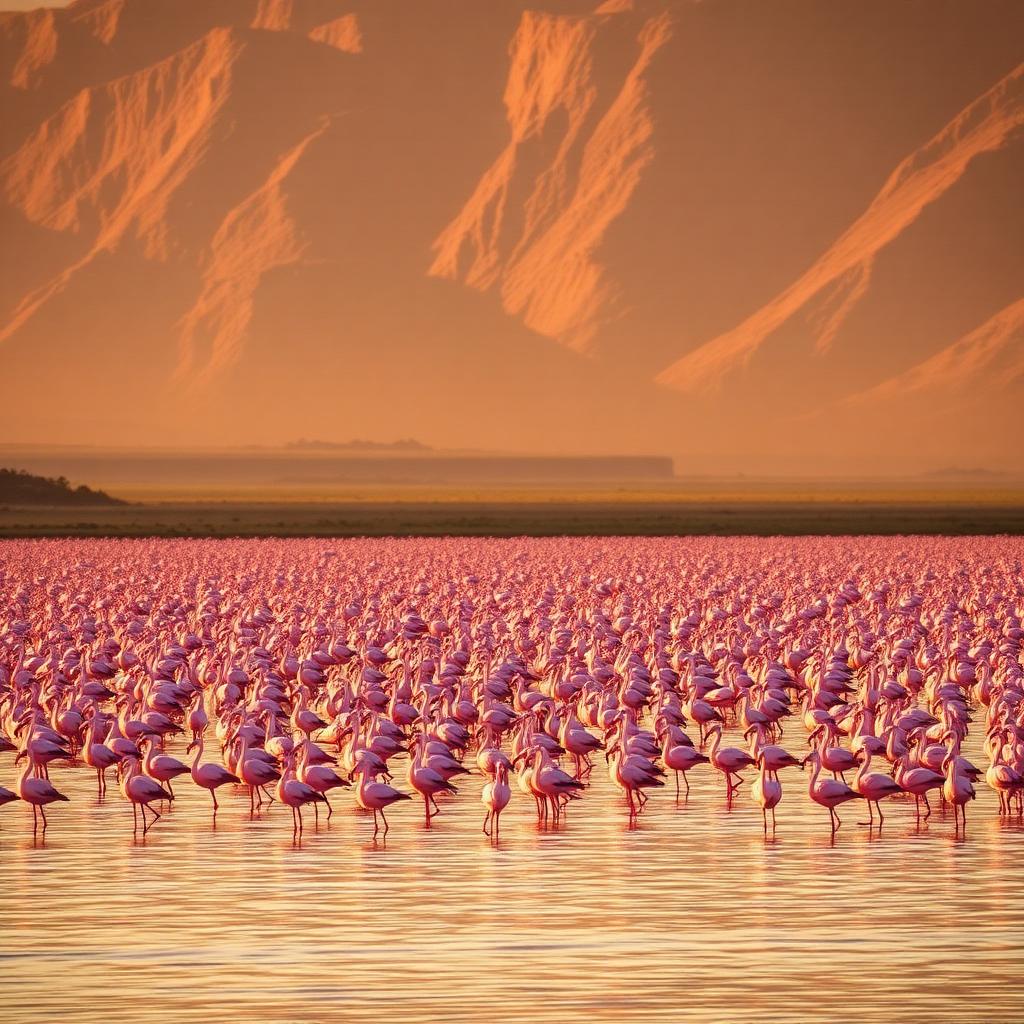
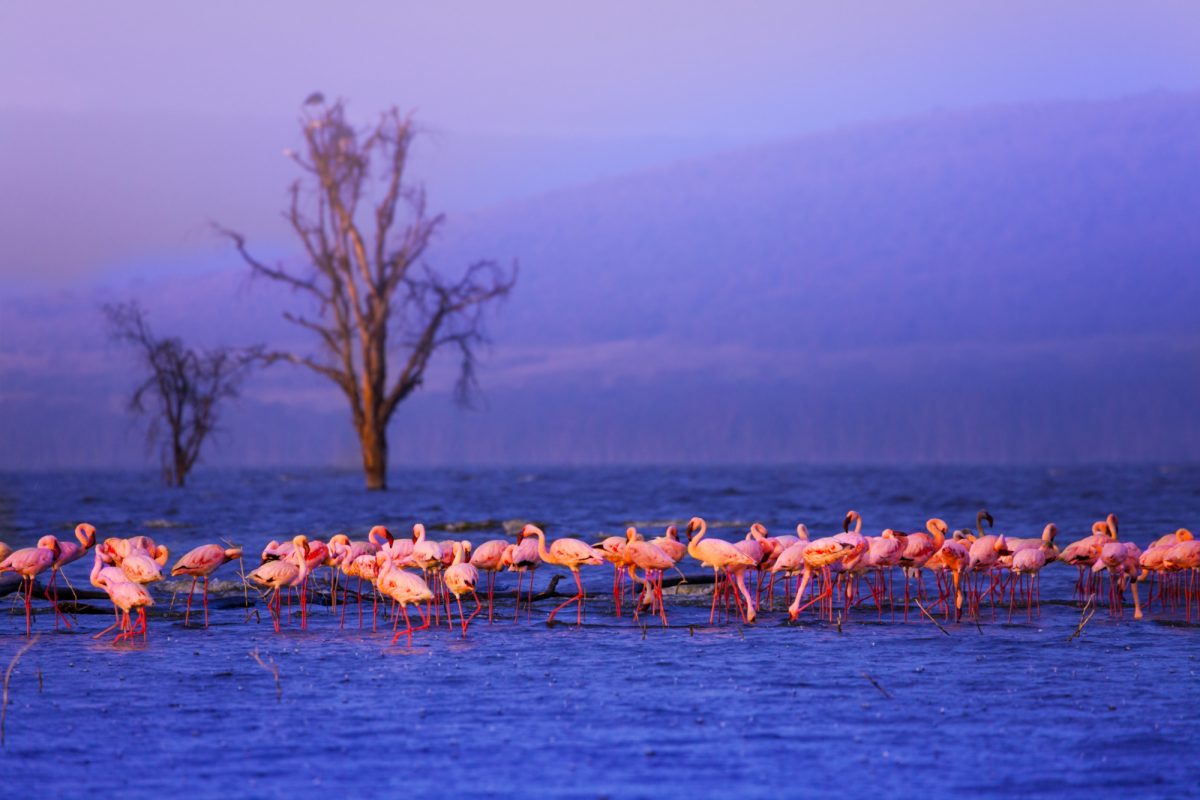
Lake Nakuru was once famous for flocks of more than a million flamingos. That has changed. Flamingo numbers at the lake have fallen sharply and vary from year to year. Visitors should expect a lake, viewpoints and birdlife, and treat any large flamingo flock as a bonus.
Why Flamingos Came Here
Lesser flamingos feed on blue-green algae (cyanobacteria), which thrive in alkaline, shallow water. Lake Nakuru's soda water used to grow large amounts of it. The birds gathered in flocks that coloured the shoreline pink.
What Has Changed
Since about 2010, rising water levels across the Rift Valley lakes have changed the chemistry of Lake Nakuru. Fresher, deeper water reduces the algae. Pollution and catchment problems add pressure. Flamingos have moved to other lakes, including Bogoria, Elementaita, Magadi and Natron.
A recent KWS note on a coordinated flamingo census across seven Rift Valley lakes says Lake Nakuru's count had fallen to about 500 lesser flamingos by January 2025. The census is part of a national recovery plan for the lesser flamingo for 2026 to 2035.
Sources differ on current numbers. Some operators describe flocks of 10,000 to 30,000 birds in early 2026, in clusters that move around the lake. Others describe a few hundred or a few thousand. The difference comes from timing, location on the lake and counting methods. Flamingos can return when conditions improve, and they can also leave again.
What to Expect
- Expect birdlife, including pelicans and waterbirds, on most visits.
- Do not expect a pink shoreline.
- Ask your operator about the current flamingo situation before you book.
- If flamingos are your main reason for travelling, consider other Rift Valley lakes, such as Lake Bogoria, which the birds have used recently.
Viewpoints
- Baboon Cliff: the best-known viewpoint, with a wide view over the lake and plains. Best at sunrise and late afternoon. Baboons are bold, so secure food and bags.
- Lion Hill: a quieter viewpoint with views across the lake basin. Good in late-afternoon light.
- Out of Africa Lookout: a rocky viewpoint with views of the lake and Rift Valley.
- Makalia Falls: a small waterfall at the southern end of the park, about 10 m high, with a picnic area. Best after rain.
Photography
- Visit viewpoints at sunrise or late afternoon.
- Use a long lens for birds and white rhinos on the shore.
- Use a wide lens for the lake and the euphorbia forest.
- Keep dust off your camera in the dry months.
The main activity in Lake Nakuru National Park is the game drive. Visitors also visit the viewpoints, stop at picnic sites, watch birds and camp inside the park. Night drives are not normally permitted, because the park is a fenced sanctuary.
Inside the National Park
- Game drives: the main activity. Early morning and late afternoon drives suit wildlife and light. The park is open from 6 am to 6 pm. Choose a shared or private drive, or a full day with a picnic lunch.
- Rhino viewing: white rhinos are often easy to find on the grassland. Black rhinos need patience.
- Birdwatching: best around the lake shore and at Baboon Cliff. Ask for a guide who knows the birds.
- Viewpoints: Baboon Cliff, Lion Hill and Out of Africa.
- Makalia Falls: a picnic stop and short walk near the waterfall. Sources describe limited guided walks in designated areas only.
- Picnic sites: designated sites at Baboon Cliff, Makalia Falls and near the lake. Secure food from baboons.
- Camping: designated campsites inside the park, including at Makalia Falls. Camping fees are separate from the entry fee.
- Photography: viewpoints, rhinos and giraffes.
Outside the Park
- Hell's Gate National Park: a scenic KWS park near Naivasha, known for cycling and walking. The entry fee is lower than at Lake Nakuru (non-resident adults USD 50). Cycling fees are extra.
- Lake Naivasha: boat rides and birdwatching.
- Menengai Crater: a volcanic crater near Nakuru town, with viewpoints and local hiking.
- Hyrax Hill: a museum and archaeological site near Nakuru.
- Horseback riding: offered outside the park by some operators.
Private and Shared Drives
A private drive gives control over timing and pace. A shared drive costs less and follows a set schedule.
What Is Not Available
Night drives, balloon flights and Maasai cultural visits are not part of a standard Lake Nakuru visit. Do not assume that activities from other Kenyan parks apply here.
Lake Nakuru National Park is a small, fenced protected area surrounded by a growing town, farmland and the Mau Escarpment catchment. The lake depends on water from these areas, so the health of the park depends on land use outside its boundary.
What the Ecosystem Includes
- The park and lake, about 188 km²
- The Mau Escarpment catchment, the source of most of the water that reaches the lake
- Rivers that feed the lake, including the Njoro, Makalia, Nderit and Naishi
- Nakuru town, immediately north of the park
- Neighbouring Rift Valley lakes, including Elementaita, Naivasha and Bogoria
How It Differs from the Park
- The park is managed by KWS and charges a daily KWS fee.
- The catchment and town are managed by the county government, landowners and other agencies.
- The fence keeps wildlife in the park. Rhinos and giraffes cannot move freely out of it, unlike wildlife in Amboseli or the Maasai Mara.
Pressures on the Lake
- Rising water since about 2010, linked to changing rainfall patterns, which has diluted the alkaline water.
- Pollution from the town and farms, including sewage, industrial waste and plastic carried by the Njoro River.
- Loss of forest in the Eastern Mau catchment, which increases erosion and silt. One source reports that more than 46% of forest cover there has been lost.
- Pressure on land and water as the town grows.
Conservation
- Kenya Wildlife Service: manages the park, the rhino sanctuary and anti-poaching patrols.
- WWF Kenya and partners: have supported catchment and water-quality programmes.
- KWS flamingo recovery plan: a national plan for lesser flamingos, covering 2026 to 2035.
Communities
People live around the park in Nakuru town, nearby farmland and the upper catchment. Many depend on the same rivers and land that affect the lake. Tourism supports jobs in lodges, transport and guiding. Ask your operator how they support local guides and community projects.
Why the Wider Ecosystem Matters
The lake is only as healthy as the water that flows into it. Clean catchments, controlled waste and protected forest in the upper rivers help the lake, the birds and the rhinos. Visitors can support this by using operators who follow park rules and avoid plastic waste.
Lake Nakuru is a compact park. Most travellers visit it for one or two nights as part of a Rift Valley route or on the way to the Maasai Mara. The most common combinations are Nakuru with Naivasha and Hell's Gate, the Maasai Mara, Amboseli or Ol Pejeta.
Nairobi and Lake Nakuru
Lake Nakuru and Naivasha / Hell's Gate
Lake Nakuru and the Maasai Mara
Lake Nakuru and Amboseli
Lake Nakuru and Ol Pejeta
Lake Nakuru and Lake Bogoria
Lake Nakuru and the Kenya Coast
Planning Advice
- Do not squeeze too many stops into too few days. Long drives use up game-drive time.
- Park fees are charged separately for each park.
- Ask your operator for realistic timings rather than map-tool times.
Is Lake Nakuru National Park worth visiting?
Yes, if you want to see rhinos, Rothschild's giraffes and varied birdlife close to Nairobi. Do not go expecting a pink lake. Flamingo numbers have dropped.
How many days do you need in Lake Nakuru?
One night is the usual minimum. Two nights allow time to add Naivasha or Hell's Gate.
How much does a Lake Nakuru safari cost?
Published 2026 prices run from about USD 135 to 450 per person per day on most standard trips, with luxury packages higher. Check what each quote includes.
How far is Lake Nakuru from Nairobi?
About 160 km by road to the Main Gate.
How long does it take to drive from Nairobi to Lake Nakuru?
Usually about 3 hours, with a range of 2.5 to 4.
Can you fly to Lake Nakuru?
Yes, by charter flight from Wilson Airport to Naishi Airstrip inside the park. We did not find a reliable regular scheduled service, so ask your operator.
What airport is closest to Lake Nakuru?
Naishi Airstrip inside the park serves charter flights. Wilson Airport in Nairobi is the usual departure point.
Can you visit Lake Nakuru from Mombasa?
Yes, but not directly. Fly or take the SGR to Nairobi, then drive about 3 hours to Nakuru.
Can you visit Lake Nakuru from Diani Beach?
Yes. Fly from Ukunda to Nairobi (about 1 hour), then drive to Nakuru.
Can you visit Lake Nakuru from Watamu?
Yes, by flight from Malindi or Mombasa to Nairobi, then a road transfer. It takes most of a day.
Can you visit Lake Nakuru from Malindi?
Yes, by flight to Nairobi where schedules allow, then a road transfer, or via Mombasa and the SGR.
What is Lake Nakuru famous for?
Rhinos, Rothschild's giraffes, birdlife and a shallow soda lake that once held millions of flamingos.
Are there still flamingos in Lake Nakuru?
Yes, but in far smaller numbers than in the past. KWS reported about 500 lesser flamingos in January 2025. Some operators report larger clusters in 2026. Numbers change.
Are there rhinos in Lake Nakuru?
Yes. Both black and white rhinos live in the fenced sanctuary. White rhinos are easier to see. Black rhinos are harder to find.
Are there elephants in Lake Nakuru?
No. The park is too small and fenced.
What is the best time to visit Lake Nakuru?
June to October and January to February are the dry months and give the easiest driving. The rains, March to May, are the quietest.
What animals can you see in Lake Nakuru?
Rhinos, Rothschild's giraffes, lions, leopards, buffalo, hippos, hyenas, zebras, waterbuck, baboons, colobus monkeys and many birds.
Are the Big Five found in Lake Nakuru?
Four of them: lion, leopard, buffalo and rhino. Elephants are not found in the park.
Is Lake Nakuru good for a family safari?
Yes. The park is compact, drives are short and the road from Nairobi is tarmac. Check lodge child policies.
How much are Lake Nakuru National Park fees?
Non-resident adults pay USD 90 per 24 hours. Children and students pay USD 45. Rates come from the KWS tariff effective 1 October 2025.
Is one day enough for Lake Nakuru?
A day trip from Nairobi works but means about 6 hours of driving. One night gives a better visit.
Can you combine Lake Nakuru with the Maasai Mara?
Yes. The drive between them takes about 5 to 7 hours by road. Many itineraries stop at Lake Nakuru on the way.
Can you combine Lake Nakuru with Naivasha?
Yes. Naivasha is about 70 km away, a drive of about 1.5 hours. Hell's Gate and boat rides are popular add-ons.
Can you do night drives at Lake Nakuru?
Not normally. The park is a fenced sanctuary and night drives are not part of a standard visit.
Where should you stay at Lake Nakuru?
It depends on budget, gate and views. See the Accommodation section.
What should you pack for a Lake Nakuru safari?
Layers for cool mornings and evenings, a light rain jacket, neutral clothes, a hat, sunscreen, binoculars and a camera with a dust cover.