Ngorongoro Crater & Conservation Area, Tanzania
The world's largest unbroken caldera: a 260 km² floor with black rhino, lion and resident herds, set inside a Conservation Area of highlands, craters and Olduvai Gorge.
Ngorongoro Crater is a collapsed volcanic caldera in northern Tanzania, about 610 metres deep, whose grassland floor of roughly 260 square kilometres supports one of the densest concentrations of large mammals in Africa, including a protected population of black rhino. The Crater sits inside the much larger Ngorongoro Conservation Area (NCA), an 8,292 square kilometre multiple-land-use area where wildlife, Maasai pastoralists and some of the world’s most important human-evolution sites share the same landscape.
That distinction matters for planning. The Crater is roughly 3% of the Conservation Area. Most travellers spend one morning or one day on the Crater floor, but the wider Conservation Area also includes the Ngorongoro Highlands, Empakaai and Olmoti craters, Olduvai Gorge, and the Ndutu plains where the wildebeest migration calves early in the year.
This guide explains what you can realistically see, what it costs, where to stay, how long to allow, and how Ngorongoro fits alongside Serengeti, Tarangire and Lake Manyara.
| Location | Northern Tanzania, Arusha Region, between Lake Manyara and Serengeti National Park |
| Feature type | Volcanic caldera (not an impact crater) |
| Formed | About 2.5 million years ago, when a large volcano collapsed inwards |
| Crater floor | About 260 km², at roughly 1,800 m above sea level |
| Crater depth | About 610 m from rim to floor |
| Diameter | Roughly 16–20 km depending on where it is measured (the NCAA cites about 20 km) |
| Rim elevation | Approximately 2,300 m; the rim road and lodges sit high enough to feel cold at night |
| Conservation Area size | 8,292 km² (NCAA figure) |
| Managed by | Ngorongoro Conservation Area Authority (NCAA), not Tanzania National Parks (TANAPA) |
| Status | UNESCO World Heritage Site (natural, 1979; cultural criteria added 2010); part of the Serengeti-Ngorongoro Biosphere Reserve and the Ngorongoro Lengai UNESCO Global Geopark |
| Key wildlife | Lion, black rhino, elephant (mostly bulls), buffalo, hippo, spotted hyena, wildebeest, zebra, gazelles, flamingos |
| Big Five | All five occur; leopard is the hardest to see on the floor |
| Main activity | Game drive on the Crater floor by 4x4 vehicle (no walking on the floor) |
| Typical visit | One Crater game drive (half to full day) plus one or two nights nearby |
| Common combinations | Serengeti, Tarangire, Lake Manyara, Ndutu, Lake Eyasi |
These are two different things, and confusing them leads to poorly planned itineraries.
Ngorongoro Crater
Ngorongoro Crater is the single caldera at the heart of the Ngorongoro Highlands. Its floor is a mix of short grassland, the soda lake Lake Magadi, swamps such as Gorigor, freshwater springs at Ngoitokitok, and the yellow-barked acacia woodland of Lerai Forest. The steep walls do not fence animals in, but permanent water and grazing mean many herbivores have little reason to leave, so wildlife is present all year in a compact area. Visitors drive down a one-way descent road, spend several hours on the floor, and drive back up a separate ascent road.
Ngorongoro Conservation Area
The Ngorongoro Conservation Area (NCA) was established in 1959 as a multiple-land-use area. Unlike a national park, people live here: semi-nomadic Maasai pastoralists graze livestock alongside wildlife, under management by the NCAA. The NCA stretches from the edge of the Rift Valley in the east to the Serengeti plains in the north-west and includes:
- The Ngorongoro Highlands: forested volcanic slopes and montane grassland, including the Northern Highland Forest Reserve
- Olmoti and Empakaai craters: smaller, quieter craters reached on foot with a ranger
- Olduvai Gorge and Laetoli: archaeological sites central to the story of human evolution
- The southern Serengeti short-grass plains around Ndutu, where the wildebeest migration typically calves
- Nasera Rock, Gol Mountains and Olkarien Gorge in the remote north-west
Why the Distinction Matters
Ngorongoro is in northern Tanzania, west of Arusha and south-east of Serengeti National Park. It sits at the centre of the northern Tanzania safari circuit, which is why so many itineraries include it:
Because Ngorongoro lies between Arusha and Serengeti, it fits naturally at the start or end of a Serengeti safari without backtracking.
Ngorongoro is a caldera, not an impact crater. Around 2.5 million years ago a large volcano, estimated to have stood somewhere between 4,500 and 5,800 metres high, erupted and emptied its magma chamber. Without support, the summit collapsed inwards, leaving the bowl you see today.
UNESCO and the NCAA describe it as the world’s largest unbroken caldera. That wording matters: larger calderas exist, but they are flooded or their walls are broken. Ngorongoro’s rim is intact and its floor is dry land, which is why it works as a contained wildlife habitat. The name is generally traced to a Maasai phrase relating to the bowl-like shape.
The Crater is one of several volcanic features in the Crater Highlands, part of the eastern branch of the Great Rift Valley. Olmoti and Empakaai craters are nearby, and the still-active Ol Doinyo Lengai volcano lies just beyond the NCA’s eastern edge.
For travellers, the geology explains three practical things: why the rim is cold and often misty, why the descent and ascent roads are steep and slow, and why the floor has permanent water fed by springs and highland run-off.
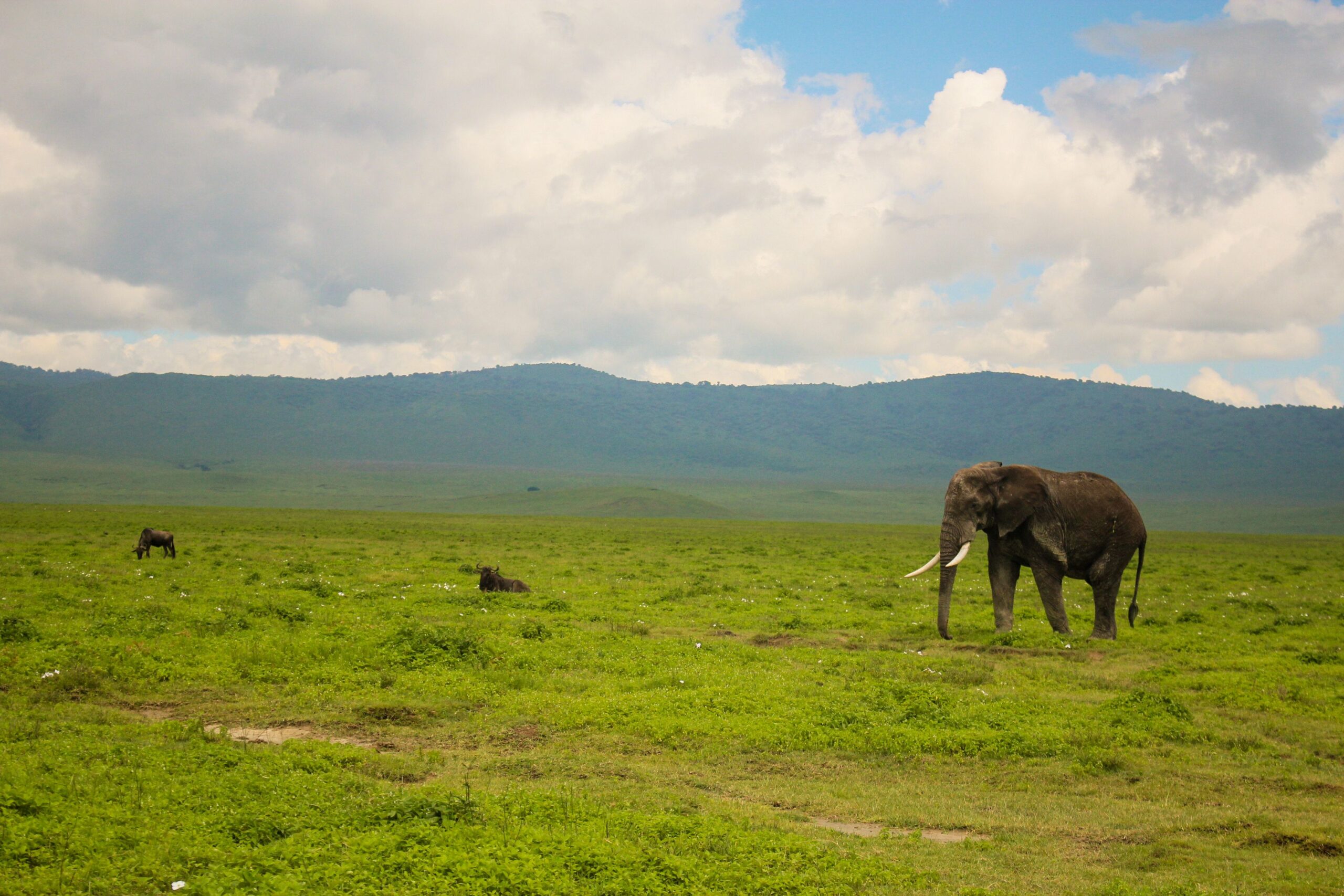
Ngorongoro Crater is famous for putting a large number of animals, including black rhino and lion, into an area small enough to cover in one game drive. The NCAA estimates more than 25,000 large animals live in the Crater.
Three factors drive that density
- Permanent water from springs, swamps and streams means grazers do not have to migrate in the dry season.
- The floor is mostly open grassland, so animals are easy to spot.
- Predators follow the resident prey, so lion and hyena encounters are frequent.
This is different from Serengeti, where wildlife is spread across around 14,700 km² of open ecosystem and the migration moves with the rains. In Serengeti you search; in the Crater you usually find animals quickly but share them with more vehicles.
Strong Chances on Most Visits
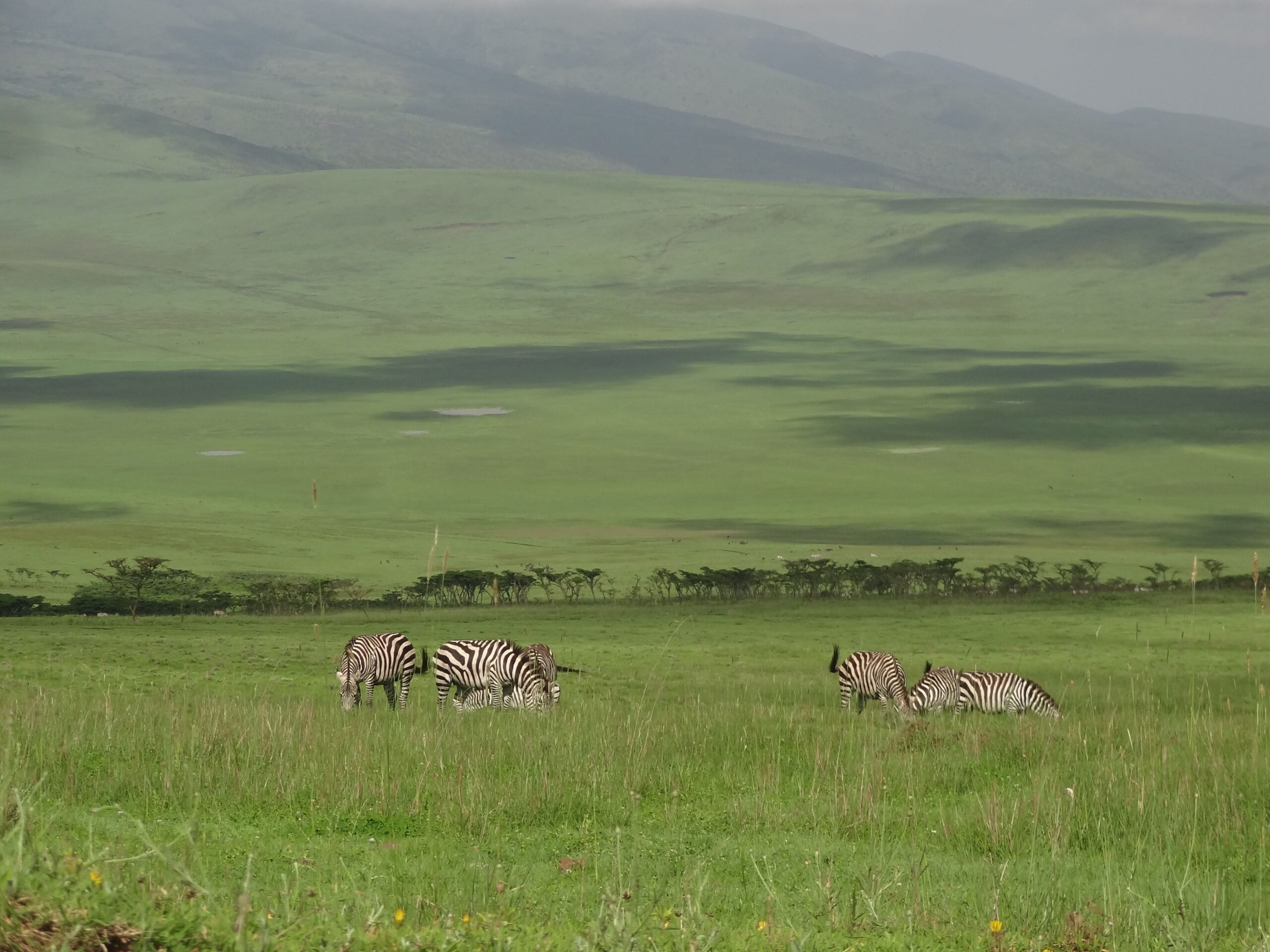
- Buffalo, wildebeest, plains zebra, Grant’s and Thomson’s gazelle, eland, warthog
- Lion: the Crater has a small, long-studied population; prides are often seen resting on open grassland or near the swamps
- Spotted hyena and golden and black-backed jackal
- Hippo at Ngoitokitok Springs and in larger pools
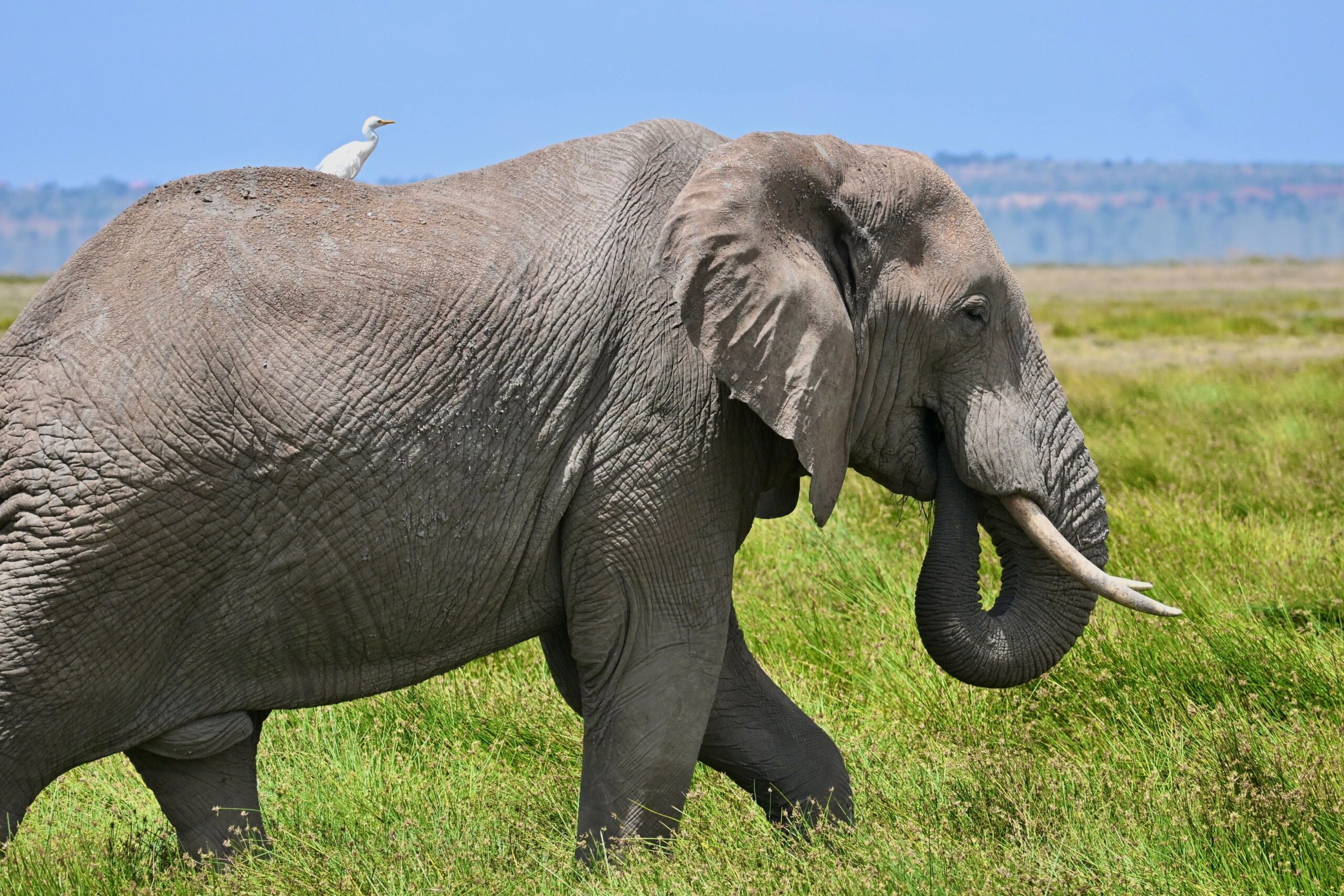
- Elephant: mostly mature bulls, often near Lerai Forest; breeding herds generally stay in the highland forests
- Birdlife: kori bustard, grey crowned crane, ostrich, and seasonal flamingos on Lake Magadi
Possible but Not Reliable
Largely Absent
Giraffe are not found on the Crater floor, and impala and topi are scarce or absent. If giraffe are important to you, Tarangire, Manyara and Serengeti cover them easily.
Why Sightings Are Never Guaranteed
Off-road driving is not allowed, vehicles must keep roughly 25 metres from animals, and weather can close visibility on the rim. Animals move. A good guide improves your odds; no operator can promise a particular species.
Yes, all Big Five species occur in Ngorongoro Crater, but seeing all five in a single game drive is uncommon.
Timing
NCAA rules allow driving between 06:00 and 18:00, and Crater descent closes at 16:00. Guides usually aim to descend as early as possible, ideally soon after 06:00, to beat the mid-morning build-up of vehicles and catch predators while they are active.
The Descent
The descent road drops through highland forest and onto the floor in roughly 30–45 minutes. Only 4x4 vehicles are permitted, the speed limit inside the craters is 25 km/h, and a licensed guide must accompany every vehicle.
On the Floor
There is no fixed route. Guides follow a loop of tracks around Lake Magadi, the Munge Stream, Gorigor Swamp and Lerai Forest, adjusting to what other guides report. NCAA rules limit any one sighting to five vehicles and prohibit leaving the vehicle except at designated sites.
Lunch
Most travellers bring packed lunches from their lodge and eat at a designated picnic site such as Ngoitokitok Springs. Watch for black kites, which snatch food from hands. A permit exists for serving pre-cooked hot meals in the Crater.
How Long You’ll Spend
Most visitors spend about four to six hours on the floor. Many operators plan around a maximum of roughly six hours per Crater permit; confirm the current rule when you book. After the drive, you take the separate ascent road back to the rim.
Practical Limitations
You cannot walk on the floor, drive off-road, or stay overnight in the Crater. During busy months you will share sightings with other vehicles, and the floor can be dusty in the dry season.
The answer depends on whether you want only the Crater or the Conservation Area as well. For the Crater alone, one full game drive is normally enough. For the NCA, allow more.
A Ngorongoro Crater day trip is realistic from Karatu and possible from Arusha, but it is a long day.
Advantages: lower accommodation costs and simple logistics. Limitations: early starts, less time on the floor, nothing beyond the Crater. A day trip does not cover the Conservation Area.
Ngorongoro Crater can be visited year-round because its wildlife is resident. The best time depends on your priorities:
Birdlife peaks in the wetter months, when Eurasian migrants arrive and seasonal pools fill.
The key point is the difference between the rim and the floor.
What to pack: warm fleece or down jacket, a windproof layer, hat and gloves for the rim, sunscreen, sunglasses and a light layer for the floor. Layering beats one heavy coat.
The Crater rim sits at roughly 2,300 m, about 500 m higher than the floor. Most healthy travellers feel no more than slight breathlessness on stairs, cold nights and possibly lighter sleep. A few notice headaches.
Practical Points
- Rim lodges are at the highest point of most northern Tanzania itineraries. If you are sensitive to altitude, Karatu (lower) may sleep better.
- Drink plenty of water and go easy on alcohol the first evening.
- Mention heart, lung or other relevant medical conditions to your safari planner and doctor before travel so accommodation can be chosen accordingly.
Lake Magadi is a shallow, alkaline soda lake on the Crater floor. Lesser flamingos feed on the algae that grow in these conditions, and the NCAA notes that the lake often holds thousands of them.
Numbers vary. When water levels drop sharply in long dry spells, or rise and dilute the algae after heavy rains, flamingos move to other Rift Valley lakes. Treat flamingos as a likely but variable sighting rather than a fixed feature. Empakaai Crater’s lake can also host flamingos.
This is where Ngorongoro offers far more than most itineraries use.
Ngorongoro is not a national park. It was created on the principle that conservation, pastoralism and tourism could share one landscape. Maasai communities have lived and grazed livestock here for generations; at UNESCO inscription in 1979, around 20,000 Maasai were estimated to live in the area. Permanent agriculture is officially not allowed, and no one lives in the Crater or Empakaai.
Population growth, livestock numbers, limits on cultivation, and tourism pressure have made the model contested. Since 2022 the Tanzanian government has run a voluntary relocation programme moving residents out of the NCA. The government presents this as necessary for conservation and residents’ welfare; human rights groups and many community members dispute how voluntary it is. In April 2026 UNESCO restated that forced evictions are unacceptable and that any resettlement must have free, prior and informed consent, and it called for a joint monitoring mission.
For travellers, this means
- The people you see grazing cattle on the highland roads are residents, not a performance.
- Photographing local people is prohibited outside designated cultural bomas.
- Choosing operators and lodges that employ and buy locally keeps more tourism income in the area.
The Ngorongoro Conservation Area was inscribed as a natural World Heritage Site in 1979 and extended to include cultural criteria in 2010, making it a “mixed” site. UNESCO recognises it for:
UNESCO also tracks threats including tourism pressure, traffic, road upgrades, invasive plants and the resettlement debate. That status is why fees are high and vehicle rules strict.
A Ngorongoro safari price is made of several parts. The fees below are from the NCAA’s published tariffs for non-East African visitors (USD, VAT included). Tariffs can change without notice, so confirm before travel.
Official NCAA Fees
| Conservation Area entry permit, age 16 and over | $70.80 per person, valid for a single entry within 24 hours |
| Children 5–15 | $23.60 per person; under 5: free |
| Crater Service Fee | $295 per vehicle per trip into the Crater |
| Vehicle permit | TZS 23,600 for a locally registered vehicle under 2,000 kg; $47.20 for a foreign-registered vehicle |
| Concession fee (lodges and permanent camps inside the NCA) | $59 per adult per night |
| Walking safari fee | $23.60 per adult for short walks (1–4 hours); $29.50 for longer walks |
| Olduvai Gorge | $35.40 per adult |
| Cultural boma entry | $20 per vehicle |
What That Means in Practice
For two adults doing one Crater game drive in a locally registered safari vehicle, the official fees come to roughly $446: $141.60 in entry permits, $295 Crater fee and about $9 in vehicle fees. That’s about $223 each. With four adults sharing the vehicle, it drops to about $147 each, because the $295 Crater fee is per vehicle.
Other Cost Drivers
- Vehicle and guide day rate
- Accommodation: rim lodge vs highlands vs Karatu
- Private vs shared safari: Private costs more but gives you control over timing and pace.
- Season: Peak months cost more at many lodges.
- Number of days and activities: walks, Olduvai, cultural visits and Empakaai add fees.
- Transit: Crossing the NCA to and from Serengeti requires NCA entry permits each time you enter.
Because the entry permit lasts 24 hours from a single entry, a good planner times your Crater day and Serengeti transfer to avoid paying for days you don’t need.
For a quote built around your dates and group size, contact Silent Plains Africa Safaris.
Crater Rim Lodges
Rim lodges give you views into the Crater and the shortest route to the descent road, so you can be among the first on the floor. Disadvantages: highest altitude, cold nights, generally higher rates, and the $59 per adult per night concession fee plus a daily entry permit.
Highlands Accommodation
Lodges and camps elsewhere in the Ngorongoro Highlands suit travellers adding walks, Empakaai or quieter surroundings. Drive times to the Crater vary by location.
Karatu
Karatu sits outside Lodoare Gate on the coffee-farm slopes below the highlands. It is the most common base because it avoids the concession fee and nightly NCA permits, has a wide range of quality and price, and is lower and warmer. The trade-off is a longer early-morning drive to the descent road.
Camps
Public and special campsites on the rim, such as Simba, suit budget and adventurous travellers; facilities are basic and nights are cold. Seasonal mobile camps operate in Ndutu during the calving season.
Luxury
At the top end, you pay mainly for location on the rim, views, service, privacy and space rather than for better wildlife, which is the same Crater for everyone.
The usual route runs west from Arusha via Mto wa Mbu and Karatu to Lodoare Gate. Tarangire or Lake Manyara often comes first, with Ngorongoro next, before continuing to Serengeti, or the reverse.
Typical Structures
See our Tanzania safari packages or explore all Tanzania parks for ready-made itineraries.
This is the most popular combination in Tanzania, and for good reason. They contribute different things:
Allow at least two nights in Serengeti and one in Ngorongoro. Doing Ngorongoro last works well because it’s on the way back to Arusha. Doing it first can make sense if you want a high-impact opener or if Ndutu is your migration area in January to March.
Lake Manyara National Park lies at the foot of the Rift Valley escarpment on the road to Ngorongoro, so combining them takes little detour. Manyara offers groundwater forest, baboons, a lakeshore with water birds, and elephant in woodland. It works best as a half-day stop or a morning game drive en route to Karatu. It suits shorter trips and families who want variety without long drives.
Tarangire National Park is known for large elephant herds, baobab trees and the Tarangire River, which draws animals in the dry season from roughly June to October. It adds giraffe, breeding elephant herds and a woodland landscape that the Crater lacks. One night in Tarangire before Ngorongoro is a common and effective pairing.
For most northern Tanzania itineraries, yes, but it helps to understand the downsides.
It is especially valuable for
- First-time safari travellers who want strong sightings in a short time
- Rhino enthusiasts
- Shorter safaris of three to five days
- Families who prefer a focused game drive over long days of searching
- Travellers combining Serengeti and wanting variety
- Anyone interested in geology, archaeology and cultural context
Honest Drawbacks
- Cost: The $295 per vehicle Crater fee plus permits is significant, especially for solo travellers or couples.
- Vehicle concentration: Popular sightings can have several vehicles, and peak months feel busy.
- Limited flexibility: No off-road driving, fixed opening times, a single permit window.
- Shorter game-drive environment: You can see the main habitats in a few hours, which is efficient but less exploratory.
- High-altitude, cold accommodation on the rim
If you have already seen dense wildlife elsewhere and prefer solitude, you may get more value from extra Serengeti nights or Empakaai and the highlands instead of a second Crater drive.
Who might prioritise elsewhere: travellers seeking total solitude, those focused on leopard or cheetah, and walking-safari purists who want long bush walks among big game.
What to pack: layers, a warm jacket, hat and gloves for the rim, sunscreen, sunglasses, a dust scarf in the dry season, a reusable water bottle and any medication. Plastic bags are not allowed in the NCA.
What to wear: neutral colours, comfortable closed shoes, and modest clothing for village or boma visits.
Photography: A telephoto lens (around 300–600 mm equivalent) helps because vehicles must stay on tracks. A bean bag steadies shots from the vehicle.
Binoculars: Essential. Rhino are often far away.
Mobile connectivity: Signal is generally available on the rim and in Karatu but can be patchy on the Crater floor.
Safety: The Crater is well managed and patrolled. Stay in the vehicle except at designated sites and follow your guide’s instructions.
Children and families: Children under 5 enter free; ages 5–15 pay reduced fees. Packed lunches, early starts and relatively short distances make the Crater family-friendly. Walking activities have age limits.
Accessibility: The game drive is vehicle-based, which suits many travellers with limited mobility. Discuss lodge layouts, toilets at picnic sites and vehicle access with your planner in advance.
Altitude and weather: Expect cold rim mornings and changing conditions through the day. Pack layers.
What is Ngorongoro Crater?
Ngorongoro Crater is a volcanic caldera in northern Tanzania, about 610 m deep with a 260 km² floor, formed about 2.5 million years ago when a large volcano collapsed. It holds a dense, largely resident population of large mammals, including black rhino and lion.
Where is Ngorongoro Crater?
Ngorongoro Crater is in Tanzania’s Arusha Region, roughly 170–190 km west of Arusha by road, between Lake Manyara National Park and Serengeti National Park.
What is the difference between Ngorongoro Crater and the Ngorongoro Conservation Area?
The Crater is a single caldera of about 260 km². The Ngorongoro Conservation Area is the 8,292 km² protected multiple-use area around it, which includes the highlands, Empakaai and Olmoti craters, Olduvai Gorge, Ndutu and Maasai communities.
What animals can you see in Ngorongoro Crater?
Commonly seen animals include buffalo, wildebeest, zebra, gazelles, lion, spotted hyena, jackals, hippo, elephant bulls and flamingos. Black rhino are seen on many visits. Leopard and cheetah are uncommon, and giraffe are absent from the floor.
Can you see the Big Five in Ngorongoro Crater?
All Big Five species live in Ngorongoro, but seeing all five on one drive is uncommon, mainly because leopard rarely appear on the Crater floor.
Can you see rhinos in Ngorongoro?
Yes. Ngorongoro is one of the best places in northern Tanzania to see black rhino, though sightings are not guaranteed and are often at a distance.
How deep is Ngorongoro Crater?
Ngorongoro Crater is about 610 metres (2,000 feet) deep from rim to floor.
How big is Ngorongoro Crater?
The Crater floor covers about 260 km² and is roughly 16–20 km across.
How many days do you need in Ngorongoro?
One full Crater game drive with one night nearby is enough for the Crater itself. Allow two or more nights to include Empakaai, Olduvai Gorge, walks or Ndutu.
What is the best time to visit Ngorongoro?
The Crater is good year-round. June to October offers dry, clear conditions with more vehicles; January to March pairs well with the Ndutu calving season; April to May is wettest but quietest.
How much does a Ngorongoro safari cost?
Official fees for a non-resident adult are $70.80 per 24-hour entry plus a $295 per vehicle Crater Service Fee, according to NCAA tariffs. The total cost depends on vehicle, guide, accommodation, group size and season.
Can you visit Ngorongoro Crater as a day trip?
Yes. From Karatu it’s an easy day; from Arusha it’s possible but long, with several hours of driving each way.
Is Ngorongoro better than Serengeti?
Neither is better overall. Ngorongoro offers concentrated wildlife and rhino in one game drive; Serengeti offers scale, the migration and stronger big cat viewing. Most travellers benefit from combining them.
We plan private safaris around your priorities, whether that’s an early first descent, adding Empakaai or Ndutu, keeping costs down by sharing a vehicle, or combining northern Tanzania with Kenya’s Maasai Mara. Tell us what matters to you, and we’ll build the route around it.