Samburu National Reserve
Elephants, leopards and Grevy's zebra on the banks of the Ewaso Ng’iro River, in the dry, wild north of Kenya.
Samburu National Reserve is a small, dry-country reserve in northern Kenya. It sits on the Ewaso Ng’iro River and is known for large elephant herds, strong leopard sightings and a group of northern species you will not find in the Mara. This guide covers how the reserve works: where it is, how to reach it, what it costs, what you can see and how to fit it into a wider Kenya safari.
| Location | Samburu County, on the north bank of the Ewaso Ng’iro River. |
| Size | About 165 square kilometres. |
| Distance from Nairobi | About 350 km, usually 5.5 to 7 hours. |
| Flight from Nairobi | About 45 to 60 minutes to the Samburu airstrips. |
| Management | Run by Samburu County, not by Kenya Wildlife Service. |
| Neighbours | Buffalo Springs National Reserve lies across the river. Shaba National Reserve lies further east. |
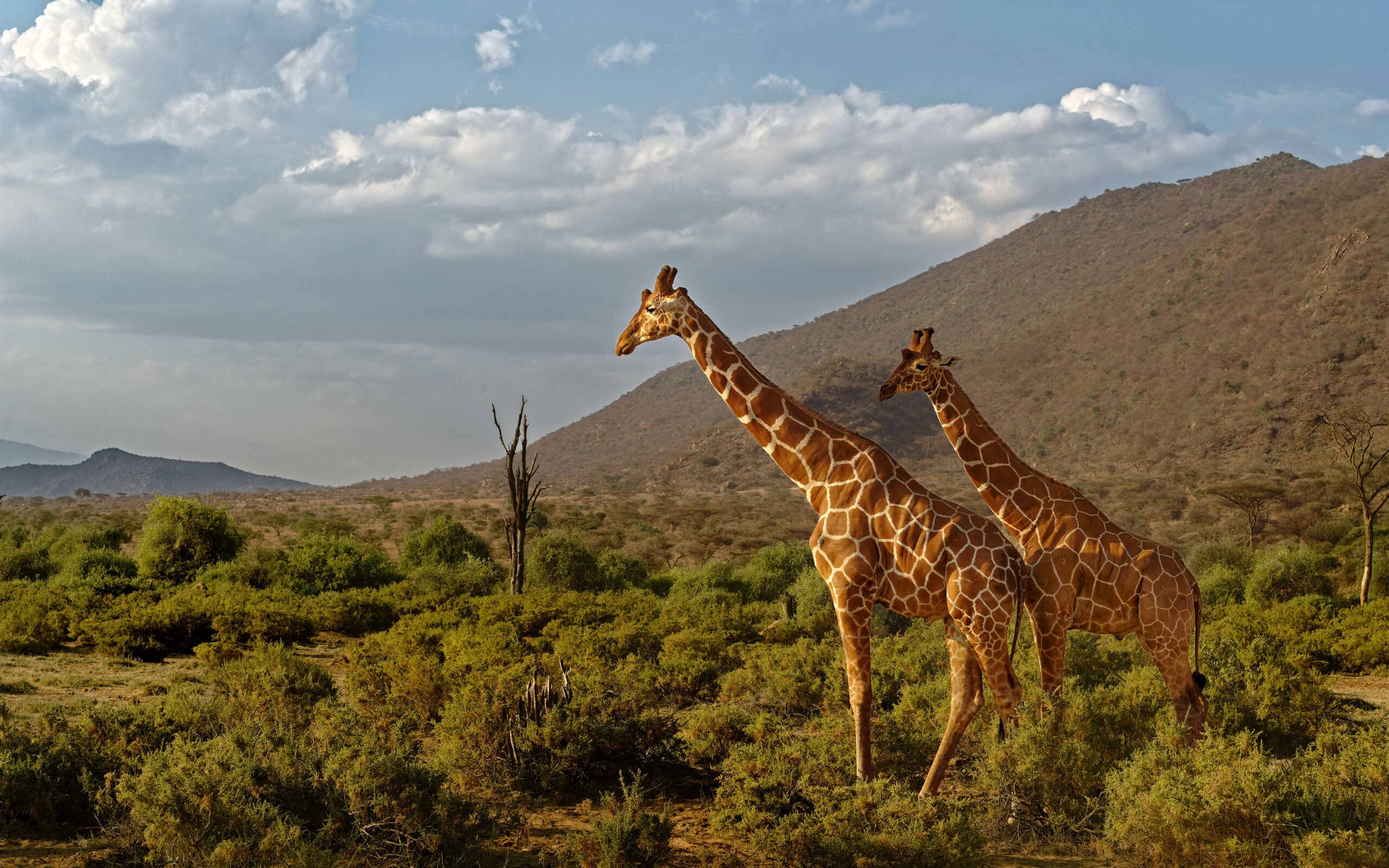
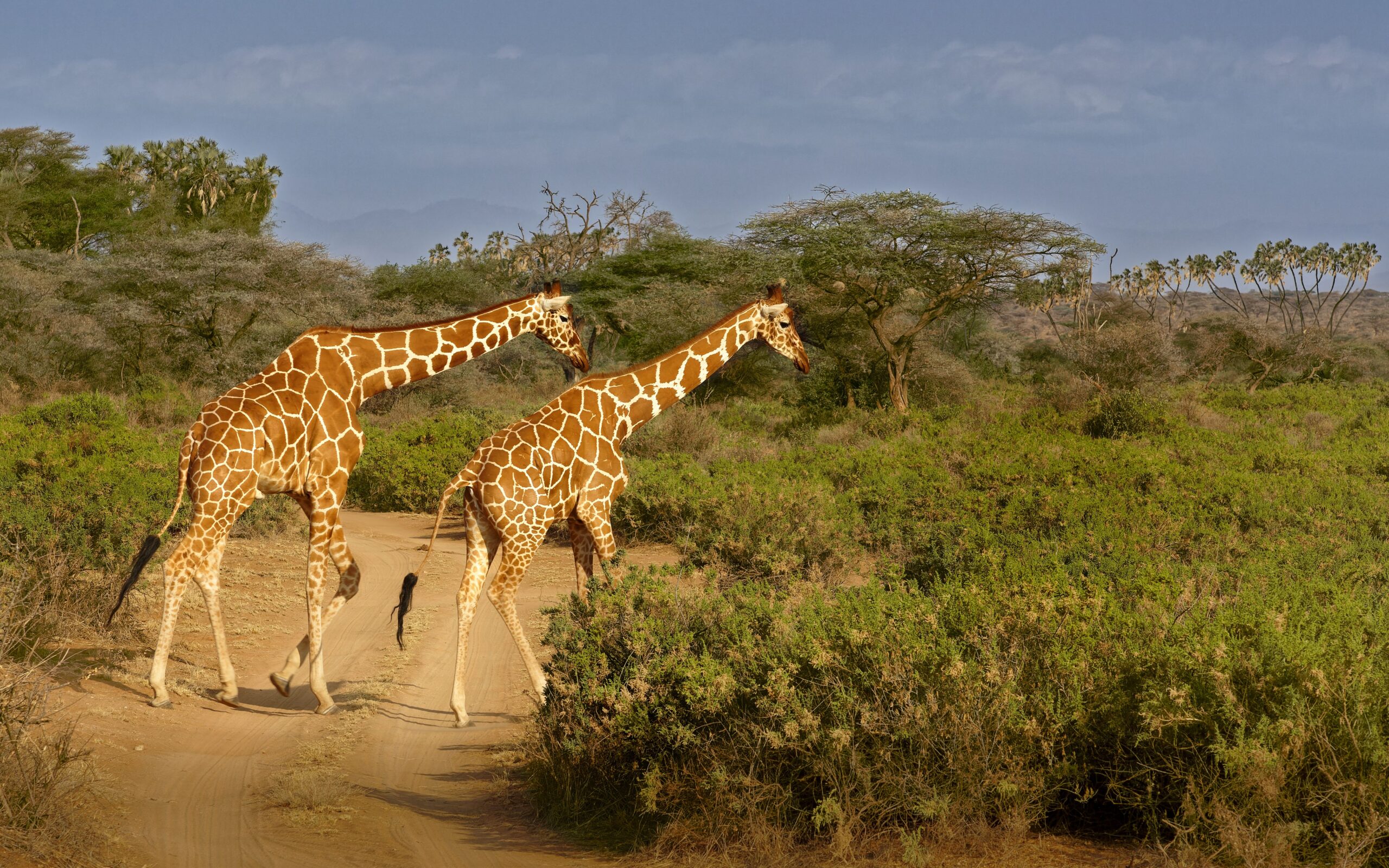
| Signature species | Grevy’s zebra, reticulated giraffe, Beisa oryx, gerenuk and Somali ostrich. |
| Entry fee (non-resident adult) | USD 85 per 24 hours. Confirm before travel. |
| Best months | June to October and January to February. |
Where Is Samburu National Reserve?
Samburu National Reserve is in Samburu County in northern Kenya. It lies on the north bank of the Ewaso Ng’iro River, about 350 km north of Nairobi by road. The nearest town is Archer’s Post, beside the main entrance, Archer’s Gate. Isiolo is the last large town before it.
The reserve covers about 165 square kilometres. Its altitude ranges from roughly 800 to 1,230 metres. That makes it much smaller than the Maasai Mara, Tsavo or Laikipia, and the size shapes the safari. Game drives are short hops between river, plain and hill. You are rarely more than a few kilometres from water.
Three things define the reserve.
First, the river. The Ewaso Ng’iro is the only dependable water for a very large area. Doum palms and riverine forest line it, and nearly all the wildlife traffic runs to and from it.
Second, the dryness. Away from the river the ground is thorn scrub, acacia woodland, rocky ridges and open gravel plains. Koitogor Hill rises inside the reserve. Mount Ololokwe, a flat-topped mountain, is a landmark elsewhere in Samburu County, but it is not part of the reserve’s game-drive circuit.
Third, the species. Samburu sits at the edge of the Somali-Maasai arid zone. That is why northern animals such as Grevy’s zebra, the gerenuk and the Somali ostrich appear here and not on the Mara plains.
How It Differs from Southern Kenya
The Mara and Amboseli are open grassland with big herds and heavy vehicle traffic at popular sightings. Samburu is hotter, drier and bushier. Sightings tend to cluster along the river rather than across wide plains. Visitor numbers are generally lower. You trade open views and migration spectacle for a different species list and a quieter feel.
Who It Suits
Samburu suits travellers who care about particular animals, photographers, birders, and repeat visitors who have already done the Mara. It also works well as a second stop after Ol Pejeta or Laikipia. It is a weaker fit if your main aim is the Great Migration or if you only have two days and cannot spare the driving time.
From Nairobi by Road
The standard route runs north through Thika, Nyeri and Nanyuki, then on to Isiolo and Archer’s Post. Nanyuki sits on the equator, and Mount Kenya stays to your west for much of the drive. The road distance to Archer’s Gate is about 350 km.
Plan for 5.5 to 7 hours. Traffic out of Nairobi, towns on the way, trucks around Isiolo and roadworks all change the real time. Most operators leave Nairobi between 6:30 and 7:30 am to arrive for lunch. Do not plan a tight connection around a road journey.
The main road is tarmac to Archer’s Post. Inside the reserve the tracks are sand, gravel and rock, with dry riverbeds (luggas) to cross.
By Air
Airkenya publishes a daily service from Wilson Airport in Nairobi to Samburu, serving the Kalama and Buffalo Springs airstrips. Flight time is roughly 45 to 60 minutes depending on routing. Scheduled flights can need a minimum number of passengers per airstrip, and schedules change by season. Charter flights are available if you want your own timing.
Practical Points About Flying
- Camps usually collect you at the airstrip. Transfers are often 15 to 45 minutes and often count as a short game drive.
- Small aircraft take soft bags only. Check the airline’s weight limit before you pack.
- Confirm which airstrip your camp uses. Some camps use Kalama, others Buffalo Springs.
- Samburu connects by air to the Maasai Mara through Wilson Airport. Check connection timings with your operator.
From Other Safari Areas
Ol Pejeta: Operators quote roughly 3 to 4 hours by road, depending on gate, stops and which part of the conservancy you leave from. This is the most natural link. The route runs Archer’s Post, Isiolo, Nanyuki and then Ol Pejeta.
Lake Nakuru: This is a long day. The road runs via Nanyuki, Nyahururu and Thomson’s Falls, and takes about 7 to 8 hours with stops.
Maasai Mara: There is no practical direct road link. By road you go via Nairobi or Nakuru, which takes the better part of a day or more. Most travellers fly via Wilson Airport instead.
Nairobi: Covered above. Return trips follow the same road.
Planning from the capital? See our safaris from Nairobi.
Who Sets the Fees
Samburu County Government manages Samburu National Reserve and sets its fees through the county’s annual Finance Act. Because of this, the fees do not follow the KWS national park schedule, and they can change between years.
Current Published Rates
At the time of writing (October 2026), the most widely published 2026 rates for non-residents are:
Resident and citizen rates are published inconsistently. Kenya citizen and East African adult figures in the range of KES 500 to 800, and resident adult figures in the range of KES 1,000 to 1,600, appear on different pages. Carry ID or a valid permit, and confirm the current figure at the gate.
Camping, per person per night, as published: non-resident adult about USD 25 to 30, non-resident child about USD 15. Special campsites carry a separate booking fee.
Vehicle fees are charged on top. An older tariff listed KES 400 for vehicles under six seats and KES 1,000 for vehicles with 6 to 12 seats. Confirm the current vehicle fee.
How Fees Work
- The fee is valid for 24 hours from entry. An afternoon drive and a morning drive can fall under one ticket if timed well.
- Fees are paid at the gate, usually Archer’s Gate. Sources mention cash in USD or KES, and some operators report card and M-Pesa acceptance. Do not rely on cards. Bring cash.
- Accommodation is charged separately from park fees. Many lodge package rates exclude park fees. Check the wording.
- Camps on neighbouring conservancies such as Kalama, West Gate and Namunyak charge conservancy fees, not reserve fees.
- Samburu does not publish separate high-season and low-season entry fees. The Mara does.
- Buffalo Springs and Shaba are managed by Isiolo County and have their own fee schedules. Some travellers report moving between Samburu and Buffalo Springs on one ticket. Ask your operator or the gate before you rely on this.
There is no single Samburu safari price. The total depends on seven things.
- Park fees. USD 85 per adult per day at current published rates, plus a vehicle fee.
- Accommodation. The biggest swing factor, from about USD 130 a night at basic lodges to more than USD 1,800 per person at top camps.
- Vehicle and guide. A shared vehicle costs far less per person than a private one. A private 4x4 with a driver-guide adds a daily cost that you split by the number in your group.
- Meals. Full board, half board or all-inclusive. All-inclusive camps usually include drinks and activities.
- Flights versus road. Flying saves about a day each way but costs more than driving.
- Transfers. Airstrip transfers, Nairobi pick-ups and any extra legs.
- Activities and community visits. Camel walks, bush meals, cultural visits and elephant sanctuary day trips are sometimes included and sometimes extra.
Indicative Planning Ranges
Budget: roughly USD 200 to 350 per person per day, including park fees. Expect camping or a basic lodge, a shared vehicle and a road transfer.
Mid-range: roughly USD 400 to 750 per person per day. Expect a river-view tented camp or lodge, a private vehicle with a guide and full board.
Luxury: roughly USD 900 to 2,000 or more per person per day. Published 2026 rates at top-end camps such as Sasaab run from about USD 1,300 to USD 1,850 per person per night, fully inclusive.
Season matters. Rates are highest from about July to October and over Christmas and New Year. They are lower in April to June, when the long rains discourage travel.
Who Pays What
For ready-made itineraries and prices, see our Kenya safari packages.
What the Special Five Is
“Samburu Special Five” is an informal tourism label. It is not an official designation. It refers to five species that visitors can see in Samburu and that are rare or absent on the southern safari circuit.
These animals are not found only in Samburu. Grevy’s zebra and reticulated giraffe also occur in other northern areas, and some appear in Laikipia and Meru. Samburu is simply one of the easiest places to see all five in one trip.
Other Wildlife
Elephants: Samburu is best known for them. Several hundred are present in the Samburu ecosystem, and some operators quote figures near 900. Save the Elephants has tracked and named individual elephants and families here for decades, including the large family known as the Royals.
Lions: Present across the three reserves. In the early 2000s a lioness named Kamunyak became widely known for repeatedly adopting oryx calves.
Leopards: Samburu has some of Kenya’s more consistent leopard sightings, helped by the river’s trees and rocky ground. Dry months give the best chance.
Cheetahs: Present, and often seen on open ground. Numbers vary.
Buffalo, hippos and Nile crocodiles: Hippos and crocodiles live in the Ewaso Ng’iro. Buffalo are present but are not as numerous as elsewhere.
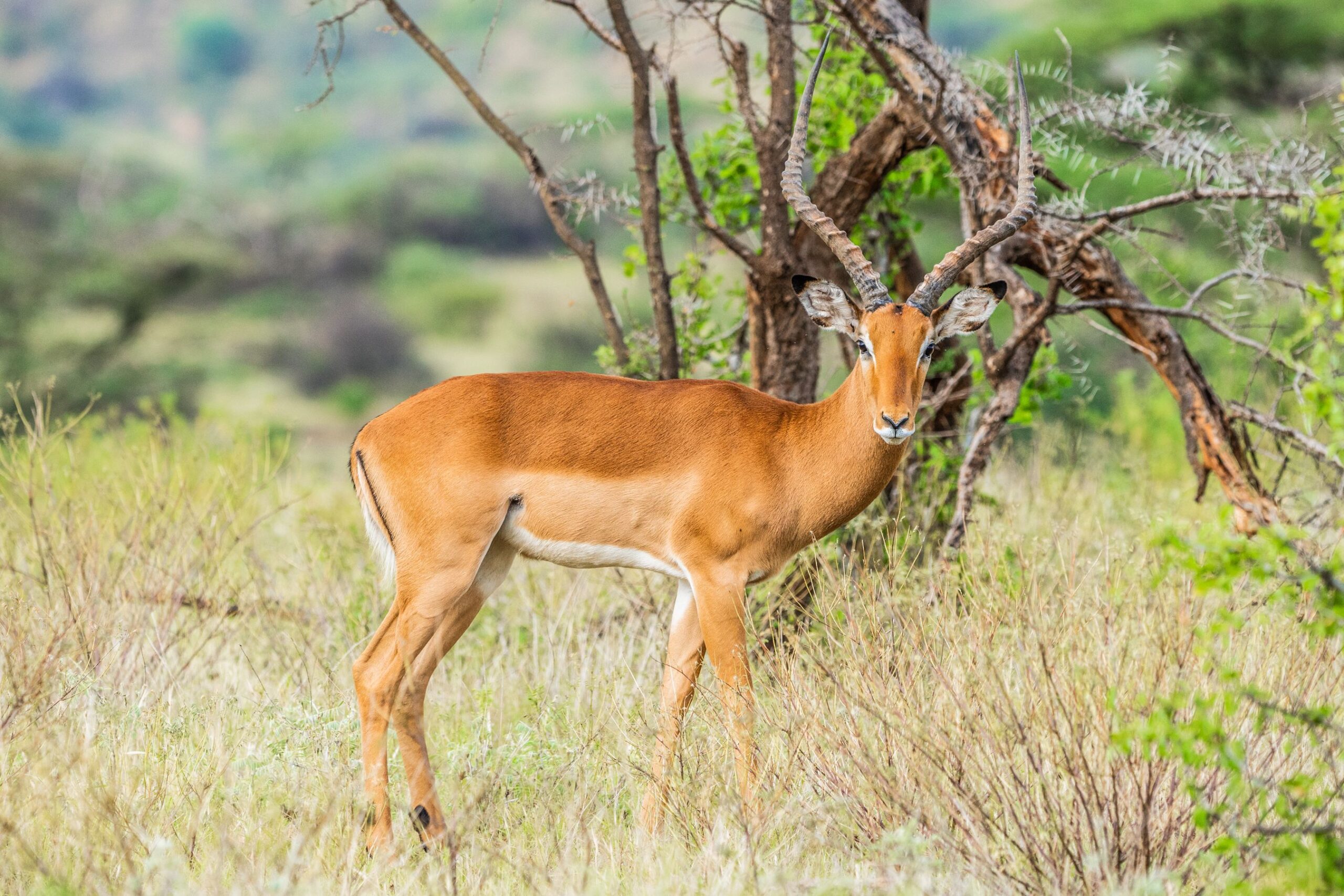
Plains species also appear, including impala, Grant’s gazelle, Defassa waterbuck, warthog, baboons and dik-dik.
Can You See the Big Five in Samburu?
Not in the usual sense. Elephant, buffalo, lion and leopard are present. Rhinos are not part of the normal Samburu game-drive picture. Black rhinos were reintroduced in 2015 at the community-run Sera Rhino Sanctuary in Sera Conservancy, further north in Samburu County, and white rhinos were added later. If rhinos matter to you, add Sera or Ol Pejeta.
Bird counts depend on the area surveyed. Published figures for the Samburu ecosystem run from about 350 to more than 450 species.
Samburu sits at the edge of the Somali biome, so it holds dry-country species that birders cannot easily find on the Mara or around Nairobi. Examples that are reliably mentioned include:
The river and doum palms also hold waterbirds and kingfishers.
Timing: Palearctic migrants arrive from about November and stay until April, so birding is strongest then. The dry season still gives excellent resident-bird viewing and easier mammal sightings. Many birders choose November to April and accept some rain risk.
Ask for a guide with bird knowledge. Your driver-guide’s skill matters more here than the month.
Game Drives
Standard drives run in the early morning and late afternoon, when animals are most active and temperatures are lower. The reserve’s small size means two drives a day cover a lot of ground.
Reserve Rules
Game drives in the reserve stay in vehicles and on the tracks. Walking inside national reserves is generally not allowed. Night drives are also generally not permitted inside the reserve. Some conservancy-based camps offer guided walks and night drives on their own land. Ask your camp which activities it can legally run, and where.
Other Activities, Depending on the Camp
- Guided nature walks near camp or on conservancy land.
- Camel rides.
- Bush breakfasts and sundowners.
- Birdwatching with a specialist guide.
- Visits to Samburu villages and community projects.
- River activities when the water is high (a few camps offer this).
- Day trips to Reteti Elephant Sanctuary, run by the Namunyak community, which rehabilitates orphaned elephants. It is several hours from the reserve, so it needs planning.
Samburu is arid, with two rainy periods.
June to October: The main dry season. Vegetation thins and animals concentrate along the Ewaso Ng’iro. Leopard and elephant sightings are strong. Days are hot and dry. This is also the busiest and most expensive period.
November: Short rains. They can be heavy or fail altogether. Quieter and cheaper, but roads can become slippery and wildlife spreads out. Migratory birds begin to arrive.
December to March: A shorter dry spell. Game viewing is generally good but varies with how much rain fell in November. Days are hot. Christmas and New Year are expensive.
April and May: Long rains. Landscapes turn green, wildlife disperses and some tracks become difficult. Camps are quieter and rates are lower. This can suit birders, photographers who want green backdrops and travellers on a budget, but it is a weaker period for dependable game viewing.
Trade-offs in Plain Terms
Dry season gives the best chance of concentrated sightings but costs more and attracts more vehicles. Wet season gives lower prices and green scenery but harder viewing and sometimes poor roads.
Month Questions Travellers Search
Camps and lodges fall into four broad groups. Names below are examples seen in published 2026 listings. Confirm they are operating and get a current rate before you book.
Luxury Camps on Conservancy Edges
Sasaab and Saruni Samburu sit on community conservancy land at the edge of the reserve. Both sell all-inclusive stays, with guided walks, private game drives and community experiences often built in. Published 2026 rates for Sasaab alone run from about USD 1,300 to 1,850 per person per night. Saruni Samburu is cheaper but still in the luxury band. Both offer views over the conservancy.
Luxury and Upper Mid-range River Camps
Elephant Watch Camp (run in association with Save the Elephants), Soroi Larsens Camp and Elephant Bedroom Camp are small tented camps on or near the river. They suit travellers who want to watch elephants from camp. Rates range from about USD 500 to well over USD 1,500 per person depending on the camp and season.
Mid-range Lodges and Tented Camps
Samburu Intrepids Tented Camp, Ashnil Samburu Camp (Buffalo Springs side), Samburu Sopa Lodge, Samburu Simba Lodge and Samburu Game Lodge cover the middle of the market. Many have pools, river views and set menus. Published guide rates run from about USD 150 to 600 per person depending on the lodge and season. Samburu Intrepids is a common choice for families.
Budget and Camping
Samburu Riverside Tented Camp is a budget tented option inside the reserve. Public campsites exist in Samburu and Buffalo Springs, with basic facilities. Lion King Bush Camp offers a more self-catering style.
What to Ask When Choosing
- Is the camp inside the reserve, in a conservancy, or in Buffalo Springs? This affects fees and activities.
- Does the rate include park fees and drinks?
- Which airstrip does the camp use?
- Are walks and night drives offered?
- Is the camp suitable for children, and at what minimum age?
For help choosing a camp, contact us.
The three reserves are neighbours, but they are separate protected areas with separate managers.
Samburu National Reserve: About 165 square kilometres. North of the Ewaso Ng’iro River. Managed by Samburu County. Main entrance: Archer’s Gate.
Buffalo Springs National Reserve: About 131 square kilometres. South of the river, opposite Samburu. Located in Isiolo County and managed by Isiolo County. Named for its natural springs, which keep water flowing through dry months. The springs and swamps attract wildlife, especially when conditions are dry.
Shaba National Reserve: About 239 square kilometres, gazetted in 1974. East of the other two, also in Isiolo County. It is rockier and more rugged, with springs, riverine forest and lava outcrops. It is quieter and less visited.
Together they form the wider Samburu ecosystem. Samburu and Buffalo Springs are the two most visited. They share the same wildlife and river, and are joined by a bridge. Elephants and other animals move freely between the three, and conservation work by groups such as Save the Elephants covers all three reserves.
Why Visit More Than One
Buffalo Springs gives a different set of tracks and a natural pool. Shaba adds rugged scenery and fewer vehicles. If you stay three nights or more, a drive into Buffalo Springs is easy to add. A day in Shaba needs more planning because the reserve is more remote.
The Ewaso Ng’iro flows from the Mount Kenya and Aberdare highlands. Its name is usually given as meaning “brown water”. It is the only reliable water source for a huge area.
How It Shapes the Safari
Water draws elephants, giraffe, zebra and antelope in daily patterns. In dry months animals pack closely along the river. Predators, especially leopards, work the same corridor. In wet months the rest of the land fills with temporary water, animals spread out and sightings become harder.
Vegetation
Along the river grow tall acacias, riverine forest and doum palms. Elephants feed on the doum palm fruit. Away from the river the land turns to thorn scrub and open gravel plains. Rocky ridges and hills such as Koitogor give the area its relief.
Why the Habitat Matters for Wildlife
The dry shrubland suits Beisa oryx, gerenuk and Somali ostrich. The river forest suits leopards, monkeys and many birds. Open gravel plains suit Grevy’s zebra and reticulated giraffe. Different species use different pockets, so a guide who knows each pocket matters more than speed.
Surroundings
Community conservancies such as West Gate, Kalama and Namunyak extend the protected land beyond the reserve boundary. Wildlife moves across these areas, and livestock grazing is part of the pattern.
The Samburu are semi-nomadic pastoralists who live across Samburu County and nearby areas. They speak a dialect of Maa, a language also spoken by Maasai, and the two communities are related. They are distinct peoples with their own history, and visitors should not treat them as the same.
Wildlife and people share this landscape. Cattle, goats and camels graze beside the reserve, and community land makes up much of the wider ecosystem.
Cultural Visits
Many camps and operators arrange visits to Samburu villages (manyattas). These range from short, staged stops to longer visits arranged with a community. Quality varies widely.
Ask These Questions
- Who runs the visit and who receives the money?
- Is the visit arranged with the community, or is it only a stop for photographs?
- Is photography allowed, and do I ask first?
- How long will it take, and can I take a guide who speaks the language?
A women-run village near Archer’s Post, Umoja, is a well-known example of a community initiative that receives visitors. Confirm current arrangements before including it.
Community Conservation
Northern Rangelands Trust conservancies are owned and run by local communities. Sera Rhino Sanctuary and Reteti Elephant Sanctuary are community projects with local rangers and staff. Staying at camps on community land often channels bed-night and conservancy fees to those communities.
A Respectful Approach
Treat visits as meetings, not performances. Ask permission before photographing people. Do not hand out sweets or money to children. Do not assume any single experience represents the whole community.
There is no overall winner. The right place depends on what you want to see and how long you have.
Samburu vs Maasai Mara
Samburu vs Amboseli
Samburu vs Tsavo
Samburu vs Ol Pejeta
Samburu + Ol Pejeta
This works best. The two are linked by one main road, the drive is about 3 to 4 hours, and the wildlife complements each other. Samburu gives the Special Five. Ol Pejeta gives rhinos and chimpanzees. A typical split is 2 to 3 nights in Samburu and 2 nights in Ol Pejeta, then back to Nairobi by road or by air from Nanyuki. For routing detail, contact us.
Samburu + Lake Nakuru
It works if you are heading west to the Mara anyway. The drive is long, so many itineraries break it with a night near Nanyuki, Laikipia or Nyahururu. Nakuru is known for rhinos and its birdlife, but flamingo numbers vary with lake conditions. Flamingo sightings are never guaranteed.
Samburu + Maasai Mara
By road this is a very long haul. Most travellers fly Samburu to Wilson Airport in Nairobi, then Wilson to the Mara, often connecting the same day. A sensible shape is 3 nights in Samburu and 3 to 4 nights in the Mara, so about 7 to 8 days with Nairobi nights. Fitting both into 5 days by road is exhausting.
Samburu + Nairobi
A short Kenya trip can be built as Nairobi, then 2 nights in Samburu by air, then back to Nairobi. By road, 2 nights is the minimum and 3 is better because the driving takes most of two days.
Browse our Kenya safari packages for ready-made routes.
Camping
Camping is permitted. Published options include
- A public campsite near the river by the reserve headquarters. It is basic, and travellers report habituated baboons, so keep food locked away.
- Special campsites on the river. These need advance booking.
- A public campsite at Buffalo Springs, by the natural pool.
Camping fees are paid with your entry fee. Published rates are about USD 25 to 30 per adult per night for non-residents and about KES 500 for citizens, with special campsites carrying a booking fee. Bring your own tent, food, water and cooking gear. Facilities are limited.
Self-drive
Self-drive is allowed. Travellers do it with their own or hired vehicles and a reserve ticket.
What to Know
- Use a 4x4 or a high-clearance vehicle. Tracks are sandy and rocky, and dry riverbeds can trap low vehicles.
- Large or underpowered vehicles sometimes get stuck in sand, which blocks the track for others.
- Phone signal is patchy. Tell your camp or the gate where you are going.
- Download offline maps in advance. Signs are limited.
- Stay in the vehicle outside designated areas, give animals space and never approach elephants or lions.
- Keep to the tracks and respect reserve opening hours. Plan to be at camp or a gate before dark.
- After heavy rain, tracks can become slippery and luggas can flood. Do not cross if you are unsure.
Why Many Travellers Prefer a Guide
A driver-guide finds animals faster, knows which tracks are open, deals with breakdowns and handles gate procedures. In a reserve where sightings cluster in particular pockets, local knowledge often makes the difference between seeing leopards and missing them.
Protection of the area goes back to the mid-20th century. Sources describe the reserve as formally established in the early 1960s, with 1962 commonly cited, backed by support from the Elsa Trust. It is owned and managed by Samburu County Government.
Buffalo Springs was gazetted in 1985 and Shaba in 1974. Both are managed by Isiolo County.
The area is often linked to the Born Free story of George and Joy Adamson. Elsa’s story is usually tied to Meru National Park, so treat claims that Elsa lived in Samburu with caution. Joy Adamson worked in Shaba in the 1970s, where she established a camp for rehabilitating leopards.
Conservation
Elephants: Save the Elephants runs long-term monitoring of the Samburu elephant population, identifying individuals and families. The elephants were hit hard by ivory poaching in the 1970s and 1980s. Threats now include human-wildlife conflict and snaring outside the protected areas.
Community conservancies: The Northern Rangelands Trust supports community-run conservancies around the reserves. They extend protected land and provide jobs and income for local families.
Rhinos: Black rhinos had not been seen in Samburu since the late 1980s until the 2015 reintroduction at Sera Rhino Sanctuary. Sera now holds black and white rhinos and is run with community rangers.
Grevy’s zebra: Remains Endangered. Conservation depends on protecting water access and grazing in northern Kenya.
Challenges: drought, competition for grazing and water, and unregulated tourism are ongoing concerns.
What to Pack
- Neutral clothing (khaki, olive, tan). Avoid bright colours and black or dark blue.
- Layers. Early mornings are cool and midday is hot.
- A wide-brimmed hat, sunglasses, sunscreen and a scarf for dust.
- Closed shoes or boots.
- Binoculars. They matter more in Samburu than almost anywhere else for birds and distant animals.
- A camera with a zoom lens and spare batteries. Dust protection helps.
- A refillable water bottle.
Connectivity
Mobile coverage is patchy inside the reserve and stronger around Archer’s Post and Isiolo. Many camps offer limited Wi-Fi. Do not plan to work from the bush.
Payments
Carry some Kenya shillings and US dollars in cash for gate fees and tips. Card and M-Pesa acceptance at gates is unreliable. Camps usually take cards.
Health and Safety
Northern Kenya is a malaria area. Ask your doctor or a travel clinic about prevention before you go. Follow your guide’s instructions around wildlife. Stay in the vehicle during drives unless your guide says otherwise.
Roads and Travel Times
Allow generous buffers. Do not schedule international flights on the same day you drive back from Samburu.
Families
Many camps accept children but set minimum ages for some activities. Ask about child rates, family tents and the reserve’s children’s fees.
Accessibility
Published information is limited. Safari vehicles have high steps, and camps often use paths and steps. If you need step-free access, ask each camp directly.
Responsible Tourism
Choose camps that employ local staff and pay conservancy fees. Keep to tracks. Do not feed animals. Keep your distance from elephants and predators. Ask before taking photos of people.
Where is Samburu National Reserve?
It is in Samburu County in northern Kenya, on the north bank of the Ewaso Ng’iro River. It lies about 350 km north of Nairobi by road, beside Archer’s Post. Buffalo Springs National Reserve is across the river and Shaba National Reserve is to the east.
Is Samburu National Reserve worth visiting?
Yes, if you want northern species, elephants, leopards and a quieter reserve. It is a weaker choice if your only goal is the Great Migration or if you have just two days and no flight. It works well as a second or third stop on a longer Kenya trip.
What is Samburu National Reserve known for?
Large elephant herds, strong leopard sightings, the Ewaso Ng’iro River and the Samburu Special Five. It is also known among birders for dry-country species.
How far is Samburu from Nairobi?
About 350 km by road, usually 5.5 to 7 hours depending on traffic and stops. Flying from Wilson Airport takes roughly 45 to 60 minutes.
How do you get to Samburu National Reserve?
Drive north via Nyeri, Nanyuki and Isiolo to Archer’s Gate, or fly from Wilson Airport to the Kalama or Buffalo Springs airstrips. Most visitors arrive on a guided safari with transfers arranged.
What animals are found in Samburu National Reserve?
Elephants, lions, leopards, cheetahs, buffalo, hippos, Nile crocodiles, giraffe and plains game, plus the Special Five. Sightings vary and are never guaranteed.
What are the Samburu Special Five?
The Grevy’s zebra, reticulated giraffe, Beisa oryx, gerenuk and Somali ostrich. It is an informal label for northern species that are rare or absent on the southern circuit.
Can you see the Big Five in Samburu?
Not reliably. Elephant, buffalo, lion and leopard are present, but rhinos are not part of the normal Samburu game-drive picture. For rhinos, add Ol Pejeta or Sera Rhino Sanctuary.
What is the best time to visit Samburu?
June to October and January to February are the main dry periods, with the best concentration of wildlife along the river. April, May and November bring rain, lower prices and more difficult conditions.
How many days do you need in Samburu?
Two nights is the minimum, and three is better. Add a night if you want to visit Buffalo Springs, Shaba or a nearby conservancy, or if you are driving from Nairobi.
How much does a Samburu safari cost?
It depends on camp, season, vehicle and group size. As a rough planning guide, budget trips start around USD 200 to 350 per person per day, mid-range around USD 400 to 750, and luxury from about USD 900 upward. Get an itemised quote.
What are the Samburu National Reserve entry fees?
Published 2026 rates show USD 85 per non-resident adult and USD 50 per non-resident child for 24 hours, plus a vehicle fee. Older pages still show USD 70 and USD 40. Confirm at booking.
Can you self-drive in Samburu?
Yes, with a 4x4 or high-clearance vehicle and a valid reserve ticket. Tracks are sandy and rocky, signal is patchy and signage is limited. Many first-time visitors prefer a guide.
Is camping allowed in Samburu National Reserve?
Yes. There is a public campsite near the river, special campsites that need booking, and a public campsite at Buffalo Springs. Facilities are basic, and baboons can be a problem at the Samburu public site.
Where should I stay in Samburu?
It depends on budget and style. Luxury travellers often choose conservancy-edge camps such as Sasaab or Saruni Samburu. River camps such as Elephant Watch Camp or Larsens suit elephant watchers. Intrepids, Ashnil and Sopa cover mid-range budgets.
Can Samburu be combined with Ol Pejeta?
Yes, and it is the easiest pairing. The drive is about 3 to 4 hours, and the two reserves complement each other: Special Five in Samburu, rhinos and chimpanzees at Ol Pejeta.
Can Samburu be combined with Maasai Mara?
Yes, but by air rather than road. Fly from Samburu to Wilson Airport and connect to the Mara. Allow at least 7 to 8 days for both.
Is Samburu good for a first safari?
It can be. Sightings are easy to reach and the reserve is compact. The heat and the travel time are the main drawbacks. Many first-timers pair it with Ol Pejeta or the Mara.
What is the difference between Samburu and Maasai Mara?
The Mara is open grassland with large herds, big cats and the migration. Samburu is dry bush along a river, with northern species and fewer vehicles.
What is the difference between Samburu, Buffalo Springs and Shaba?
They are three separate reserves in the same ecosystem. Samburu is north of the river, Buffalo Springs is south, and Shaba is east. Samburu is managed by Samburu County. Buffalo Springs and Shaba are managed by Isiolo County. They have separate fees.