Lake Manyara National Park, Tanzania
A compact Rift Valley park of groundwater forest, elephants, baboons, birdlife and a changeable alkaline lake: an easy first stop on the road to Ngorongoro and the Serengeti.
Lake Manyara National Park is a compact national park in northern Tanzania. It sits on the floor of the Great Rift Valley, between the escarpment wall and the shallow alkaline lake it is named after. It is known for elephants, large baboon troops, rich birdlife, seasonal flamingos and its reputation for tree-climbing lions. What sets it apart from Tarangire, Ngorongoro and the Serengeti is how quickly the habitats change. In one morning’s drive you pass through groundwater forest, acacia woodland, open floodplain and lakeshore.
Most travellers visit Lake Manyara as a half-day or full-day stop on the road from Arusha towards Ngorongoro and the Serengeti. It suits first-time safari travellers, birders, families with limited time, and anyone who wants a gentler introduction before the bigger parks. It is not the place for a long, wildlife-dense stay, and this guide explains why.
| Location | Northern Tanzania, Great Rift Valley floor, beside the town of Mto wa Mbu |
| Managed by | Tanzania National Parks Authority (TANAPA) |
| Status | Game reserve from 1957, national park since 1960, part of a UNESCO biosphere reserve since 1981 |
| Size | Roughly 330 km² is the figure most often quoted. Much of that is lake surface, and how much depends on water levels. |
| Main habitats | Groundwater forest, acacia woodland, grassland and floodplain, swamps, alkaline lake, Rift Valley escarpment |
| Known for | Elephants, baboons and other primates, tree-climbing lions (not guaranteed), waterbirds, seasonal flamingos, hot springs |
| Birds | More than 350 recorded species, according to TANAPA |
| Main activities | Game drives; also, depending on current availability, a treetop canopy walkway, canoeing, night game drives, and cultural and cycling tours around Mto wa Mbu |
| Typical visit | Half day to one full day; an overnight stay suits birders and slower itineraries |
| Best combinations | Ngorongoro Crater, Tarangire, Serengeti |
| Access | About 2 hours by road from Arusha on tarmac; nearby Lake Manyara airstrip for light aircraft |
Lake Manyara National Park lies in northern Tanzania, roughly 120–126 km west of Arusha by road. It occupies a narrow strip of land between the Rift Valley escarpment to the west and Lake Manyara to the east. Most of the park’s land is a narrow strip between the Gregory Rift wall and the lake, and the park protects only the north-western part of the lake. That is an important distinction. Lake Manyara the lake is far larger than Lake Manyara National Park, and much of its shoreline sits outside protected land.
Key Reference Points
Mto wa Mbu is the busy market town immediately outside the main park gate. It is where you find budget accommodation, banana plantations, cultural walks and cycling tours.
Karatu sits on the highlands above the escarpment, about 30–45 minutes’ drive further on. It is the most common overnight base for both Lake Manyara and the Ngorongoro Crater.
The Ngorongoro Conservation Area’s Lodoare Gate is roughly 15 km beyond Karatu. The crater rim, Olduvai and the Serengeti lie past it.
Tarangire National Park is to the south-east. You reach it by driving back towards the Makuyuni junction and then south, usually about 1–1.5 hours from Mto wa Mbu.
This position is why Lake Manyara appears in so many itineraries. It sits directly on the main road from Arusha to Ngorongoro and the Serengeti, so a visit costs very little extra driving time.
The honest answer is variety packed into a small space, rather than any single headline species.
The groundwater forest. Just inside the gate, the vegetation turns tall, green and shaded. This is not rain-fed forest. It is sustained by water seeping out from the base of the escarpment. For a traveller, it means a park that looks and feels unlike the open savannah most people picture, with blue monkeys, vervet monkeys and baboons along the track.
Elephants. TANAPA historically set the park up partly to protect its elephants, and elephants remain a regular sighting in the woodland and along streams. You will usually see smaller family groups rather than the large herds Tarangire is known for in the dry season.
Tree-climbing lions. This is the park’s most famous reputation and its most misunderstood one (see the dedicated section below).
Birdlife. The mix of forest, swamp, freshwater inflows and an alkaline lake supports an unusually broad bird list for a park this size.
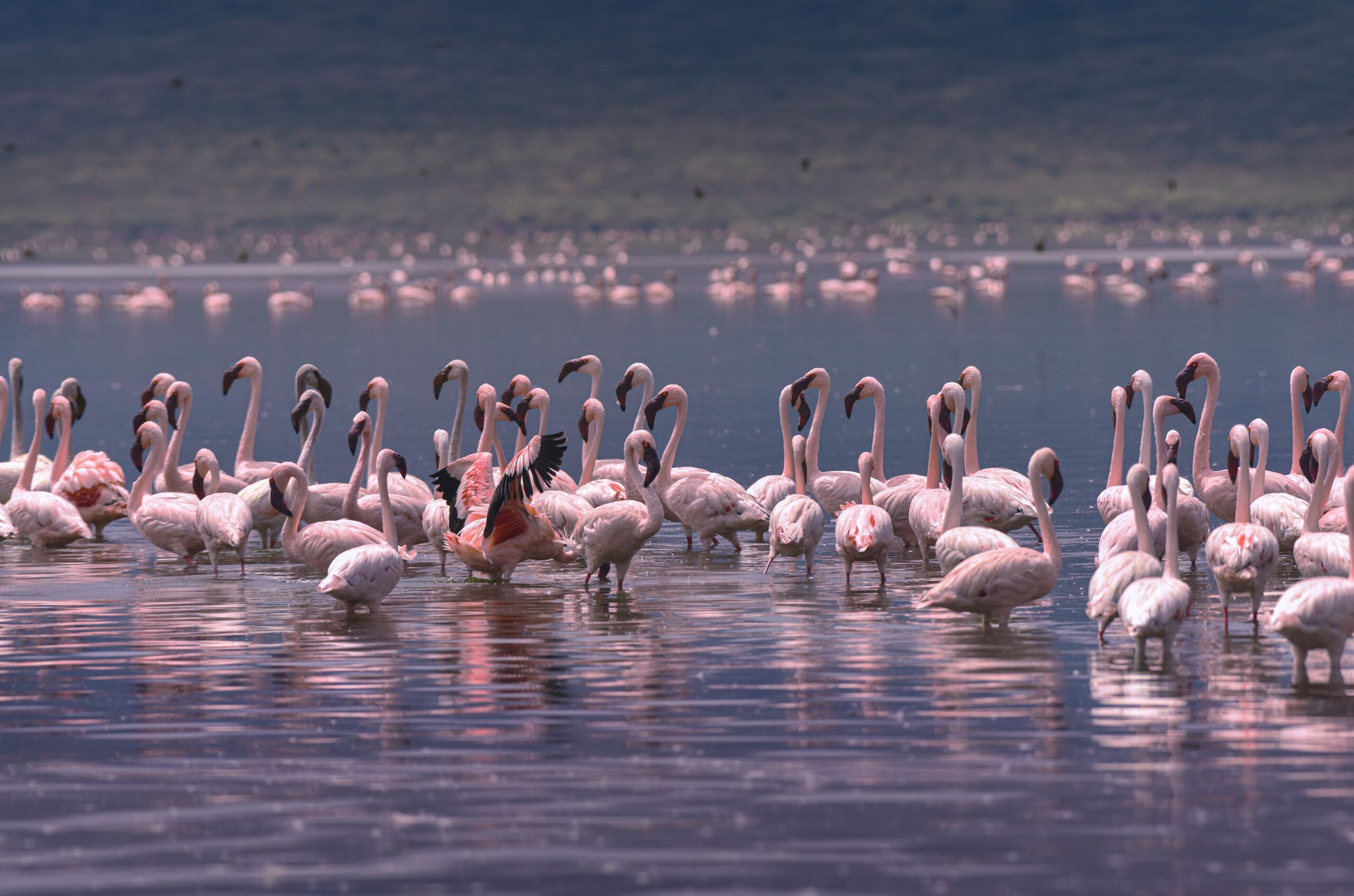
Flamingos. When conditions suit them, lesser flamingos gather on the lake in large numbers. TANAPA notes that more than two million have been counted on the lake at once, but numbers swing dramatically from month to month and year to year.
The escarpment. The Rift Valley wall rises steeply above the park and gives Manyara its distinctive backdrop. It also creates the springs that feed the forest.
Hot springs. In the south of the park, the Maji Moto springs reach about 70°C, according to TANAPA.
Likely on Most Visits
- Olive baboons, often in large troops near the gate and forest
- Blue monkeys and vervet monkeys in the forest
- Elephants in the woodland and riverine areas
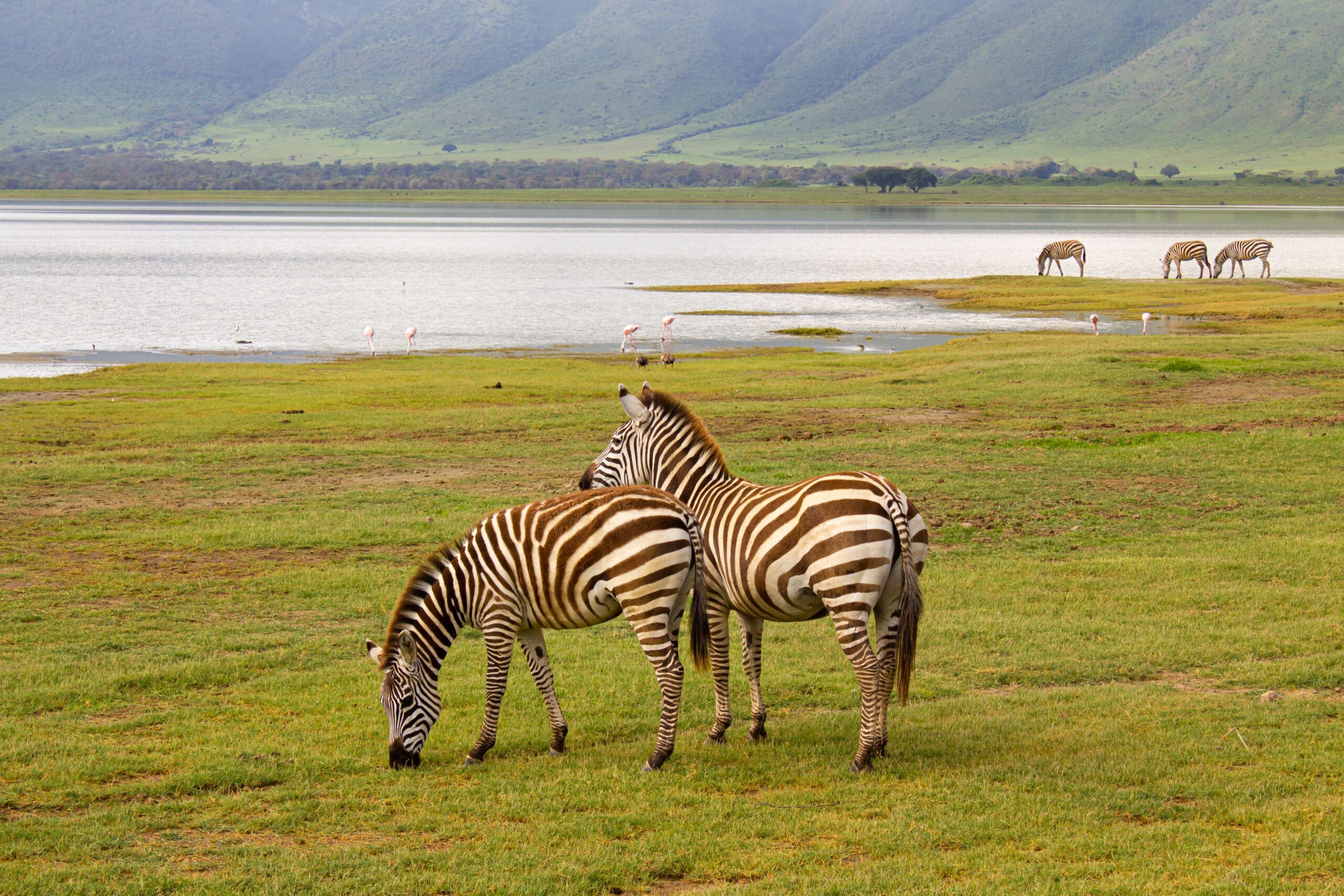
- Giraffes, zebras, wildebeest, impala and warthogs on the floodplain
- Buffalo, often on the open grassland near the lakeshore
- Hippos, especially at the hippo pool area
- Waterbuck near the water’s edge
Possible but Less Predictable
- Lions, including in trees
- Spotted hyenas
- Bushbuck and Kirk’s dik-dik in thicker cover
- Klipspringer on the escarpment rocks
Present but Rarely Seen
- Leopard, which uses the forest and escarpment but is shy
- Nocturnal species such as genets and bushbabies, more likely on a night drive
Habitat shapes what you see. The first stretch of forest is primate country, and experienced travellers on forums sometimes note that guides linger there too long. If time is short, ask your guide to keep moving towards the floodplain and southern woodland, where the wider range of animals tends to be.
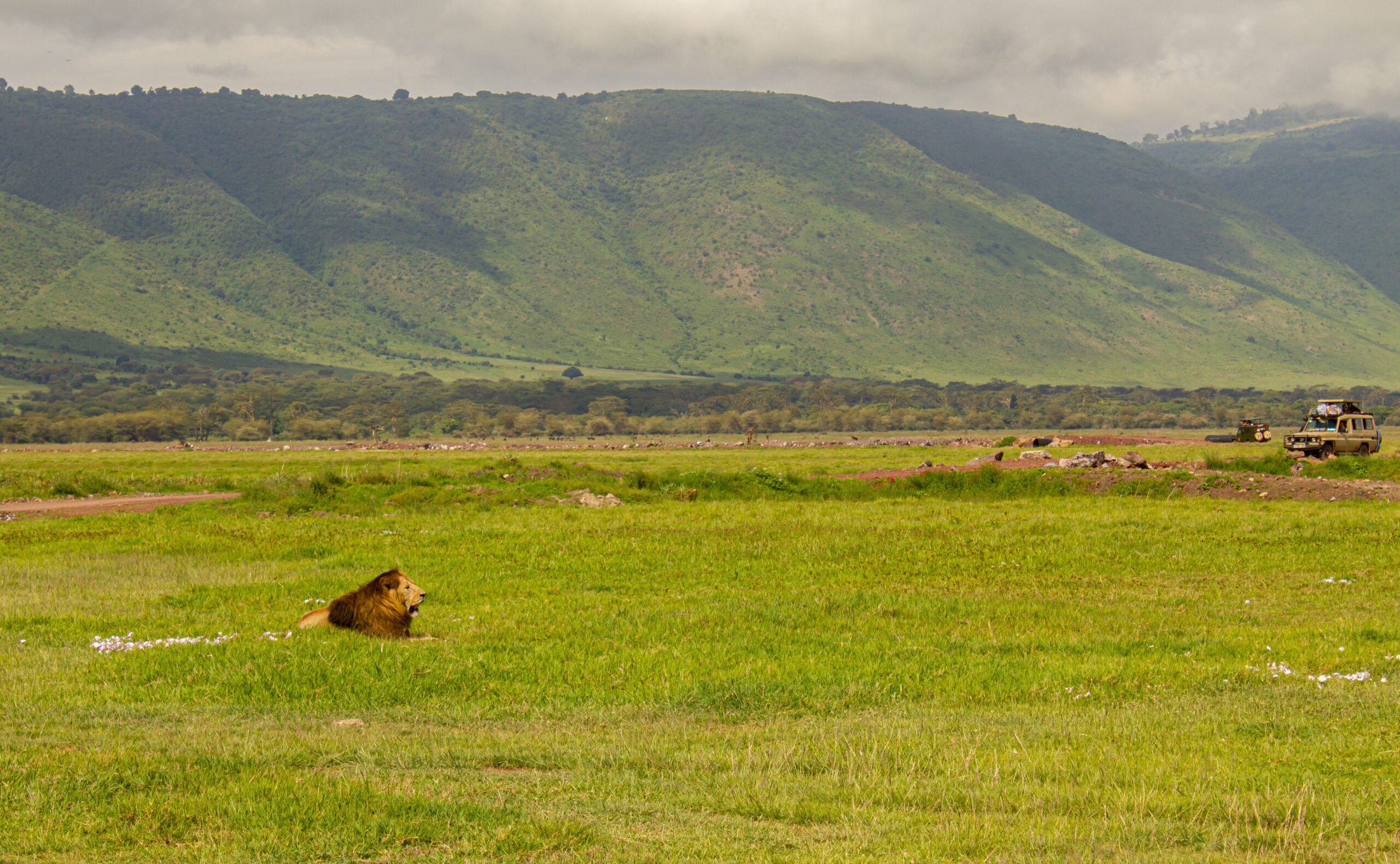
Lake Manyara became famous for lions resting in trees because the behaviour was documented here repeatedly and was easy for visitors to see from the road. Lions that climb trees are not unique to Manyara, though. The behaviour is also well known in Uganda’s Queen Elizabeth National Park, around Ishasha, and occurs occasionally elsewhere, including in Tarangire and the Serengeti.
Why lions climb is not fully settled. The most common explanations are escaping biting flies, catching a breeze, keeping a lookout, and simple learned habit within a pride. All of these are plausible, and none has been proven to be the single cause.
What to expect: lions are present in the park, but lion sightings at Manyara are inconsistent, and a lion in a tree is a bonus, not a planned outcome. Some visitors get lucky in a few hours; many leave without seeing lions at all. Any operator promising guaranteed tree-climbing lions is overselling. If lions in trees are a priority, a full day gives you more chances than a quick half day, but it still guarantees nothing.
For birders, Lake Manyara is one of the most rewarding stops in northern Tanzania for the time it takes. The park’s range of habitats means you can find forest birds, woodland species, raptors along the escarpment, and waterbirds on the lakeshore in a single drive.
Typical highlights include pelicans, yellow-billed storks, herons and egrets, African fish eagles, crowned hornbills, silvery-cheeked hornbills in the forest, and a wide range of waders and ducks at the water’s edge. Northern-hemisphere migrants add to the list from roughly November to April.
Flamingos need more careful expectations. Lake Manyara is a closed, alkaline lake with no outflow. Its level fluctuates considerably between seasons and between years, and in very dry periods it can shrink to a small saline pool. Flamingos follow food and water conditions across the Rift Valley’s soda lakes, moving between Manyara, Natron and other lakes. Some visits show a pink fringe along the shoreline. Other visits show distant specks or none at all. Ask your safari planner about recent conditions in the weeks before you travel, rather than relying on a brochure photo.
Birders should consider a full day or an overnight stay, as the best birding is early in the morning.
Lake Manyara National Park fits several ecosystems into a narrow strip because of its geology. The escarpment wall rises steeply above the lake floor, and groundwater percolating through the rock emerges at its base as springs. That steady water supply feeds tall evergreen forest that could not survive on rainfall alone.
Moving away from the springs, the forest gives way to acacia woodland, then to open grassland and floodplain, then to swamp and the alkaline lakeshore. The lake has no outlet. Water arrives through rivers from the highlands, springs and rain, and leaves only by evaporation, which is why it is salty and alkaline and why its extent changes so much.
For a visitor, this means the park looks different depending on the season and the year. In wet years the floodplain shrinks and some lakeside tracks flood. In dry years open ground expands and grazers spread out across it.
Game drives. The core activity. Most drives follow the main track from the northern gate south through forest, woodland and floodplain, with detours to the lakeshore and the hippo pool. Daytime drives are standard; the park opens at dawn.
Birdwatching. Possible on any drive, but it is worth telling your guide in advance if birds are a priority so they pace the drive accordingly.
Treetop canopy walkway. A suspended walkway through the groundwater forest near the park entrance. It opened in November 2016, is about 370 m long and reaches about 18 m above the ground. Expect to spend about an hour on it. It is a good option for families and anyone who wants to see the forest from above. It carries an extra fee and is not ideal for people uncomfortable with heights. Confirm it is operating before you travel.
Canoeing. Operators have run canoe trips on the lake, but these depend heavily on water levels and suitable launch points. Treat canoeing as a possible add-on to confirm close to your travel date, not a guaranteed part of a visit.
Night game drives. Lake Manyara is one of the few Tanzanian parks where night game drives have been offered, usually arranged through specific lodges with a separate permit fee. Availability changes, so confirm current arrangements before building an itinerary around one.
Walking. Some guided walks have operated in and around the park, but rules and operators change. Confirm what is currently permitted. Forest walks on the escarpment above the park and walks around Mto wa Mbu are easier to arrange.
Cultural experiences outside the park. Mto wa Mbu offers guided village walks, banana-farm visits, local food, craft markets and bicycle tours. These are community experiences outside the park, not TANAPA activities, and they make a good use of an afternoon after a morning game drive.
Half day (3–5 hours in the park). Enough to drive the main circuit, see primates, elephants and plains game, and stop at the hippo pool. Best suited to travellers passing through on the way from Arusha to Karatu or Ngorongoro. This is how most visitors use the park.
Full day. Gives you time to reach the southern sections, look harder for lions, and enjoy a relaxed picnic lunch. Worth it for birders, photographers and travellers who have only a few safari days and want a full game day without a long drive.
One night. Makes sense if you want to drive early in the morning, combine a game drive with the canopy walk or a cultural tour, or break a longer journey. Staying overnight in Mto wa Mbu, on the escarpment or in Karatu is typical.
Two nights. Only worth it for dedicated birders or for travellers using Manyara as a quiet base between other parks. Most people are better served spending extra time in Tarangire or the Serengeti.
A day trip from Arusha is entirely workable. Arusha to the gate is roughly two hours on a good tarmac road, so an early departure gets you into the park by mid-morning, with a full afternoon of driving before heading back.
Who It Works for
- Travellers with a spare day before or after Kilimanjaro, a business trip or a beach stay
- Families who want a first safari experience without a long trip
- Travellers who are not continuing to Ngorongoro or the Serengeti
What you can achieve: a solid game drive through the park’s main habitats, a picnic lunch and a reasonable chance of elephants, giraffes, zebras, buffalo, hippos, baboons and plenty of birds.
Limitations: about four hours of driving to and from Arusha, a midday window when wildlife is often less active, and no guarantee of lions or flamingos. If you are flying in from Zanzibar or elsewhere for a single day, factor in flight times carefully. A day trip from Karatu or Mto wa Mbu is easier, at about 30–45 minutes each way.
Lake Manyara can be visited year-round, and its resident wildlife does not migrate in the way Serengeti herds do. Each season changes the experience, though.
Dry season (roughly June to October): Thinner vegetation makes animals easier to spot, tracks are in their best condition, and days are dry and pleasant. This is the busiest period, with more vehicles near the entrance.
Short rains (roughly November to December): Showers are usually brief. The landscape turns green, migrant birds arrive and visitor numbers fall.
Short dry spell (roughly January to February): Green, good light, often good birding, and a popular window for combining with the Serengeti calving season in the south.
Long rains (roughly March to May): The quietest season. Heavy rain can flood low tracks and occasionally affects access. In April 2018, for example, TANAPA temporarily suspended visits after floods washed out the Marera River crossing near the gate. Low-season park fees and lodge rates can make this period cheaper.
Flamingos follow lake conditions rather than a fixed calendar, so no month guarantees them. Birding is strongest from November to April, when migrants are present. Photographers often prefer the dry season for easier wildlife visibility or the green months for colour and clearer air.
Lake Manyara is warm for most of the year because the park lies on the Rift Valley floor, close to 960 m above sea level. Daytime temperatures are typically warm to hot, while early mornings can be cool. Karatu, up on the highlands, is noticeably colder at night.
Mornings are usually the clearest and calmest part of the day. Afternoons can bring heat haze over the lake and, in the rainy months, build-ups of cloud and showers.
Pack light layers, a warm fleece for early starts and evenings in Karatu, a rain jacket from November to May, sun protection, and insect repellent for the forest and lakeshore.
Park entry is only one part of what you pay. A Lake Manyara safari cost depends on:
Park fees. TANAPA charges Lake Manyara entry per person per 24-hour period. Published rates for non-resident adults are about USD 59 in high season and about USD 53 in the low season (roughly mid-March to mid-May), including 18% VAT, with lower rates for children aged 5–15. There is also a vehicle fee. Overnight stays inside the park attract a separate concession fee. Activities such as the canopy walkway, canoeing and night drives carry their own fees. Payments at TANAPA gates are digital only, with no cash accepted. Always check the current TANAPA schedule before booking, as fees change.
Vehicle and guide. A private 4x4 safari vehicle with a professional driver-guide is usually the largest daily cost after accommodation, and it is shared across everyone in the vehicle.
Accommodation. Ranges from simple campsites and guesthouses to luxury lodges.
Group size. Two travellers pay more per person than four sharing the same vehicle.
Season. High-season lodge rates can be significantly higher.
Private vs shared. Shared group safaris cost less but fix the pace and itinerary.
Transfers and flights. Light-aircraft flights cost more than road transfers but save time.
We do not quote a fixed Lake Manyara safari price, because the combination of the factors above changes the total widely. If you are comparing quotes, check whether park fees, concession fees, vehicle fees, activities, drinks, tips and airport transfers are included. Some quotes covering several parks include TANAPA fees but not Ngorongoro (NCAA) fees, which are charged separately.
For a quote built around your dates and group size, contact Silent Plains Africa Safaris.
Inside the park. There are very few options inside the park, so they are exclusive and usually expensive. Lake Manyara Tree Lodge, deep in the southern forest, is the best-known luxury choice and gives the most private access to the park.
On the escarpment rim. Several lodges sit on the Rift Valley wall above the park, with views across the lake. They suit travellers who want a scenic overnight close to the gate, with a short drive down in the morning.
Mto wa Mbu and the lakeside. Mid-range tented camps and budget lodges close to the gate. Practical if you want an early start in the park or plan to explore the town.
Karatu. The largest choice at every price level, from campsites to coffee-farm lodges. Karatu is the best compromise if your next stop is the Ngorongoro Crater, since it shortens the following morning’s drive.
How to Choose
- Continuing to Ngorongoro early the next day: Karatu
- Want the earliest possible entry to Manyara: Mto wa Mbu, the escarpment or inside the park
- Want a scenic, quieter lodge experience: the escarpment or inside the park
- On a tighter budget: Mto wa Mbu or Karatu guesthouses and campsites
From Arusha. The standard route is west on tarmac through Makuyuni to Mto wa Mbu and the park gate, about two hours of driving depending on traffic and stops. Most safaris start here.
From Kilimanjaro International Airport (JRO). JRO is the main international gateway for northern Tanzania safaris. Expect roughly 3–3.5 hours by road to Lake Manyara. Many travellers overnight in Arusha after a long-haul flight before setting out.
From Arusha Airport (ARK). Used by domestic and light-aircraft flights. Lake Manyara airstrip sits on the escarpment near the park, and some scheduled flight circuits stop there. Your planner can confirm current routes.
From Ngorongoro. Lake Manyara is back down the escarpment road through Karatu. The NCA’s Lodoare Gate is about 15 km from Karatu, so the crater rim to the Manyara gate typically takes around 1.5–2 hours.
From Tarangire. About 1–1.5 hours by road via the Makuyuni junction. The two parks combine easily on the same day or on consecutive days.
From the Serengeti. A long road day. From Seronera you drive to Naabi Hill Gate, cross the Ngorongoro Conservation Area and descend through Karatu. Allow most of a day, with gate formalities. Some travellers instead fly out of the Serengeti and visit Manyara at the start of the trip.
From Zanzibar. Flights connect Zanzibar to Arusha or Kilimanjaro, and some scheduled services include Lake Manyara airstrip. Flying can make sense for travellers who start or end their trip at the beach. Schedules change seasonally, so they should be confirmed at the time of booking.
These two are combined more than any other pair because they sit on the same road, 1–2 hours apart. A typical pattern is an afternoon at Manyara, a night in Karatu and an early descent into the Ngorongoro Crater the next morning.
The two are complementary. Manyara is forest, woodland and lakeshore at the foot of the escarpment. The crater is an open, enclosed grassland caldera with high predator density, black rhino and wide views. Together they give a short safari two very different landscapes in two days. This combination suits travellers with 3–4 safari days or anyone continuing to the Serengeti.
This is the comparison travellers ask about most, because both parks are close to Arusha and both work as a first or last stop.
Elephants. Tarangire is the stronger choice, especially in the dry season, when large herds gather along the Tarangire River. Manyara has regular elephant sightings but in smaller groups.
Landscape. Tarangire is open woodland, baobabs, river valleys and swamps. Manyara is forest, escarpment and lake.
Birdlife. Both are good. Manyara has the edge for waterbirds and forest species within a short distance. Tarangire has an excellent dry-country bird list.
Size and atmosphere. Tarangire is much larger. Vehicles spread out, and long stays work well there. Manyara’s small road network means sightings near the entrance can get busy.
Season. Tarangire is at its best from roughly June to October, when wildlife concentrates on the river. Manyara is steadier year-round, though the lake and vegetation change.
Which Is Better for What
- Big elephant numbers and a fuller wildlife day: Tarangire
- A convenient stop directly on the road to Ngorongoro: Manyara
- Birding variety in a short visit: Manyara
- A multi-night stay in one park: Tarangire
- Both, if you have the time: Tarangire first, then Manyara the next day on the way to Karatu
On a Serengeti itinerary, Lake Manyara usually works best as a short stop on the drive out from Arusha, before Ngorongoro and the Serengeti. It adds forest and lake habitats the Serengeti lacks, at little cost in travel time.
On a 6–8 day northern circuit, a sensible pattern is Arusha, Tarangire, a half or full day at Manyara, Ngorongoro, then 3 or more nights in the Serengeti. With fewer days, it is better to give the Serengeti the extra night than to stay overnight at Manyara purely for game viewing.
Wildlife concentration. The Ngorongoro Crater has one of Africa’s densest concentrations of large mammals and predators, plus the realistic chance of black rhino. Manyara has a lower density but a different mix, with stronger primate and forest bird viewing.
Landscape. The crater is a wide, open caldera floor. Manyara is a narrow, forested lake edge beneath a cliff.
Safari style. A crater visit is a half-day descent with strict time rules and a separate vehicle fee. Manyara is a relaxed drive with flexible timing.
Time required. Both are commonly done in a half to full day.
First-time travellers. If you must choose one, the crater usually delivers more of the classic big-game experience. Manyara makes a gentler opening day or a strong add-on.
Yes, for the right itinerary, but not for everyone.
Lake Manyara is worth including if you
- Are driving from Arusha to Ngorongoro or the Serengeti anyway, so the detour cost is small
- Want variety: forest, primates, elephants, plains game and birds in one short drive
- Are a birder, or travelling during the migrant season
- Have only a day or two for safari and want something close to Arusha
- Are travelling with children who will enjoy a shorter, varied game drive
- Like the idea of a chance at tree-climbing lions, without needing it guaranteed
Another park may be the better priority if you
- Have limited time and want the strongest possible big-game day; the Ngorongoro Crater or Tarangire in the dry season usually delivers more
- Want a long, quiet stay with vehicles spread out; Tarangire or the Serengeti are better
- Are travelling mainly to see big cats
- Are visiting only for flamingos, which can be absent
Manyara offers a different kind of photography from the open Serengeti plains. The groundwater forest gives shade and green backgrounds for primates and birds, though the light is low and contrasty, so a lens with a wide aperture and a camera that handles higher ISO well helps. On the floodplain, the escarpment wall gives depth behind elephants, giraffes and buffalo, which is hard to find on flat plains. The lakeshore suits telephoto work on pelicans, storks and, when present, flamingos, and early mornings bring softer light before haze builds over the water.
Practical tips: bring at least a 100–400 mm lens or equivalent; use a beanbag on the vehicle rather than a tripod; and ask for a pop-up-roof vehicle with space for gear. Birders should carry binoculars for everyone in the vehicle and a regional field guide or app.
What to pack: Light layers, a fleece, a rain jacket in wet months, a hat, sunglasses, sunscreen, insect repellent, binoculars, spare batteries, a power bank and a dust cover for camera gear.
What to wear: Neutral colours such as khaki, olive and beige. Comfortable closed shoes. Long sleeves for early mornings and forest areas, where insects are more common.
Mobile connectivity: Coverage is generally available in Mto wa Mbu and Karatu but varies inside the park, especially in the southern sections.
Safety: Stay in the vehicle except at designated picnic sites and viewpoints, and follow your guide’s instructions. Keep food out of sight, as baboons are bold. Ask your doctor about malaria prevention, since the Rift Valley floor is warm and low-lying.
Families and children: Shorter drives work well. Pack snacks and water, and check lodge child policies, as some exclusive camps set minimum ages.
Accessibility: Accessibility varies by vehicle, lodge and activity. The canopy walkway, for example, is not suitable for everyone. Discuss your specific needs with your safari planner before booking so the vehicle, rooms and pace can be matched to them.
The Lake Manyara area was used for hunting in the early 20th century. It became a game reserve in 1957 and a national park in 1960. In 1981 UNESCO recognised the wider Lake Manyara basin as a biosphere reserve under its Man and the Biosphere programme. This framework acknowledges that the park sits within a landscape of farms, villages and towns, not empty wilderness.
That context matters to conservation. Lake Manyara depends on water flowing in from the surrounding highlands. Irrigation, deforestation and siltation in the catchment have all been raised as concerns for the lake’s health. The park also connects to Tarangire through the Kwakuchinja wildlife corridor, which elephants and other animals use to move between the two parks. Park fees help fund TANAPA’s protection work, and supporting community-run tours in Mto wa Mbu keeps tourism income in the local economy.
The right Lake Manyara safari depends on a few practical decisions:
Time available: With 1–2 days, consider a Manyara day trip or Manyara plus Ngorongoro. With 3–5 days, add Tarangire. With 6 days or more, build in the Serengeti.
Budget: Your choice of accommodation tier and group size affects cost more than which parks you choose.
Season: Choose between the drier months for easier wildlife viewing and the green months for birds, fewer vehicles and lower rates.
Interests: Birders should allow a full day. Elephant enthusiasts should add Tarangire. Big-cat seekers should prioritise the Serengeti.
Private vs shared: A private safari lets you control the pace, such as moving past the primate area quickly or lingering with birds.
Road vs air: Driving keeps costs down and links parks efficiently. Flying saves time on longer routes.
Families: Prioritise shorter drive days, child-friendly lodges and flexible timing.
At Silent Plains Africa Safaris, we plan private, flexible safaris across Tanzania and Kenya and build each itinerary around these priorities. Sometimes that means including Lake Manyara. Sometimes it means telling you that another park suits you better.
Browse our Tanzania safari packages or explore all Tanzania parks for more ideas.
Where is Lake Manyara National Park?
Lake Manyara National Park is in northern Tanzania, on the floor of the Great Rift Valley, about two hours’ drive west of Arusha. The main gate is beside the town of Mto wa Mbu, on the road to Karatu and the Ngorongoro Conservation Area.
What is Lake Manyara National Park known for?
It is known for groundwater forest beneath the Rift Valley escarpment, elephants, large baboon troops, rich birdlife, seasonal flamingos, hot springs and its reputation for tree-climbing lions.
Is Lake Manyara worth visiting?
Yes, especially as a half-day or full-day stop on the way to Ngorongoro or the Serengeti, or for birders. If you have very limited safari time and want the most big-game action, Tarangire in the dry season or the Ngorongoro Crater may be a stronger priority.
Are there tree-climbing lions in Lake Manyara?
Yes, lions in the park are known to rest in trees, but sightings are unpredictable, and many visitors see no lions at all. The behaviour also occurs in other parks.
Can you see flamingos at Lake Manyara?
Sometimes, and occasionally in very large numbers. Flamingo numbers depend on water levels and food conditions, which change between seasons and years, so they cannot be guaranteed in any month.
Is Lake Manyara good for birdwatching?
Yes. More than 350 species have been recorded in a small area spanning forest, woodland, swamp and an alkaline lake. November to April adds migrant species.
How many days do you need in Lake Manyara?
For most travellers, a half day to a full day is enough. Add an overnight stay for dedicated birding or a slower itinerary.
Can you do a Lake Manyara day trip from Arusha?
Yes. Expect about two hours’ drive each way, with roughly 4–6 hours in the park.
What is the best time to visit Lake Manyara?
June to October offers the easiest wildlife viewing and the best road conditions. November to April is best for birds and green landscapes. March to May is quietest but can bring flooding.
How much are Lake Manyara National Park fees?
TANAPA’s published non-resident adult entry fee is about USD 59 in high season and about USD 53 in low season, including VAT, plus vehicle and any activity fees. Check TANAPA’s current schedule before travel.
How far is Lake Manyara from the Ngorongoro Crater?
The park gate is roughly 1.5–2 hours by road from the Ngorongoro Crater rim, via Karatu and the Lodoare Gate.
Is Lake Manyara better than Tarangire?
Neither is better overall. Tarangire is stronger for elephants and longer stays. Lake Manyara is more convenient on the road to Ngorongoro and offers more habitat variety and birdlife in a short visit.