Nyerere National Park Safari Guide
Tanzania's largest national park: the Rufiji River, African wild dogs and a safari that mixes game drives, boat trips and walking.
Nyerere National Park is Tanzania’s largest national park, covering about 30,893 square kilometres of river, lake, woodland and grassland in the south-east of the country. It was created in 2019 from the northern, photographic-tourism part of the former Selous Game Reserve. The park is best known for the Rufiji River, large numbers of hippos and crocodiles, and an important population of African wild dogs. A safari here can combine game drives with boat trips and guided walks.
This guide explains what a Nyerere National Park safari involves and what wildlife you can realistically expect. It also covers when to go, how to get there from Dar es Salaam or Zanzibar, where to stay, what drives the cost, and how to build an itinerary that suits your time and interests.
| Location | South-eastern Tanzania, in the Rufiji River basin |
| Size | About 30,893 km² (Tanzania Tourist Board figure; TANAPA states over 30,000 km²) |
| Status | National park, established November 2019 |
| Managed by | Tanzania National Parks Authority (TANAPA) |
| Formerly | The northern photographic-safari sector of the Selous Game Reserve |
| Neighbouring parks | Mikumi National Park (north-west), Udzungwa Mountains National Park (west) |
| Landscape | Rufiji River and its lakes and channels, floodplains, open woodland and grassland |
| Wildlife highlights | Elephant, buffalo, lion, African wild dog, hippo, Nile crocodile, giraffe, sable antelope, over 400 bird species recorded |
| Main activities | Game drives, boat safaris, guided walking safaris, fly camping (all depend on camp and operator) |
| Main dry season | Roughly June to October |
| Access | Light-aircraft flights from Dar es Salaam and Zanzibar to camp airstrips; road transfers from Dar es Salaam |
| Planning tip | Your choice of camp decides which activities you can do and which airstrip you fly to |
Nyerere National Park lies in south-eastern Tanzania, inland from the Indian Ocean coast and south-west of Dar es Salaam. The Rufiji River, Tanzania’s largest river system, runs through the park before reaching the coast. Along the way it shapes a landscape of lakes, channels, sandbanks and floodplains.
The park shares boundaries with Mikumi National Park to the north-west and Udzungwa Mountains National Park to the west. The remaining Selous Game Reserve lies to the south. Together these areas form one of the largest protected landscapes in Africa.
For visitors, geography matters more than size. Almost all safari tourism takes place in the northern part of the park, around the Rufiji and the chain of lakes near it. This is where the camps, airstrips and boat activities are concentrated. Much of the rest of the park is remote wilderness that most travellers will never see.
Nyerere National Park is not the same as the Selous Game Reserve. In 2019 the Tanzanian government divided the Selous into two protected areas. Nyerere National Park took in the northern photographic-tourism sector and areas around it. A smaller Selous Game Reserve remains a game reserve under different management. Reports to UNESCO indicate that roughly 38 per cent of the former Selous kept game-reserve status.
The park is named after Mwalimu Julius Kambarage Nyerere, Tanzania’s first president. The Selous name honours the explorer and hunter Frederick Courteney Selous, and it now applies only to the remaining game reserve.
In practice, when a camp or itinerary still refers to “the Selous” for photographic safaris on the Rufiji, it almost always means what is now Nyerere National Park. Size figures above 50,000 km² refer to the old Selous as a whole, not to the national park.
UNESCO listed the Selous Game Reserve as a World Heritage Site in 1982 for its scale, its undisturbed ecological processes and its wildlife. Since 2014 the property has been on the List of World Heritage in Danger. It was first listed because poaching caused a severe decline in elephants. The Julius Nyerere Hydropower Project, built on the Rufiji at Stiegler’s Gorge, was later added as a second reason. Tanzanian authorities report that elephant poaching has fallen sharply since then. Note that the World Heritage listing applies to the Selous Game Reserve property, not to the new national park as a separate designation.
Many Tanzanian parks are explored mainly from a vehicle. In Nyerere, depending on where you stay, you can spend the morning on foot with an armed ranger. The middle of the day might be a game drive, and the late afternoon a trip on the water. That mix of activities is the main reason people choose Nyerere.
The river also changes how you see wildlife. From a boat you watch elephants drinking, crocodiles on sandbanks and hippos at close quarters. The low angle is very different from the view out of a vehicle.
Visitor numbers are modest compared with the northern circuit, and most camps are small. The exception is the area near the main gate and airstrip on the eastern side. It can be busier with day visitors flying in from Zanzibar.
Nyerere is not the best choice for everyone. If your main goal is the Great Migration or very high predator densities on open plains, the Serengeti or Ruaha may suit you better. Nyerere rewards travellers who value a variety of experiences, water-based scenery and a quieter atmosphere.
Nyerere supports a wide range of East African wildlife, with especially good numbers of animals that depend on water. What you see on any trip depends on the season, the area your camp covers, the skill of your guide and luck. A species being present in the park does not mean you will see it on every safari.
Elephants, Buffalo, Lions and Other Large Mammals
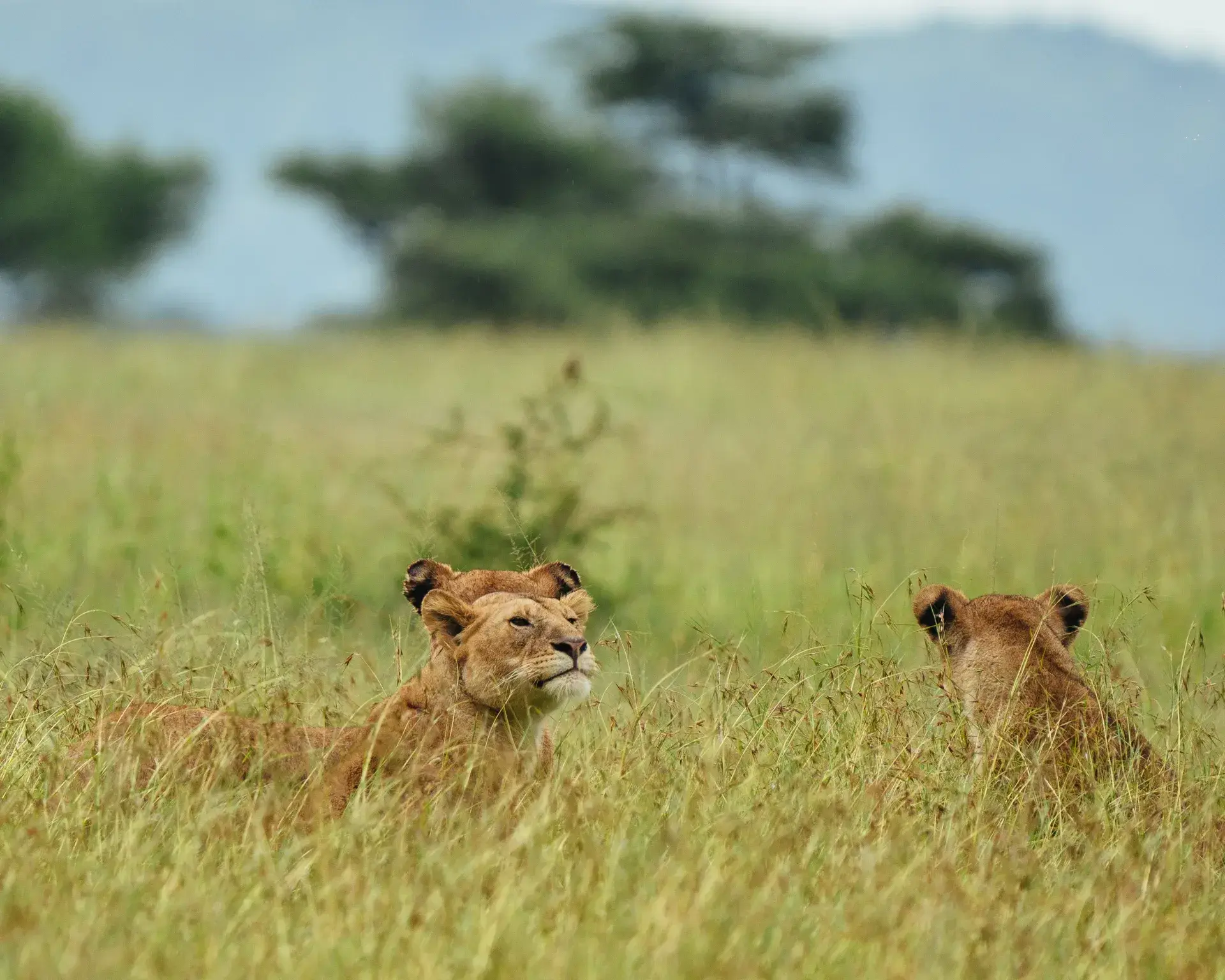
Elephant, buffalo and lion are the large mammals visitors most often associate with Nyerere, and TANAPA highlights all three. Herds of buffalo and elephant are a regular sight in the dry season, when animals gather near the river and lakes. Lions are present throughout the tourism area. Early mornings usually give the best chance of seeing them active.
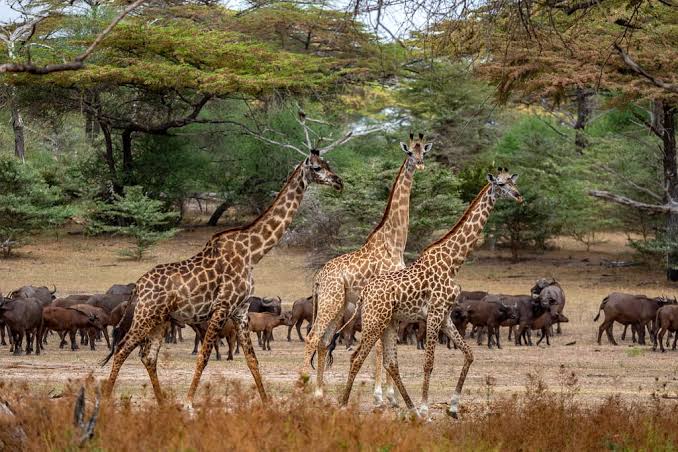
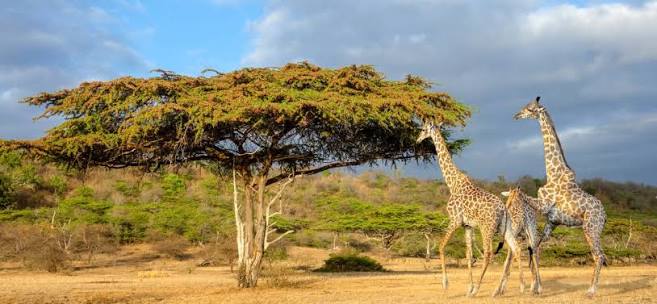
You can also expect giraffe, zebra, wildebeest, impala, waterbuck and warthog in many areas. Nyerere is one of the better places in Tanzania to look for sable antelope, though they are not seen on every trip. Leopards and spotted hyenas are present but less predictable.
African Wild Dogs
TANAPA describes Nyerere, together with the remaining Selous Game Reserve, as the last true stronghold of the African wild dog. This endangered species has disappeared from much of its former range, and it is one of the strongest wildlife reasons to visit.
Wild dogs range over very large areas, so sightings are never guaranteed. Chances often improve in the dry season, particularly when packs are denning and stay in one area for a period. A good guide and a camp in an active area make a real difference.
Hippos, Crocodiles and the Rufiji River
The Rufiji and its lakes hold large numbers of hippos and Nile crocodiles, which are among the most reliable sightings in the park. Riverine areas also attract elephants and buffalo coming to drink, and birds that feed along the water.
Birdlife
The Tanzania Tourist Board records about 440 bird species in the park, both resident and migratory. Wetlands, sandbanks and river edges are good for kingfishers, fish eagles, storks, herons and other water birds. The woodland holds a different set of species. Migratory birds are present roughly from November to April, which makes the wetter months appealing for keen birdwatchers.
Four of the Big Five occur in the main tourism area of Nyerere: elephant, buffalo, lion and leopard. Leopard sightings are less predictable than the others. Black rhino is present in the wider ecosystem but very rarely seen by visitors, so you should not plan a Nyerere safari around seeing it. If completing the Big Five is a priority, consider adding a park in northern Tanzania where rhino sightings are more realistic. The Ngorongoro Conservation Area is one option.
TANAPA lists game drives, boat safaris, walking safaris and fly camping among the park’s activities. Not every activity is offered at every camp or on every package. Boat and walking safaris also carry park activity fees on top of normal entry fees, so always check what your quote includes.
| Activity | What it involves | Best for | Confirm before booking |
|---|---|---|---|
| Game drive | Morning, afternoon or full-day drives with a guide, in an open 4x4 or one with a pop-up roof | Everyone; covering ground and seeing larger mammals | Shared or private vehicle; full-day or half-day; whether lunch is included |
| Boat safari | A guided trip by small boat on the Rufiji or connected lakes, often in the late afternoon | Photographers, birders, and anyone interested in hippos, crocodiles and elephants at the water | Whether your camp offers it; river and lake levels in your travel month; activity fee |
| Guided walking safari | A walk with an armed ranger and guide, focused on tracks, plants, smaller animals and the feeling of being on foot | Repeat safari-goers and active travellers | Minimum age and fitness requirements; length of walk; activity fee |
| Fly camping | A night or more in a simple, temporary camp away from the main lodge, usually combined with walking | Travellers wanting a more immersive night in the wilderness | Which camps offer it; season; group size; facilities |
Game Drives
Game drives are the foundation of most Nyerere safaris. Drives around the northern lakes and the Rufiji give access to open woodland, grassland and water edges, where wildlife concentrates in the dry season. Full-day drives with a packed lunch let you go further. Early-morning and late-afternoon drives make the most of cooler temperatures and active wildlife.
Boat Safaris on the Rufiji
A boat safari is the experience most people remember from Nyerere. It is a quiet way to watch hippos and crocodiles, see elephants and buffalo at the water and photograph birds from a low angle. Camps and operators run boat trips in specific sections of the river and lakes, so whether you can do one depends on where you stay. Water levels vary through the year, which can affect routes.
Guided Walking Safaris
Walking safaris are led by an armed ranger and an experienced guide. The focus is as much on tracks, plants, insects and birds as on large animals, and on understanding how the bush works. Camps set their own age limits and walking rules, so families with children should check these in advance.
Fly Camping and Other Experiences
Some camps offer fly camping: one or more nights in a simple tented camp set up away from the main lodge, usually reached on foot. A few operators also mention fishing or visits to hot springs. These depend entirely on the camp and current park rules, so ask before you book rather than assuming they are available.
The best time to visit Nyerere National Park for general wildlife viewing is usually the dry season, roughly June to October. The months either side can also be rewarding, but plan around heat, rain and camp closures.
Nyerere is low-lying and close to the coast, so it is warm to hot all year. It is generally coolest from June to August and hottest from around October to March.
| Season | Weather | Wildlife viewing | Practical notes |
|---|---|---|---|
| June to October (dry season) | Little rain, clear skies, cooler mornings | Animals gather near the river and lakes; thinner vegetation improves visibility | Most camps open; busiest period; book flights and camps well ahead |
| November to February (short rains and hot season) | Hot and humid; showers are usually short | Greener landscapes; young animals; migratory birds arrive; wildlife more spread out | Most camps open; some roads may be affected after rain |
| March to May (long rains) | Wettest period, especially March and April | Dense vegetation makes game viewing harder; good birding | Many camps close around April and May; some park areas may be inaccessible |
Dry Season (roughly June to October)
This is the most popular time for a Nyerere safari. Water sources shrink, so wildlife concentrates around the Rufiji and the lakes. The bush also thins out, making animals easier to spot. Boat and walking safaris generally operate well, and the cooler mornings make walking more comfortable. October can be very hot, and the first rains sometimes arrive towards the end of the month.
Short Rains and Hot Season (roughly November to March)
Rain usually arrives in short bursts, and the landscape turns green quickly. This period suits keen birdwatchers and travellers who prefer fewer vehicles and lush scenery. Temperatures and humidity are high. Once surface water is widely available, wildlife is more spread out.
Long Rains (roughly March to May)
March and April are usually the wettest months. Many camps close around April and May for maintenance, and some areas may be difficult to reach. If you are travelling in this period, check camp opening dates first and expect a more limited choice.
Choosing a Season for Your Interests
- General wildlife viewing and first safaris: June to October.
- Walking safaris: June to September, when it is cooler and the bush is thinner.
- Birdwatching: November to April, when migratory species are present (outside camp closure dates).
- Photographing green landscapes and dramatic skies: November to February.
- Combining with a Zanzibar beach stay: possible most of the year, but check camp opening dates for March to May.
There are two main ways to reach Nyerere. You can take a light-aircraft flight to the airstrip that serves your camp, or a road transfer from Dar es Salaam. Your camp choice determines the airstrip and often the best route.
Flying from Dar es Salaam or Zanzibar
Scheduled light-aircraft flights connect Dar es Salaam and Zanzibar with airstrips in Nyerere. Flying times are typically up to about an hour and a quarter, depending on the route and stops. Airstrips used by visitors include Mtemere, Matambwe, Kiba, Beho Beho, Siwandu, Sumbazi and Mbuyu. Each camp uses a particular airstrip. Not every airstrip has flights every day or from every departure point.
Schedules change. For example, scheduled flights to Siwandu airstrip resumed only in early 2026 after a period without service. Always book flights to the airstrip your camp specifies, and confirm current times close to travel. Light aircraft have strict baggage limits and usually require soft bags, so check the allowance with the airline.
Flights also link Nyerere with Ruaha National Park, making a fly-in southern Tanzania circuit practical.
Driving from Dar es Salaam
You can reach Nyerere by road from Dar es Salaam. The eastern side of the park, around Mtemere Gate, is usually reached via the southern route through Kibiti. The Matambwe area in the north-west is reached via Morogoro. Distances and journey times vary with the gate, the camp and road conditions. Plan for most of a day on the road, and longer after heavy rain, when unpaved sections can be slow.
Road transfers suit travellers on a tighter budget, small groups sharing a vehicle, and itineraries that also include Mikumi. Self-driving is possible but requires a suitable 4x4, experience of remote unpaved roads and careful planning. Most visitors use a guided vehicle.
Is a Day Trip from Zanzibar Worth It?
Day trips from Zanzibar are widely sold. A typical day starts with an early flight to Mtemere airstrip, followed by a game drive of several hours with a packed lunch. An afternoon flight takes you back to Zanzibar.
A day trip can work if you have very limited time or want a first taste of an African safari. It also suits groups with people who do not want to spend a night in the bush. You will see wildlife, often including elephants, hippos and giraffe.
The trade-offs are significant:
- You are usually limited to game drives near the airstrip, which is also the busiest part of the park.
- You miss the early-morning and evening hours, when predators tend to be most active.
- Boat and walking safaris are rarely included.
- You pay for two flights and a full day’s park fees for a relatively short time in the park.
Gates and Airstrips
Mtemere Gate on the eastern side is the main entry point for many visitors and is close to Mtemere airstrip. Matambwe, in the north-west, is another established access point. Several camps have their own nearby airstrips. Your operator should tell you exactly which gate or airstrip your itinerary uses, as this affects transfer times and costs.
Accommodation in and around Nyerere ranges from rustic tented bush camps to high-end lodges. There are also a small number of more affordable lodges located just outside the park boundary. Bed numbers across the park are modest, so popular camps book up early for the dry season.
When choosing where to stay, location matters more than décor:
- Area: Camps around the northern lakes and the Rufiji give access to some of the best game-viewing areas. Camps outside the boundary are usually cheaper but involve driving into the park, and may not offer boat or walking safaris inside it.
- Activities: Check which activities the camp runs itself. Boat safaris and walking safaris are tied to specific camps and areas.
- Access: Confirm the airstrip or gate used and the transfer time to camp.
- Inclusions: Many camps quote fully inclusive rates with activities. Others charge separately for activities, drinks or park fees.
- Season: Check opening dates, especially for March to May.
- Style: Decide whether you prefer a small intimate camp, a larger lodge with more facilities, or a fly-camping night as part of your stay.
Silent Plains Africa Safaris recommends accommodation based on your dates, your budget and the activities you want, rather than a fixed list. Ask us to explain the differences between camps before you commit.
There is no single price for a Nyerere National Park safari. The total depends mainly on:
- Accommodation level and location (inside or outside the park)
- How you travel: road transfers or light-aircraft flights
- Number of nights
- Park entry fees, charged per person per 24 hours
- Concession fees charged for staying in camps inside the park
- Activity fees for boat safaris, walking safaris and similar
- Private or shared vehicle and guiding
- Season and group size
Park fees in Nyerere are set by TANAPA, and Nyerere sits in the same higher fee tier as the Serengeti and Ruaha. Fees differ by residency (non-residents, residents and East African citizens) and by age (adults and children). TANAPA fees can change, sometimes at short notice, and are usually paid electronically rather than in cash.
For current official fees, check the Tanzania National Parks website or ask us for an itemised quote.
When comparing safari packages, check whether the price includes:
- park and concession fees
- flights
- activity fees
- drinks and tips
- a private or shared vehicle
For most travellers, two to three nights in Nyerere is a good minimum. That gives you time for game drives, at least one boat safari and a guided walk if your camp offers them, without rushing.
- Day trip: A first taste of safari, mainly game drives near the airstrip.
- 2 nights: Enough for a drive and a boat trip. Works well as a bush add-on to a beach holiday.
- 3 to 4 nights: The most balanced stay. It allows the full range of activities and better chances of seeing less predictable species such as wild dogs.
- 5 nights or more: Suits keen wildlife watchers and photographers, travellers adding fly camping, and those splitting time between two camps.
These examples show what is realistic. They are not fixed departures or bookable packages. Silent Plains Africa Safaris builds every itinerary around your dates, budget and interests.
Example 1: Zanzibar and Nyerere bush-and-beach (3 nights in Nyerere)
- Day 1Fly from Zanzibar to the airstrip serving your camp. Afternoon boat safari.
- Day 2Morning walking safari (where offered), afternoon game drive.
- Day 3Full-day game drive with a picnic lunch.
- Day 4Morning activity, then fly back to Zanzibar or on to Dar es Salaam.
Example 2: Road safari from Dar es Salaam with Mikumi (4 nights)
- Day 1Drive from Dar es Salaam to Mikumi National Park, afternoon game drive.
- Day 2Morning game drive in Mikumi, then drive to Nyerere.
- Day 3Game drive and boat safari in Nyerere.
- Day 4Walking safari or full-day drive.
- Day 5Return to Dar es Salaam by road.
Example 3: Southern Tanzania fly-in circuit (6 to 7 nights)
- Days 1 to 3Nyerere for river and walking safaris.
- Days 4 to 6Fly to Ruaha National Park for game drives in a drier, more open landscape.
- Day 7Fly to Dar es Salaam or Zanzibar.
Example 4: Kenya and Tanzania combined
Nyerere can also be part of a longer East African journey that includes Kenya’s parks and reserves. See our Kenya and Tanzania safaris for ideas. Allow for international or regional flights between the two countries.
Each of these parks suits a different kind of trip. None is simply “better”.
| Park | Character | Main activities | Access | Good fit for |
|---|---|---|---|---|
| Nyerere | River, lakes and woodland; hot and lush | Game drives, boat safaris, walking safaris, fly camping (camp-dependent) | Short flights from Dar es Salaam or Zanzibar; road from Dar es Salaam | A variety of activities, wild dogs, bush-and-beach combinations |
| Mikumi | Open floodplain and grassland | Mainly game drives | Usually reached by road from Dar es Salaam | Short trips and budget road itineraries; pairs well with Nyerere |
| Ruaha | Drier, more rugged landscape with baobabs and the Great Ruaha River | Mainly game drives; some walking | Usually reached by flight | Remote, land-based safaris with strong predator interest; combines with Nyerere on a fly-in circuit |
| Serengeti | Vast open plains in northern Tanzania | Game drives; hot-air balloon flights | Flights or long drives from Arusha | The Great Migration, open-plains predator viewing, a classic northern circuit |
If you want water-based activities and a quieter safari close to Zanzibar, Nyerere is a strong choice. If you are short of time and travelling by road, Mikumi is the easier option. For a longer southern trip, Nyerere and Ruaha complement each other well. If the Great Migration is the priority, look at Serengeti National Park.
- Choose your camp before you book flights. The camp decides your airstrip and your activities.
- Check camp opening dates if travelling between March and May.
- Ask whether boat and walking safaris are included or charged as extras.
- Confirm age limits for walking safaris and boat trips if travelling with children.
- Pack light in soft bags for light-aircraft flights, and check baggage limits.
- Bring sun protection, a hat, breathable neutral-coloured clothing and insect repellent. It is hot for much of the year.
- Speak to a travel health professional about malaria prevention and vaccinations well before you travel.
- Allow generous connection time between international flights and safari flights.
- Check current visa and entry requirements for Tanzania before you travel.
- Follow your guide’s and ranger’s instructions at all times, especially on foot and near water.
Is Nyerere National Park the same as the Selous Game Reserve?
No. In 2019 Tanzania split the former Selous Game Reserve into two protected areas. Nyerere National Park took in the northern photographic-tourism sector and surrounding areas. The remaining southern part is still the Selous Game Reserve. Photographic safaris on the Rufiji now take place in Nyerere National Park.
Where is Nyerere National Park?
Nyerere National Park is in south-eastern Tanzania, in the Rufiji River basin south-west of Dar es Salaam. It borders Mikumi National Park to the north-west and Udzungwa Mountains National Park to the west.
How big is Nyerere National Park?
About 30,893 square kilometres, according to the Tanzania Tourist Board. It is the largest national park in Tanzania.
What is Nyerere National Park famous for?
The Rufiji River and its lakes, large numbers of hippos and crocodiles, and an important African wild dog population. It is also known for the chance to combine game drives with boat safaris and walking safaris.
Can you see the Big Five in Nyerere National Park?
You can see elephant, buffalo and lion fairly reliably in the dry season, and leopard less predictably. Black rhino occurs in the wider ecosystem but is very rarely seen, so Nyerere is not a reliable Big Five destination.
When is the best time to visit Nyerere National Park?
The dry season, roughly June to October, is usually best for wildlife viewing. November to February is hot and green, with good birding. Many camps close around April and May during the long rains.
How do you get to Nyerere National Park from Zanzibar?
By light-aircraft flight to the airstrip serving your camp. Flights typically take around an hour, depending on the route. Day trips are sold, but staying at least one or two nights gives a much fuller experience.
How far is Nyerere National Park from Dar es Salaam?
By road it takes most of a day, depending on the gate and camp. You can also take a short flight. Road routes run via Kibiti to the eastern side or via Morogoro to the Matambwe area.
How many days do you need in Nyerere National Park?
Two to three nights is a good minimum. Three to four nights lets you enjoy game drives, boat safaris and walking safaris at a comfortable pace.
Are boat safaris available everywhere in the park?
No. Camps and operators offer boat safaris in specific parts of the Rufiji and its lakes, and a park activity fee applies. Check with your camp before booking.
What are the park fees for Nyerere National Park?
TANAPA sets the fees, which vary by residency, age and season. Activities and camp concessions carry extra fees. Check the official TANAPA website or ask for an itemised quote, as fees can change.
Is Nyerere National Park good for a first safari?
Yes, especially if you are visiting Zanzibar or Dar es Salaam and want a safari with varied activities. If your priority is the Great Migration or the classic northern Tanzania circuit, the Serengeti may suit you better.
Nyerere National Park suits travellers who want more than a vehicle-based safari. It offers a mix of river, walking and game-drive experiences in a large, quieter wilderness, and it is easy to pair with Zanzibar or a wider Tanzania trip. It is less suited to travellers whose main goal is the Great Migration or a guaranteed Big Five.
If Nyerere sounds right for you, Silent Plains Africa Safaris can help you choose the right camp, season and route for your time, interests and preferred travel style. Browse our Tanzania safari packages or explore Zanzibar safari packages. To start planning a tailor-made itinerary, contact us.