Serengeti National Park, Tanzania
Tanzania's largest and best-known safari park: open plains, one of Africa's highest densities of big predators and the Great Wildebeest Migration.
Serengeti National Park is Tanzania’s largest and best-known safari park, covering about 14,763 square kilometres of grassland, woodland and riverine country in the north of the country, bordering Kenya. It is famous for two things: one of the highest densities of large predators in Africa, and the Great Wildebeest Migration, the year-round movement of well over a million wildebeest with hundreds of thousands of zebra and gazelle.
It suits travellers who want classic open-plains game viewing and are willing to give it at least three nights. What separates the Serengeti from other northern Tanzania parks is scale. Ngorongoro Crater, Tarangire and Lake Manyara can each be covered well in a day or two. The Serengeti is big enough that where you stay inside it, and in which month, changes your safari more than almost any other decision you make.
| Country | Tanzania, East Africa |
| Location | Northern Tanzania, between Lake Victoria (west), the Ngorongoro highlands (southeast) and the Kenyan border (north) |
| Size | About 14,763 sq km (roughly 5,700 sq miles) |
| Established | 1951; UNESCO World Heritage Site since 1981 |
| Managed by | Tanzania National Parks Authority (TANAPA) |
| Elevation | Roughly 920 to 1,850 metres above sea level |
| Famous for | The Great Wildebeest Migration, lions, cheetahs, leopards in the central kopjes and riverine trees |
| Main activity | Game drives in safari vehicles; hot-air balloon flights where operated |
| Big Five | All five present, but rhino sightings are rare |
| Main access | Road from Arusha via Ngorongoro (Naabi Hill Gate), or light aircraft to airstrips such as Seronera and Kogatende |
| Nearest international airport | Kilimanjaro International Airport (JRO) |
| Recommended time | 3 nights minimum; 4 to 6 nights if you want two different areas |
Serengeti National Park is in northern Tanzania, roughly 320 to 335 km northwest of Arusha by road. Most road safaris pass through the Ngorongoro Conservation Area on the way, which is why Serengeti and Ngorongoro are so often booked together. The park’s main southeastern entrance, Naabi Hill Gate, sits just beyond the Ngorongoro boundary.
To the north, the park meets the Kenyan border. On the Kenyan side the same ecosystem continues as the Maasai Mara National Reserve. To the west, a long arm of the park called the Western Corridor stretches toward Lake Victoria.
One distinction that many guides blur: Serengeti National Park is not the same as the Serengeti ecosystem. The ecosystem is larger, roughly 25,000 to 30,000 sq km, and includes the national park, the Ngorongoro Conservation Area (including the Ndutu plains), the Maswa, Grumeti and Ikorongo game reserves, Loliondo, and Kenya’s Maasai Mara. The migration moves through all of these, which matters when you read about “the Serengeti” in a migration context.
Why location matters for planning: the drive from Naabi Hill Gate to the far north at Kogatende can take a full day. A safari that tries to cover the whole park on a short itinerary spends much of its time in transit rather than watching animals.
Think of the park as four broad areas, plus the Ndutu plains just across the boundary in the Ngorongoro Conservation Area.
Central Serengeti (Seronera)
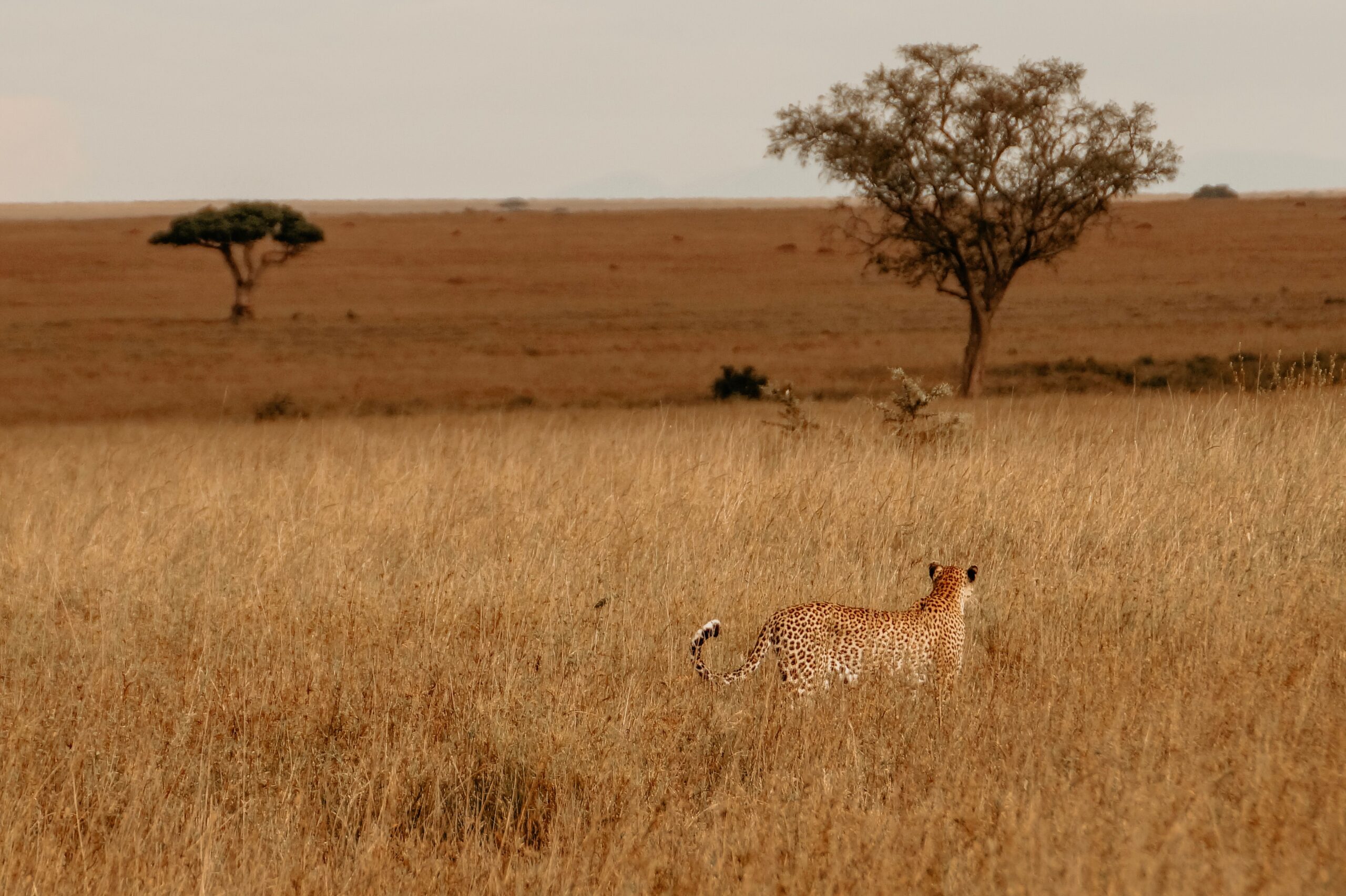
The Seronera River valley is the park’s hub, with the main airstrip, most accommodation and the most consistent year-round game viewing. Permanent water supports resident lions, leopards in the sausage trees and acacias along the river, and cheetahs on the open plains to the south and east. The granite kopjes (rocky outcrops) such as the Moru and Simba kopjes are classic lion country. The trade-off is vehicle numbers: popular sightings can draw a crowd, especially in July and August. Seronera suits first-time visitors, shorter safaris and anyone travelling outside peak migration months.
Southern Serengeti and Ndutu
The short-grass plains in the southeast of the park, together with the Ndutu area inside the Ngorongoro Conservation Area, host the migration herds during the green season, typically December to April. Calving usually peaks around February, which brings intense predator activity, including cheetah hunts and frequent lion and hyena action. Outside these months the plains are dry and much quieter. Note that lodges described as “Serengeti” in this area may actually be in the Ngorongoro Conservation Area, where different fees and rules apply, including off-road driving in parts of the Ndutu area.
Western Serengeti (Western Corridor)
The Grumeti River runs through this narrower strip of woodland and plains. The migration often passes through roughly May to July, and the Grumeti crossings, while smaller and less predictable than the Mara River crossings, are known for very large crocodiles. Outside migration months, the west has resident game and noticeably fewer vehicles. It suits repeat visitors and travellers timing a May to July trip.
Northern Serengeti (Kogatende and Lobo)
The north, around the Mara River, receives the herds roughly July to October, when river crossings are the main draw. Kogatende is the main base, usually reached by air. Lobo, in the northeast, has rolling hills and kopjes and sees the herds pass on their way north and again as they return south around November. The north is remote and quieter for much of the year, but in crossing season vehicles gather at the main crossing points.
There are two ways in: by road or by light aircraft. Most international travellers fly into Kilimanjaro International Airport (JRO), spend a night in Arusha, and start from there.
Driving from Arusha
The drive to central Serengeti takes about 7 to 8 hours without stops, via paved road to Karatu and then gravel through the Ngorongoro Conservation Area to Naabi Hill Gate. In practice, almost everyone breaks the journey with a night near Ngorongoro or Karatu, or turns the transit into a game drive. The final stretch inside the park is unpaved and dusty in the dry season.
Driving from Ngorongoro
From the Ngorongoro Crater rim to Seronera is roughly 3 to 4 hours, including the gate formalities at Naabi Hill. Road safaris usually do Tarangire or Manyara, then Ngorongoro, then the Serengeti, or the reverse.
Flying Into the Serengeti
Scheduled light-aircraft services link Arusha Airport (ARK), Kilimanjaro International Airport, and Zanzibar with Serengeti airstrips. The main ones are Seronera (central), Kogatende (north), Lobo (northeast), Kirawira and Grumeti (west), and Ndutu (south, technically in the Ngorongoro Conservation Area). Flights often make several stops, so a 1-hour direct distance can become a 2-hour journey. Baggage allowances on these aircraft are tight, commonly around 15 kg per person in soft bags; confirm with the airline when booking.
Road vs air: the trade-off
Driving is cheaper, lets you stop at Ngorongoro or Tarangire on the way, and keeps you with the same guide and vehicle throughout. Flying saves a full day each way and is the only sensible way to reach the far north or west on a shorter trip. A common middle path is a “drive in, fly out” safari: road through Tarangire and Ngorongoro to the Serengeti, then a flight back to Arusha or onward to Zanzibar.
There is no single “Serengeti price”. The total cost of a Serengeti safari is the sum of several components, and park fees are only one of them.
Park Entry Fees
Serengeti fees are charged per person per 24-hour period by TANAPA. For non-resident adults, the fee is around US$70 plus 18% VAT, so roughly US$83 per person per 24 hours, with reduced rates for children aged 5 to 15. TANAPA reviews fees periodically, so confirm the rate for your travel dates before budgeting; a reputable operator will include fees in your quote. Payment at the gates is digital (card or pre-payment), not cash.
As an illustration, two non-resident adults spending three nights in the park pay roughly US$500 in entry fees alone, before accommodation, vehicle or guide.
Concession Fees
If you sleep inside the national park, a separate concession fee applies per person per night, on top of the entry fee. Camps just outside the boundary avoid it but may add drive time each day.
Other Factors That Shape the Total
- Accommodation level, which is usually the largest single cost, from public campsites to high-end tented camps
- Number of safari days
- Private vehicle and guide versus a shared group safari
- Light-aircraft flights, if you fly rather than drive
- Season, since many camps charge less in April, May and parts of November
- Group size, as vehicle and guide costs are shared between travellers
- Additional parks, such as the Ngorongoro Crater, which has its own separate fees including a per-vehicle crater descent fee
- Extras such as balloon flights
2 to 3 Days
A Serengeti safari of 3 days is the practical minimum. Two nights in central Serengeti gives you two full days of game drives in the area with the most reliable resident wildlife. By road from Arusha, a 3-day trip usually means one full travel day each way, which leaves limited time inside the park; flying in makes three days far more productive. Fine for a first taste or when time is genuinely short.
4 to 5 Days
This is where the Serengeti starts to make sense. Three or four nights let you either settle into one area properly or split between two, such as Seronera plus the north in migration season. By road, this length also allows Ngorongoro Crater on the way in or out.
6 Days or More
Six or more days allows a full northern Tanzania circuit: Tarangire, Ngorongoro and two Serengeti areas, or a fly-in safari following the migration. Longer stays also absorb bad luck: rain, a quiet morning or an elusive species.
Adding another park makes sense because each offers something the Serengeti does not: the Ngorongoro Crater for rhino and dense game in a compact setting, and Tarangire for large elephant herds and baobab landscapes in the dry season.
See our Tanzania safari packages for ready-made itineraries.
The Serengeti’s appeal is the density and visibility of large mammals on open plains, combined with predators that are relatively used to vehicles.
Yes. All Big Five animals live in Serengeti National Park: lion, leopard, elephant, buffalo and black rhino. Lions and buffalo are seen by most visitors, elephants are common in parts of the park, and leopards are seen with some regularity in the Seronera area.
Rhino is the difficult one. The Serengeti’s black rhino population is small and mostly confined to protected areas such as the Moru Kopjes, so sightings are rare. If seeing a rhino matters to you, add the Ngorongoro Crater, which offers a far better chance.
It is also worth separating the Big Five, a term from the hunting era, from wildlife richness. The Serengeti’s real strengths are its predators, especially lion and cheetah, and the scale of the herds. A safari judged only on ticking off the Big Five can miss what makes this park special.
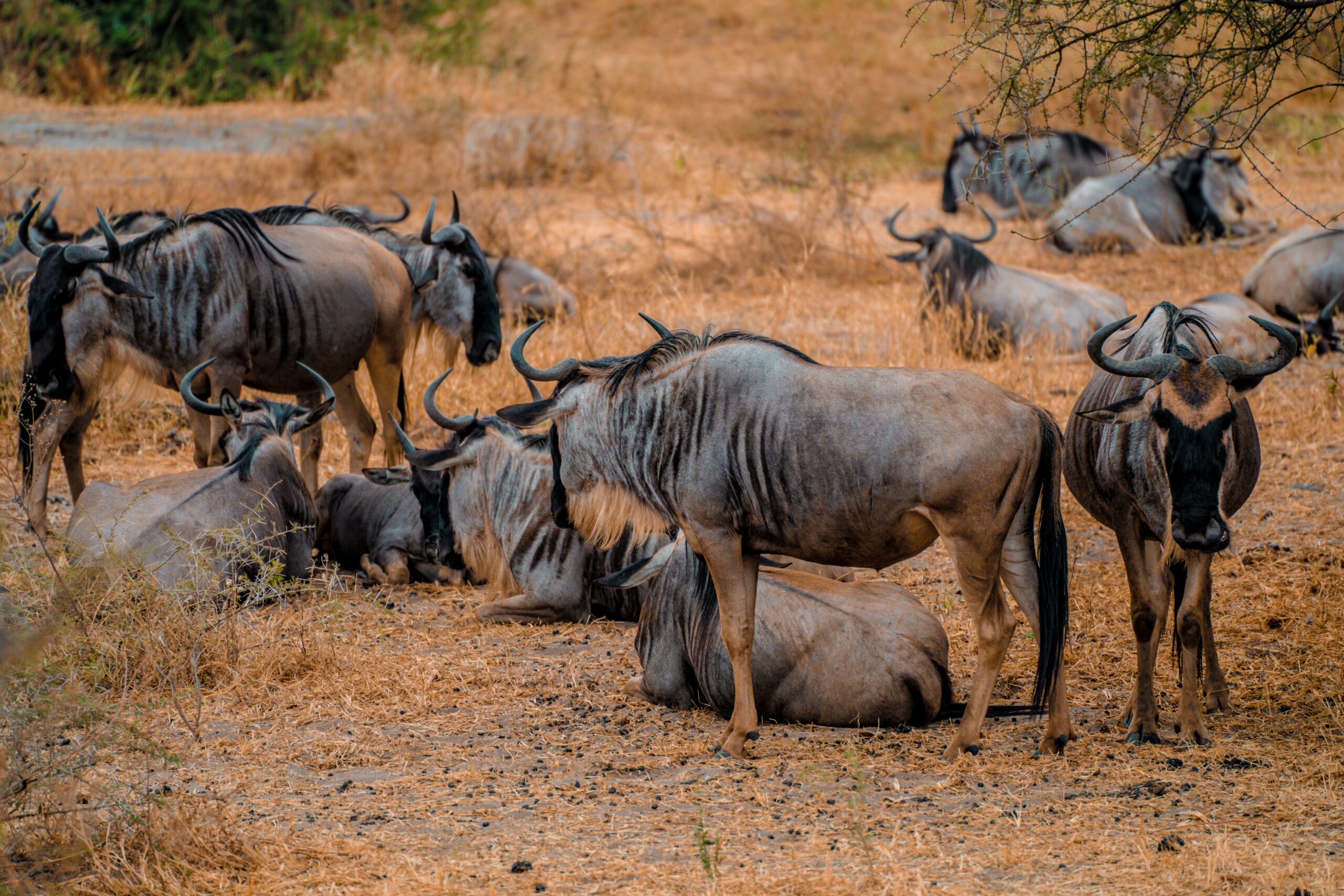
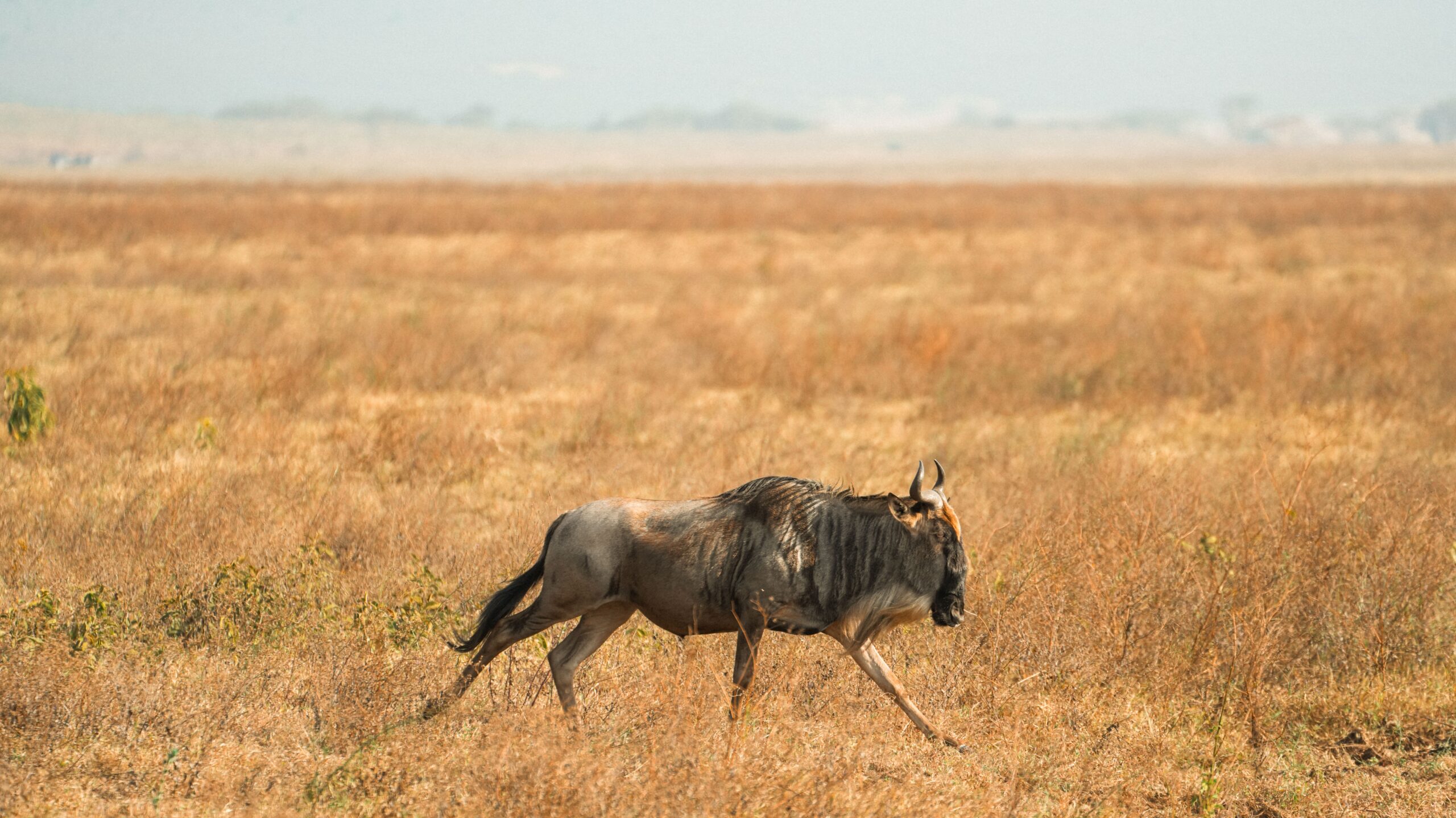
The Great Wildebeest Migration is the continuous, roughly circular movement of well over a million wildebeest, accompanied by hundreds of thousands of zebra and Thomson’s gazelle, around the Serengeti ecosystem in search of grazing and water. It is not a single event and has no fixed start date. The herds are always somewhere; the question is where.
The herds follow rainfall and fresh grass, so timing shifts every year. An early or late rainy season can move the herds weeks ahead of or behind the “typical” pattern. Below is the usual pattern, not a schedule.
December to March: Southern Serengeti and Ndutu
After the short rains, the herds spread across the southern short-grass plains, which are rich in minerals. Calving usually happens between late January and March, with a peak often around February, when hundreds of thousands of calves are born within a few weeks. Predators concentrate here, making this one of the best periods for action on the plains.
April to May: Moving north and west
The long rains arrive and the herds begin moving through central Serengeti toward the west. This is low season: quieter, greener, cheaper, but some roads become muddy and a few camps close.
May to July: Western Corridor
The herds often pass through the Western Corridor, crossing the Grumeti River. The wildebeest rut (mating season) also takes place around this time.
July to October: Northern Serengeti and the Mara River
The herds reach the north and spill across into Kenya’s Maasai Mara. Mara River crossings happen during this period, but irregularly. Herds may gather at the bank for hours or days and then turn away, or cross several times in a day. Crossings happen in both directions, on both the Tanzanian and Kenyan sides.
November: Heading south
With the short rains, the herds move back south through Lobo and the eastern side of the park toward the southern plains, and the cycle begins again.
Common Misconceptions
- “The migration happens in July.” It happens all year; July to October is just the river-crossing period in the north.
- “Booking August guarantees a crossing.” No month guarantees a crossing. Your odds improve with more days in the right area and a guide who reads herd movements.
- “The migration is only in Kenya.” Most of the annual cycle takes place in Tanzania.
- “Missing the herds means missing the Serengeti.” Central Serengeti has strong resident wildlife regardless of where the migration is.
The best time to visit Serengeti National Park depends on what you want to see. There is good wildlife viewing in every month.
June to October (long dry season)
Short grass and thinner vegetation make animals easier to find, and the herds are in the west and then the north. River crossings are possible from July. This is peak season: highest prices, most vehicles, and dusty conditions. Best for: migration crossings, first-time visitors who want dry weather.
November to December (short rains)
Brief afternoon or evening showers, greening landscapes, and the herds moving south. Fewer visitors and some lower rates. Best for: value, quieter game drives, and travellers comfortable with some rain.
January to March (green season, calving)
Generally a drier spell between the rains, with lush plains in the south. Calving and predator activity peak, and this is excellent for photographers who like green landscapes and dramatic skies. Migratory birds from Europe and Asia are present. Best for: calving, predators, photography, birding.
April to May (long rains)
The wettest months. Some camps close, roads can be difficult, and prices drop. Game viewing in central Serengeti can still be very good, with few other vehicles. Best for: budget-conscious and flexible travellers, repeat visitors.
The Serengeti has a mild climate thanks to its elevation. Daytime temperatures are typically in the mid to high 20s °C year-round, occasionally warmer on the plains. Early mornings and nights are cool, often dropping to around 13 to 16 °C, and colder in the higher eastern and northern areas.
Rain usually falls in two seasons: the short rains around November and December, and the long rains from roughly March to May. Even in the wet months, rain tends to come as afternoon or evening storms rather than all-day downpours.
For game drives, this means a fleece or warm layer for the 6 am start in an open-roof vehicle, light clothing by late morning, and sun protection at midday. In the dry season, expect dust; in the wet season, expect some muddy roads and possibly slower travel between areas.
Accommodation in the Serengeti ranges from public campsites to high-end tented camps. The main categories:
Location matters more than price. A mid-range camp in the right area for your month can deliver a better safari than an expensive lodge two hours from the action. Location affects how much of each day you spend driving versus watching wildlife, whether you can reach the migration herds, how long your airstrip transfers take, and whether you pay concession fees inside the park. Choose the area first, then choose the property.
Game Drives
Game drives are the core of a Serengeti safari. Most travellers do a morning drive starting around sunrise and an afternoon drive into the late afternoon, or a full-day drive with a packed lunch to reach more distant areas. Inside the national park, vehicles must stay on established tracks, and game driving is generally limited to daylight hours, roughly 6 am to 6 pm. Night drives are not permitted inside the national park.
Hot-air Balloon Safaris
Licensed operators run sunrise balloon flights in central Serengeti and seasonally in other parts of the park, usually followed by a bush breakfast. Flights typically cost around US$500 to $600 per person and should be booked in advance, especially in peak season.
Walking Safaris
Walking inside Serengeti National Park is limited and only allowed in designated areas with an armed ranger. Walking safaris and night drives are more widely available in private concessions and reserves bordering the park, such as Grumeti and parts of Loliondo, and in the Ngorongoro Conservation Area.
Cultural Experiences
There are no communities living inside the national park. Maasai village visits and cultural experiences take place in surrounding areas, most often in the Ngorongoro Conservation Area or around Karatu.
Photography
The open plains, kopjes and soft early light make the Serengeti excellent for photography. A private vehicle gives you control over positioning and time at each sighting.
The Ngorongoro Crater is a collapsed volcanic caldera with a floor of roughly 260 sq km, home to a dense, mostly resident population of wildlife. It is one of the best places in Tanzania to see black rhino. The Serengeti is vastly bigger, with more space, fewer vehicles per sighting outside the busiest areas, and the migration.
Tarangire National Park, about two hours from Arusha, is known for large elephant herds and baobab trees, at their best in the dry season (June to October) when wildlife gathers along the Tarangire River. The Serengeti has more predators and the migration, and good game viewing in every season. Tarangire works well as a one or two-night start to a northern circuit; it complements the Serengeti rather than replacing it.
Lake Manyara National Park is small, with groundwater forest, an alkaline lake that sometimes attracts flamingos, and good birdlife. It is a half-day or one-day stop on the road to Ngorongoro, not an alternative to the Serengeti.
The Serengeti and Kenya’s Maasai Mara National Reserve are two parts of the same ecosystem, divided by the national border. The migration crosses between them, with herds typically in the Mara between about August and October.
Neither is universally better. Choose the Mara for shorter trips focused on big cats or crossing season; choose the Serengeti for more time, more space and migration viewing outside August to October. Some travellers combine both.
Serengeti and Ngorongoro are combined so often because they sit next to each other on the same road and offer different experiences: the crater’s density and rhino, and the Serengeti’s scale, predators and migration.
A typical route runs Arusha to Tarangire or Manyara, then the Ngorongoro highlands, then the Serengeti, and back by road or flight. Five days is a comfortable minimum for Serengeti plus Ngorongoro by road; six to eight days lets you add Tarangire and two Serengeti areas. In the green season, the Ndutu area links the two naturally, since it sits between them and hosts the calving herds.
Yes, you can do a Serengeti safari from Zanzibar, and flying is by far the most practical way to do it. Light-aircraft flights connect Zanzibar with Arusha and directly with Serengeti airstrips, usually with stops; journey times are commonly a few hours. Driving is not realistic: it involves a ferry to the mainland and a road journey of well over a day.
A two-night Serengeti trip from Zanzibar is possible but rushed, given flight times. Three or four nights is a far better use of the airfare. Many travellers do it the other way round: safari first, then fly to Zanzibar for the beach at the end. Remember the soft-bag baggage limit on light aircraft, and leave heavier beach luggage at your Zanzibar hotel if you are flying out and back.
What to Pack
A soft duffel bag (essential if flying), binoculars for each traveller if possible, sunscreen and a hat, a headlamp, a power bank, any personal medication, insect repellent and a reusable water bottle. Many camps offer laundry, so you need fewer clothes than you think.
What to Wear
Neutral colours such as khaki, olive and beige. Layers for cold early mornings: a fleece or light down jacket. Long, light sleeves and trousers for sun and insects. A buff or scarf for dust. Comfortable closed shoes. Avoid dark blue and black, which can attract tsetse flies in some wooded areas.
Photography
A zoom lens in the 100–400 mm range covers most situations. Bring spare batteries and memory cards, and a beanbag or cloth to rest the camera on the vehicle. The best light comes in the first and last two hours of the day, which is another reason to start early.
Mobile Network and Connectivity
Mobile coverage exists in parts of the park, especially around Seronera, but is patchy elsewhere. Many camps offer Wi-Fi, often limited to main areas and not fast. Plan to be partly offline.
Safety
The Serengeti is a well-managed park and safaris are generally safe when you follow your guide. Stay in the vehicle unless told otherwise, do not walk unescorted at camps after dark, and follow camp briefings. Talk to a travel health professional about malaria prevention and vaccinations well before travel.
Children and Families
Long drives can be tiring for young children, so flying in or choosing a central base helps. Some camps set minimum ages for children; others offer family tents. A private vehicle lets you set the pace and take breaks.
Accessibility
Accessibility varies widely by vehicle, camp and itinerary. Some properties have step-free rooms; tented camps often involve uneven paths. Discuss specific requirements before booking so the itinerary can be planned around them.
Work through these decisions in roughly this order:
- Your travel month. This determines where the migration is likely to be and what each area offers.
- Your priorities: migration, predators, photography, a relaxed pace, or a combination.
- The right area or areas for that month.
- Number of days: three nights minimum in the Serengeti; more if you want two areas.
- Road or air: drive for value and a combined circuit; fly for time and remote areas.
- Accommodation location before accommodation brand.
- Private or shared: a private safari lets you set the pace and stay longer at sightings.
- Budget, built from itemised costs.
- Combinations: Ngorongoro, Tarangire, Zanzibar or Kenya.
At Silent Plains Africa Safaris, we plan private safaris around these choices rather than fitting travellers into a fixed package. Tell us when you are travelling, what matters most to you and your budget, and we will suggest the area, camps and routing that fit, with a clear, itemised quote.
Browse our Tanzania safari packages or explore all Tanzania parks for more ideas.
Where is Serengeti National Park?
Serengeti National Park is in northern Tanzania, East Africa, about 320 km northwest of Arusha. It borders Kenya’s Maasai Mara to the north and the Ngorongoro Conservation Area to the southeast.
What is Serengeti National Park famous for?
It is famous for the Great Wildebeest Migration and for one of the highest concentrations of large predators in Africa, especially lions and cheetahs.
How many days do you need in the Serengeti?
Three nights is the practical minimum. Four to six nights lets you explore two areas or combine the Serengeti with Ngorongoro.
What is the best time to visit Serengeti National Park?
June to October for dry-season viewing and river crossings; January to March for calving and predators. Every month offers good wildlife viewing somewhere in the park.
Can you see the Big Five in the Serengeti?
Yes, all five are present, but rhino sightings are rare. Add the Ngorongoro Crater for a better chance of rhino.
How much does a Serengeti safari cost?
It depends on accommodation level, days, season, private or shared vehicle and flights. Non-resident adult park fees alone are around US$83 per person per 24 hours, before concession fees, accommodation and transport.
How do you get to Serengeti National Park?
By road from Arusha via Ngorongoro (about 7 to 8 hours of driving), or by light aircraft from Arusha, Kilimanjaro or Zanzibar to airstrips such as Seronera and Kogatende.
Can you visit the Serengeti from Zanzibar?
Yes, by light aircraft. Plan at least three nights to justify the flights.
Is the Serengeti better than the Maasai Mara?
Neither is universally better. The Serengeti is far larger and hosts the migration most of the year; the Mara is compact, accessible and excellent in crossing season.
Can you see the Great Migration in the Serengeti?
Yes. The herds are in the Serengeti ecosystem year-round. Their location changes by season, and specific events such as calving or river crossings are never guaranteed.
Which part of the Serengeti is best?
It depends on the month. Central Serengeti is strong year-round, the south for calving (December to March), the west around May to July, and the north for crossings (July to October).
If you know roughly when you want to travel and what you hope to see, we can help shape the rest: which area, how many nights, where to stay and whether to drive or fly. Contact Silent Plains Africa Safaris to start planning a private Serengeti safari built around your dates, priorities and budget.