Tsavo East National Park
One of Kenya's largest parks: red-dust elephant herds, open plains and the Galana River, in southeastern Kenya between Nairobi and the Coast.
A Tsavo East National Park safari is a game-viewing trip into one of Kenya's largest parks. It sits in southeastern Kenya between Nairobi and the Coast. It is known for large elephant herds, open plains and the Galana River. Most travellers go from Mombasa, Diani, Watamu, Malindi or Nairobi. Trips run from one day to several nights. This guide covers fees, costs, gates, lodges, seasons and routes. Facts that change are marked so you can verify them before you travel.
Tsavo East National Park is in southeastern Kenya, between Nairobi and the Kenyan Coast. It is part of the larger Tsavo ecosystem. It covers about 13,747 square kilometres.
Key Facts
- Tsavo East National Park, location: southeastern Kenya, near Voi in Taita-Taveta County.
- Tsavo East National Park, size: about 13,747 km².
- Tsavo East National Park, established: April 1948 as part of Tsavo National Park, split into East and West soon after.
- Tsavo East National Park, managing body: Kenya Wildlife Service.
- Tsavo East and Tsavo West, combined area: roughly 22,000 km².
Position in Kenya: Tsavo East lies east of the Nairobi to Mombasa highway (A109) and the railway line. KWS describes it as the largest protected area in Kenya.
Distances (approximate road figures to the gate, not to your lodge)
- From Nairobi to Voi Gate: about 325 km.
- From Mombasa to Bachuma (Buchuma) Gate: about 100 km.
- From Mombasa to Voi: about 153 km.
Landscape: Tsavo East is mostly flat, dry savannah and semi-arid bush. The Galana River crosses it. The Yatta Plateau runs along the western side. Red iron-rich soil covers much of the park.
East versus West: Tsavo East and Tsavo West are separate parks with separate gates, fees listings and landscapes. Tsavo West covers about 9,065 km². It has hills, springs and lava flows. Tsavo East is flatter and drier. Do not treat them as one destination.
Most visitors reach Tsavo East by road from Mombasa or Nairobi. Light aircraft fly to airstrips inside and beside the park. Travel time depends on the gate, the road, traffic and where your lodge is. Allow several hours, not a fixed number.
From Nairobi
Voi Gate is about 325 km from Nairobi. Published road times run about 6 to 8 hours. Traffic around Nairobi and Mtito Andei stretches this. The main route is the Nairobi to Mombasa highway, then a turn at Voi or Manyani. Lodges deep in the park add time after the gate.
From Mombasa
Bachuma Gate is about 100 km from Mombasa. Voi Gate is about 153 km. Published times run roughly 2 to 4 hours depending on gate and traffic. Bachuma suits southern lodges. Voi suits Voi-area lodges and the Aruba Dam area.
From Diani Beach
Diani to the park is roughly 250 km. Expect about 3½ to 4½ hours to Bachuma or Voi. Some operators quote shorter times. A one-day trip means a start around 5 a.m.
From Watamu
Watamu travellers usually use Sala Gate. Published times run about 2½ to 3 hours in good conditions.
From Malindi
Malindi travellers use the C103 road to Sala Gate. Distance is roughly 105 to 130 km depending on the measure. Published times run from about 1½ to 2 hours up to 3½ hours. After heavy rain the route can close. KWS closed it in February 2026 and told visitors to use Bachuma or Voi.
By Air
KWS lists airstrips at Voi, Aruba, Satao, Sala, Ithumba, Sangayaya, Mopeo, Bachuma and Cottars. Light aircraft fly from Nairobi (Wilson) and from the coast. Flying makes sense when you have little time or want to link a distant camp. Mombasa International Airport is the nearest commercial airport.
By Train
A train station serves Voi. If you plan to use it, confirm the schedule and arrange transfer to the park.
Under the KWS 2025 fee regulations, a non-resident adult pays USD 80 per 24 hours to enter Tsavo East. A non-resident child or student pays USD 40. East African citizens pay KSh 1,000 per adult.
| Category | Tsavo East |
|---|---|
| East African citizen | KSh 1,000 |
| Kenya resident | KSh 1,350 |
| Non-resident | USD 80 |
| African citizen (non-East African) | USD 40 |
| Category | Tsavo East |
|---|---|
| East African citizen | KSh 500 |
| Kenya resident | KSh 675 |
| Non-resident | USD 40 |
| African citizen | USD 20 |
Combined package, adult: Tsavo East, Tsavo West and Amboseli together cost KSh 3,000 (East African citizen), KSh 4,000 (resident), USD 215 (non-resident) and USD 115 (African citizen).
Vehicle fees: KWS charges vehicle entry in addition to personal fees. Published ranges run from Sh 600 for small cars to Sh 5,000 for buses.
Payment: pay through the KWS eCitizen platform (KWSPay). Pre-payment speeds up entry.
Important Notes
- Fees are per person per 24 hours. Ask how many fee-days your itinerary uses.
- The fees took effect on 1 October 2025.
- A court order briefly suspended the increase on 2 October 2025. We found no final ruling. Sources in 2026 still quote the new rates.
- The KWS park page and some operator pages still show the older USD 52 adult rate. Do not rely on them.
- Confirm the current rate and child age bands with KWS before travel.
A Tsavo East safari costs from roughly USD 170 for a shared day trip to over USD 1,000 per person for a private multi-day trip. Price depends on duration, group size, lodge grade, season and starting point.
What Drives Price
- Duration. Each night adds lodge, meals and a second fee-day.
- Group size. Private safaris cost less per person with more travellers.
- Accommodation. Budget, mid-range and luxury camps differ widely.
- Private versus shared. Shared departures cost less but fix the schedule.
- Vehicle. A 4x4 with a pop-up roof costs more than a basic van.
- Start point. Nairobi and Diani add road time and fuel.
- Season. High season and festive dates raise lodge rates.
- Flights versus road. Light aircraft add a large cost.
| Format | Typical range per person (USD) | Notes |
|---|---|---|
| Day trip from Mombasa or Diani | about 170 to 280 | Early start; check if park fee and lunch are included |
| 2-day, 1-night from Mombasa or Diani | about 330 to 650 on group rates; higher for solo | Full board; private; mid-range lodge common |
| 2-day, premium lodge | about 750 to 1,250 | Check the park fee used in the quote |
| 3-day Tsavo East and West | about 1,200 to 1,500 | One operator lists higher for private |
| Nairobi overnight | about 300 and up | Longer drive |
Examples of What Is Included
- One operator's 2-day price covers park fees, full board, a driver-guide, game drives and water.
- Another lists group-size pricing and a single supplement.
What is often excluded: drinks at lodges, tips, flights, visas and insurance.
Formats
- 1-day Tsavo East safari: possible from Mombasa. Tiring from Diani.
- 2-day: the most common balance of time and cost.
- 3-day Tsavo safari: suits adding Tsavo West.
- Tsavo East plus Coast: the most common pairing.
- Tsavo safari from Mombasa: see Tab 12.
Stay inside the park for more game-drive time. Stay outside or near Voi for lower cost and easier access. The right choice depends on your gate and budget.
How Location Changes the Trip
- Game-drive time. Inside lodges start drives at dawn without a gate queue.
- Gate choice. Voi-area lodges pair with Voi Gate. Southern camps pair with Bachuma.
- Transfers. A deep-park camp adds hours.
- Water. Lodges at dams and waterholes offer sightings from the property.
Budget
- KWS bandas and public campsites, including near Voi and Aruba Dam.
- Simple camps such as Ndololo Safari Camp near Voi Gate.
- One published range puts budget stays at roughly USD 25 to 90 per night.
Mid-range
- Voi Safari Lodge. Built on a rocky hill near Voi Gate with views of waterholes.
- Ashnil Aruba Lodge. Near Aruba Dam and good for wildlife on the water.
- Sentrim Tsavo. Tented, about 11 km from Voi Gate.
- One published range puts mid-range at roughly USD 150 to 280.
Luxury
- Satao Camp. Tented camp around a waterhole.
- Galdessa Camp. On the Galana River, 15 km upstream of Lugard's Falls.
- One published range puts luxury at roughly USD 400 to 750.
Near the Park but Outside
- Voi Wildlife Lodge. On the boundary, outside the park.
- Ngutuni Lodge. In a sanctuary bordering the park.
The dry seasons give the clearest wildlife viewing. These run roughly June to October and January to February. March to May has the heaviest rain. There is no single best month for everyone.
Seasons
- Long dry season, June to October. Grass is short. Animals gather at the Galana River, Aruba Dam and other water. Dust can make the sky hazy. This is the busiest period.
- Short dry season, January to February. Hot and dry. Lonely Planet extends the dry window through March and counts December. Others place the short rains in November to early December.
- Long rains, March to May. Vegetation thickens. Some roads can become impassable. Fewer visitors. Lower prices.
- Short rains, November to early December. Greener. Less crowded. Some lodges lower rates.
| Priority | Better timing |
|---|---|
| Wildlife viewing | June to October, January to February |
| Elephants at water | Dry season |
| Photography | Dry season for visibility; green season for colour |
| Birding | Rains bring migrants; dry season concentrates birds at water |
| Lower prices | March to May, November |
| Fewer visitors | March to May, November |
| Green landscapes | After the rains |
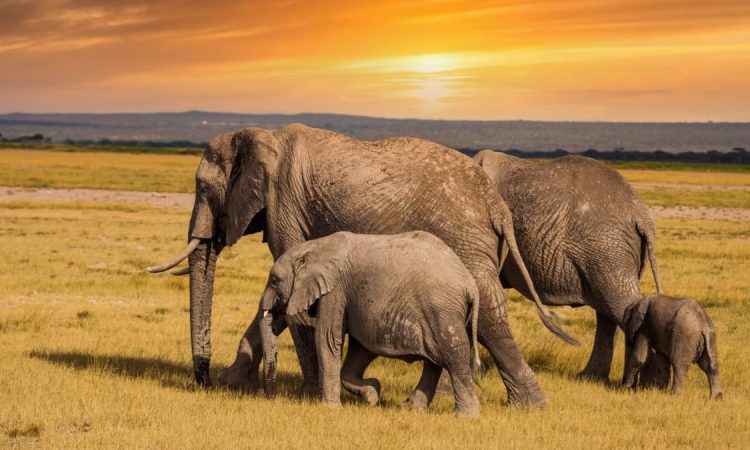
Tsavo East is best known for elephants. It also holds lions, leopards, buffalo, hippos, crocodiles and about 500 recorded bird species. Sightings are never guaranteed.
Key Facts
- Tsavo East, wildlife: elephant, lion, leopard, buffalo, hippo, crocodile, waterbuck, lesser kudu, gerenuk.
- Tsavo East, birds: about 500 recorded species per KWS.
- Tsavo ecosystem, elephants: 12,843 counted in KWS's 2017 aerial census. This covers the wider ecosystem, not only the park. A newer official count was not confirmed.
Species
- Elephants. The signature species. Herds gather at rivers and dams, especially in the dry season. Tsavo elephants are often described as more wary than Amboseli's because of past poaching.
- Lions. Tsavo lions are often described as maneless. The man-eaters of Tsavo legend is part of the park's name recognition.
- Leopards. Present and elusive. Do not expect them.
- Buffalo. Common around water.
- Giraffes and zebras. Seen on the plains. Operator pages list both.
- Antelopes. Waterbuck, lesser kudu and gerenuk are listed by KWS. Lonely Planet adds Grant's gazelle, fringe-eared oryx and Somali ostrich in drier areas.
- Hippos and crocodiles. Galana River and Aruba Dam.
- Hirola. KWS lists the critically endangered antelope as present. It is introduced and not an easy sighting.
- Rhino. KWS lists rhino among the fauna. Lonely Planet counts four of the Big Five as realistic. Do not plan around rhino.
- Cheetah. Reported in the open plains.
- Birds. Riverine and dam birds are strongest.
Red Elephants of Tsavo
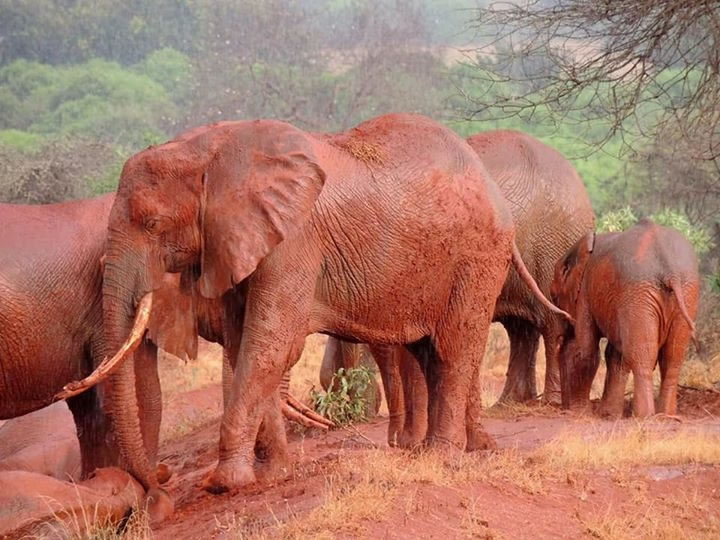
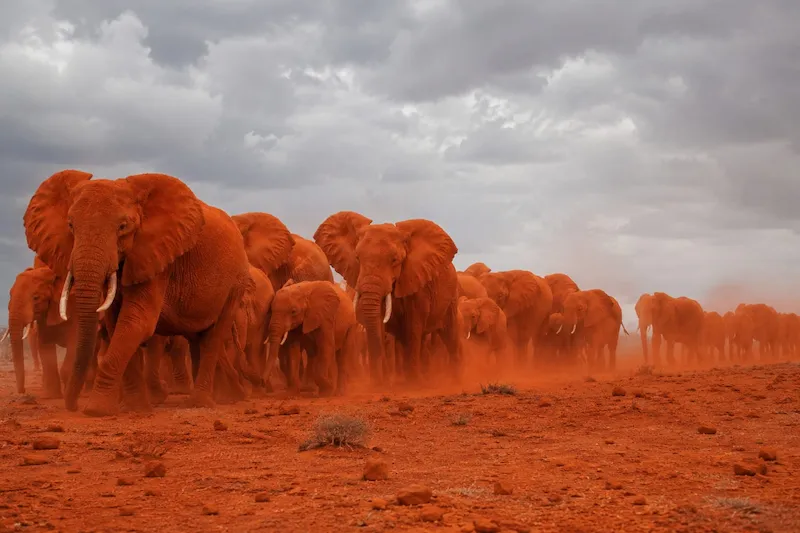
Tsavo's red elephants are ordinary African elephants. They look red because they dust-bathe and wallow in Tsavo's iron-rich red soil.
Facts
- The skin is not naturally red.
- Iron oxides in Tsavo's laterite soil colour the dust.
- Dust sticks to wet skin after bathing or rolling.
- The colour fades when the elephant bathes in clearer water or after rain.
- They are not a separate species or subspecies.
- Elephants in other red-soil areas can look similar.
- Colour varies by herd, day and soil.
Game drives are the main activity inside Tsavo East. Birding is possible during drives. Other activities depend on the lodge, a bordering conservancy and current KWS rules.
Inside the Park
- Morning game drives. Cooler and active.
- Afternoon game drives. Good light.
- Full-day game drives. Packed lunch or lodge lunch.
- Birdwatching. Rivers and dams.
- Photography. Dawn and dusk light.
- Short viewpoint stops. Mudanda Rock and Lugard Falls are part of drives. Operators describe short walks with a guide. Confirm current rules.
Restricted
The area north of the Galana River, including the Yatta Plateau, is reportedly kept for anti-poaching patrols. Visitors need permission for game drives there.
Offered Outside the Park
Walking safaris and night drives. One guide says bordering conservancies and private concessions offer them. Not inside the national park.
Unclear
Older pages claim night drives inside the park. Newer sources say otherwise. KWS's fee list includes walking safaris for some parks. We could not confirm that they run inside Tsavo East. Ask your operator in writing.
Cultural visits: offered by some lodges or operators near the park. Check that they are run with the community and are not staged.
Rules to Follow
- Stay in the vehicle unless the guide says otherwise.
- Use a licensed driver-guide.
- Keep to marked tracks.
- Do not feed wildlife.
Tsavo East has four main gates: Voi, Manyani, Bachuma (Buchuma) and Sala. Pick the gate that matches your starting point and lodge. Some guidebooks list Ithumba as a further gate in the north.
Gate hours: one guidebook gives 06:00 to 19:00. Confirm with KWS. Plan to be out of the park by closing.
| Gate | Location | Used by | Access | Why it matters |
|---|---|---|---|---|
| Voi Gate | Southwest, near Voi | Nairobi and Mombasa travellers; Voi-area lodges | Off the A109 at Voi | Main gate. KWS visitor centre. Closest to Voi Safari Lodge, Sentrim Tsavo and the Aruba Dam area |
| Manyani Gate | West, on the A109 | Nairobi travellers; Mudanda Rock area | Off the A109 | A shorter drive to Mudanda Rock. Voi to Manyani inside the park is about 38 km |
| Bachuma Gate | South, about 100 km from Mombasa | Mombasa and Diani travellers | Off the A109 | First gate for coast arrivals. About 93 km to Voi Gate through the park |
| Sala Gate | Northeast | Malindi and Watamu travellers | C103 road from Malindi | Quieter side. Route can close after rain |
Internal links: tracks connect the gates. Distances inside the park are long, so a lodge near one gate may take hours to reach from another.
Why gate choice matters: it sets your drive time, which lodges are practical and which parts of the park you can reach in a day.
Tsavo East is a flat, semi-arid savannah cut by the Galana River. Water points concentrate wildlife. Red soil, a long lava ridge and a few rocks and dams define the park.
Tsavo ecosystem: the wider Tsavo-Mkomazi area covers over 49,000 km² and includes Tsavo East, Tsavo West, Chyulu Hills and Mkomazi in Tanzania. It holds Kenya's largest elephant population.
Galana River
Aruba Dam
Mudanda Rock
Lugard Falls
Yatta Plateau
Red soil: iron-rich laterite that colours dust and elephants.
Tsavo East is flatter, drier and better for open-plain elephant viewing. Tsavo West is more scenic, with hills, springs and lava. Neither is universally better.
| Factor | Tsavo East | Tsavo West |
|---|---|---|
| Landscape | Flat plains, Galana River, Yatta Plateau | Hills, lava flows, springs |
| Size | about 13,747 km² | about 9,065 km² |
| Wildlife | Open-plain game, big herds | Denser bush, more varied terrain |
| Elephants | Strong; red-dust herds | Present |
| Main attractions | Aruba Dam, Mudanda Rock, Lugard Falls, Galana River | Mzima Springs, Shetani lava flow, Lake Jipe |
| Accessibility | Gates at Voi, Manyani, Bachuma, Sala | Gates at Mtito Andei, Man-Eaters, Chyulu and near Maktau |
| Accommodation | Lodges near Voi, Aruba, Galana | Lodges around Ngulia, Kilaguni, Severin and Finch Hattons |
| Safari style | Long open game drives | Scenic drives and short walks where permitted |
| Suitable traveller | First-time safari, elephant focus | Scenery, springs, mixed terrain |
| Combining both parks | Possible on a 3 to 4 day trip | Possible on a 3 to 4 day trip |
A Tsavo East safari from the coast is realistic from Mombasa as a long day or an overnight. From Diani it is possible but tiring. From Watamu and Malindi it depends on the Sala route. Two days is better than one for most coast travellers.
Mombasa
Diani
Watamu
Malindi
When Two or Three Days Is Better
- You want dawn and dusk drives.
- You want to reach lodges deep in the park.
- You want to add Tsavo West.
Combining with a beach holiday: do the safari first or last. Build a rest day between a long road day and a flight.
The most realistic combinations are Tsavo East with Tsavo West and Tsavo East with the Kenyan Coast. Amboseli works with Tsavo West. Mara and Samburu need more travel and are better planned separately.
Tsavo East + Tsavo West
Tsavo East + Amboseli
Tsavo East + Maasai Mara
Tsavo East + Samburu
Not usually practical. The distance is large. Plan only with a flight and a longer budget.
Tsavo East + Kenyan Coast
Where is Tsavo East National Park?
It is in southeastern Kenya, near Voi in Taita-Taveta County. It lies between Nairobi and the Kenyan Coast, east of the A109 highway. It is separate from Tsavo West, which lies on the other side of the road.
How much is a Tsavo East safari?
Prices run from about USD 170 for a shared day trip to well over USD 1,000 per person for a private multi-day safari. Group size, lodge grade, season and starting point change the price. Check whether the quote includes park fees and meals.
How much is the entrance fee to Tsavo East?
A non-resident adult pays USD 80 per 24 hours, and a child or student pays USD 40. East African citizens pay KSh 1,000 per adult. Verify the current rate with KWS before travel.
What is Tsavo East famous for?
It is known for large elephant herds that look red from dust-bathing. It also has open plains, the Galana River, Aruba Dam, Mudanda Rock and Lugard Falls. Tsavo lions are often described as maneless.
Are there red elephants in Tsavo East?
Yes, in the sense that many elephants look red. They are normal African elephants coated in Tsavo's iron-rich red dust. They are not a separate species, and sightings are not guaranteed.
What animals can I see in Tsavo East?
Elephants, lions, leopards, buffalo, hippos, crocodiles, giraffes, zebras, waterbuck, lesser kudu and gerenuk. About 500 bird species are recorded. Rhino exist but are not a reliable sighting.
Is Tsavo East worth visiting?
Yes, if you want big elephant herds, open plains and an easy trip from the coast. It is less suited to travellers who want dense predator action or a short, unrushed trip from far away. Two days works better than one.
How many days do you need in Tsavo East?
Two days is a good minimum. One day is possible from Mombasa but rushed. Three days lets you add a second area or Tsavo West.
Can you do Tsavo East in one day?
Yes from Mombasa, with an early start and about 2 to 3 hours each way. From Diani and Watamu it is longer and more tiring. Reviews describe one-day trips as intensive.
What is the best time to visit Tsavo East?
The dry seasons, June to October and January to February, give the clearest viewing. March to May is wettest, with fewer visitors and lower prices. Your priority decides the best month.
How far is Tsavo East from Mombasa?
Bachuma Gate is about 100 km from Mombasa and Voi Gate is about 153 km. Expect roughly 2 to 4 hours depending on gate, traffic and lodge.
How far is Tsavo East from Nairobi?
Voi Gate is about 325 km from Nairobi. Published road times run about 6 to 8 hours. Lodges inside the park add time after the gate.
Can I visit Tsavo East from Diani Beach?
Yes. It is roughly 250 km and 3½ to 4½ hours each way. A day trip needs a very early start. An overnight stay is more comfortable.
Which gate is best for Tsavo East?
It depends on where you start and where you stay. Voi suits Nairobi and Voi-area lodges. Bachuma suits Mombasa and Diani. Sala suits Malindi and Watamu. Manyani is closest to Mudanda Rock.
What is the difference between Tsavo East and Tsavo West?
Tsavo East is flatter and drier, with open plains and large elephant herds. Tsavo West has hills, springs and lava flows. They have separate gates and are on opposite sides of the A109.
Can I combine Tsavo East and Tsavo West?
Yes. A 3 to 4 day trip works well. The parks are on opposite sides of the highway, so plan the transfer. Fees apply per park per 24 hours.
Where should I stay in Tsavo East?
Choose by gate and budget. Voi Safari Lodge and Sentrim Tsavo suit Voi Gate. Ashnil Aruba suits the dam area. Satao and Galdessa are higher-end. Voi Wildlife Lodge is just outside the park.
Is Tsavo East good for elephants?
Yes. The Tsavo ecosystem holds Kenya's largest elephant population, with 12,843 counted in KWS's 2017 census. Dry-season waterholes and the Galana River give the best chance of seeing herds.
Can I combine Tsavo East with a beach holiday?
Yes. It is a common pairing from Mombasa, Diani, Watamu and Malindi. Plan the safari at the start or end, and allow a rest day after a long road day.