Tsavo West National Park
Volcanic hills, crystal-clear springs and black lava flows in southeastern Kenya, home to Mzima Springs, the Shetani lava field and the Ngulia Rhino Sanctuary.
Tsavo West National Park is in southeastern Kenya, in Taita-Taveta County. It covers about 9,065 square kilometres and sits on the western side of the Nairobi–Mombasa highway and railway. Tsavo East is on the other side. They are two separate parks, run by the Kenya Wildlife Service (KWS).
Tsavo West is volcanic. Lava flows, hills, crater cones and clear springs break up the bush. Animals are there, but thick vegetation makes some sightings less predictable than in open parks like Amboseli.
This guide covers location, access, current fees, safari costs, lodges, gates, wildlife, attractions, camping and how to combine Tsavo West with Tsavo East, Amboseli and the coast.
Where Is Tsavo West National Park?
Tsavo West National Park is in Taita-Taveta County, southeastern Kenya, near the Tanzanian border. It sits west of the A109 Nairobi–Mombasa highway.
| Size | About 9,065 km² |
| Established | 1948 |
| Manager | Kenya Wildlife Service |
| Nearest highway town | Mtito Andei |
| Distance from Nairobi to Mtito Andei Gate | About 240 km (KWS) |
| Distance from Mombasa to Mtito Andei Gate | About 250 km (KWS) |
| Ecosystem | Tsavo ecosystem, which includes Tsavo East and neighbouring ranches and conservancies |
Is Tsavo West the Same as Tsavo East?
No. They are separate national parks with their own gates, wardens and character. The highway and the railway divide them. Tsavo is often sold as one trip, and the two parks do share an ecosystem, but you enter and pay for each separately.
How Tsavo West Differs from Tsavo East
Tsavo West is hillier and more volcanic. It has springs, lava flows and a rhino sanctuary. Tsavo East is flatter, drier and more open, with long views across the plains and the Galana River. Many travellers find animals easier to see in Tsavo East. Tsavo West gives you more variety in the landscape.
by road, the main entrance is Mtito Andei Gate, about 4 hours from Nairobi. From Mombasa, travellers usually use Tsavo Gate near Manyani or Mtito Andei Gate. From Amboseli, the usual route is Chyulu Gate. Time depends on which gate and which lodge you are heading for. The park is large, and getting to a lodge deep inside it adds hours.
From Nairobi
- Road: Nairobi to Mtito Andei on the A109 is about 233 to 240 km. Expect about 4 to 4.5 hours to the gate.
- To a lodge deeper in the park, add 1 to 2 hours. Ngulia and Kilaguni are closer to the gate than Finch Hattons or the southern gates.
- Train: The Nairobi–Mombasa SGR stops at Mtito Andei. There is no public transport inside the park, so you need a pickup arranged with your lodge or operator.
- Flights: Light aircraft fly from Wilson Airport to airstrips in the park, including Kilaguni and Finch Hattons. The flight takes about 50 minutes. Book through the lodge or a charter operator.
From Mombasa
- Road: About 250 km to Mtito Andei. Some entry points are closer. Tsavo Gate, near Manyani on the A109, is the usual choice for coast travellers heading to the northern part of the park.
- Time: Usually 3.5 to 5 hours depending on traffic, gate and lodge.
- Air: Mombasa Air Safari flies to the Finch Hattons airstrip.
From Diani Beach
- Plan on a full morning. Diani to Mombasa, then onto the A109. Add about 1 to 1.5 hours on top of the Mombasa times above (estimate; check with your operator).
- Realistic option: overnight at least once. See the section on visiting from the Kenyan coast.
From Watamu
- Watamu to Mombasa takes about 2 hours, then the same road west (estimate).
- For many Watamu travellers, Tsavo East via Sala Gate is the easier choice. Tsavo West is possible, but it is a long day.
From Malindi
Same story. Tsavo East's Sala Gate is much closer. Tsavo West usually means a 2-night trip.
From Amboseli
- Gate to gate, the distance is roughly 80 to 95 km. Lodge to lodge, 150 to 200 km. Allow 3 to 4 hours.
- You leave Amboseli, travel towards Oloitokitok, then enter Tsavo West at Chyulu Gate. The road is rough in places and slower in wet weather.
- Some operators still run this in convoy. Ask your operator.
- Good to know: you pass the Shetani lava flows soon after Chyulu Gate.
Starting from elsewhere? See our safaris from Nairobi, Mombasa safari and Diani Beach safaris for planned routes and timings.
Park fees depend on who you are. KWS revised its fees in October 2025, the first major change in 18 years. Non-resident adults now pay US$80 per 24 hours.
| Category | Fee |
|---|---|
| Non-resident | US$80 |
| Other African citizens | US$40 |
| Kenyan resident | KES 1,350 |
| East African citizen | KES 1,000 |
| Category | Fee |
|---|---|
| Non-resident | US$40 |
| Other African citizens | US$20 |
| Resident | KES 675 |
| East African citizen | KES 500 |
| Package | Fee |
|---|---|
| Tsavo West–Amboseli | US$150 adult (non-resident), KES 2,900 resident, KES 2,200 East African citizen |
| Tsavo East–West–Amboseli | US$215 adult (non-resident) |
Other Charges
- Vehicle fees are separate. They range from about KES 600 for small cars to KES 5,000 for buses.
- Camping, activity and guesthouse charges apply on top.
- Fees are per person per 24 hours, not per calendar day. A 2-night stay with two full days in the park is usually charged as 2 days.
There is no single Tsavo West safari price. The final figure depends on:
- Number of travellers (a private vehicle costs less per person for 4 than for 1)
- Number of days
- Private or shared safari
- Vehicle type
- Accommodation level
- Starting point (Nairobi, Mombasa, the coast)
- Season
- Whether park fees, meals and transfers are included
- Flights
| Trip | Published price per person |
|---|---|
| 3 days, Tsavo West, from Nairobi | About US$1,575 |
| 3 days, Tsavo East and West, from Nairobi | About US$1,496 |
| 3 days, Tsavo East and West, from Mombasa | About US$968 (2 sharing, park fees included) to US$1,575 |
| 3 days, Amboseli and Tsavo West, from Nairobi | US$1,200 to US$1,297 |
| 4 days, Amboseli, Tsavo West, Tsavo East (Nairobi to Mombasa) | About US$2,100 |
| 5 days, same circuit | About US$1,250 (low) to US$2,600 |
Ready to compare? Browse our Kenya safari packages or ask us for a written quote.
there are KWS-run options for budget travellers, mid-range lodges inside the park, and a small number of luxury camps on the edge. Always confirm a property is open before booking.
Budget
- KWS public campsites: no booking needed. See the Camping section.
- Kamboyo Guest House (KWS): near Mtito Andei Gate, about 8 km in. Sleeps up to 8. About US$240 per night for non-residents, KES 15,000 for residents. Book through KWS.
Mid-range Lodges
- Kilaguni Serena Safari Lodge: inside the park, near the Poacher's Lookout and Mzima Springs area. A floodlit waterhole is the draw. Suits first-time safari travellers who want a proper lodge.
- Ngulia Safari Lodge: opened in 1969, on the Ndawe escarpment, overlooking the Ngulia Rhino Sanctuary. Good for views and as a central base. A more basic lodge than Kilaguni.
- Severin Safari Camp and Kitani Severin Bandas: Severin is a tented camp with a pool. Kitani is a short drive away and is more modest. Confirm the current status of Kitani.
Luxury
Finch Hattons Luxury Tented Camp: on the southwestern edge of the park, near the Chyulu Hills. About 65 km (around 1.5 hours) from Mtito Andei Gate via Kilaguni and Kitani. Fly-in option. Suits those who want a small, high-end camp. Rates quoted in early 2026 listings were well above US$1,000 per night, so check.
Outside the Park but Nearby
- Voyager Ziwani: south, near the Ziwani Gate. Useful for the southern sector few travellers see. Current status unconfirmed.
- Salt Lick Safari Lodge and Lions Bluff Lodge: in the Taita Hills area, outside the park. Useful for a Tsavo West plus Taita Hills circuit.
June to October, plus January and February, is when most travellers go for wildlife. It depends on what you want.
Seasons
- Long rains: March to May
- Short rains: October to December
- Dry: June to September, and January to February
Dry Months (June to October, January to February)
- Animals gather around water, which makes sightings more predictable.
- Dust is common. Roads are easier.
- Visitor numbers and lodge prices are higher in July to September.
Wet Months (March to May, November)
- The bush is green and thick. Animals are harder to see.
- Some tracks can become impassable. The Chyulu Gate road to Amboseli is slower.
- Lodge rates are usually lower.
- Good for birdwatching. Sources point to November to April for birding.
Who Should Go When
- Wildlife viewing and photography: June to October
- Green scenery and lower rates: April, May, November
- Birding: November to April
- Quieter travel: shoulder months
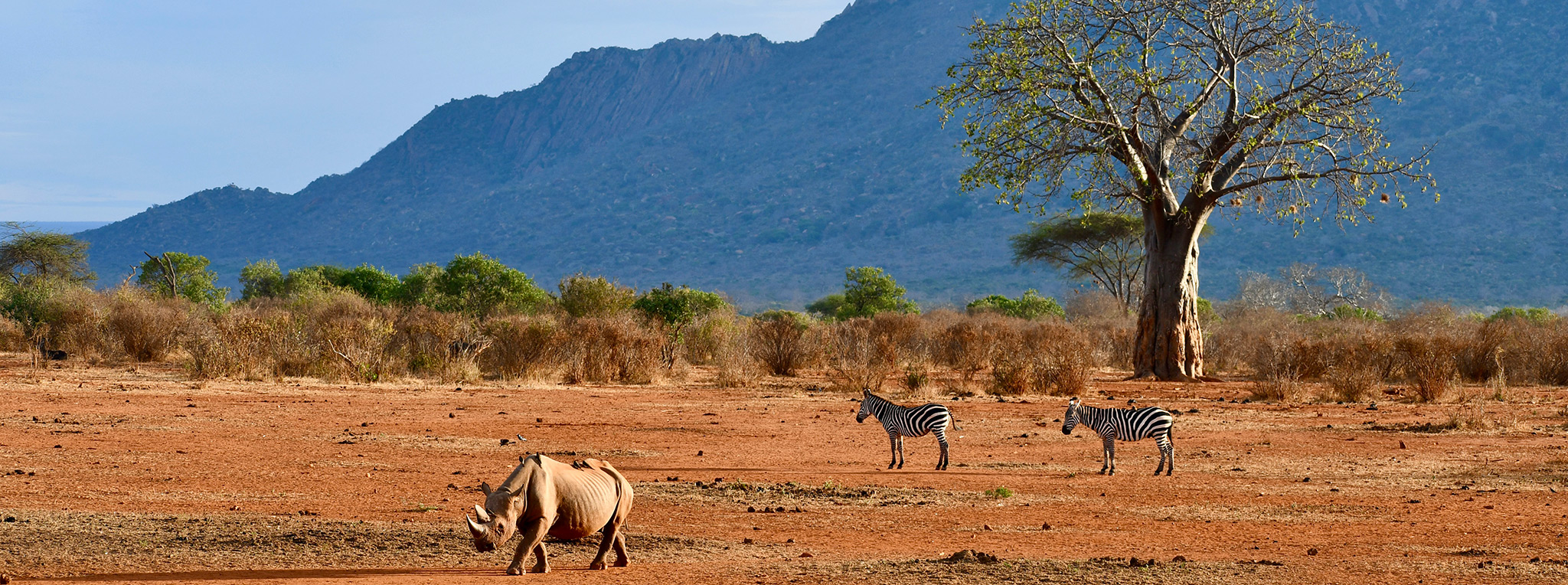
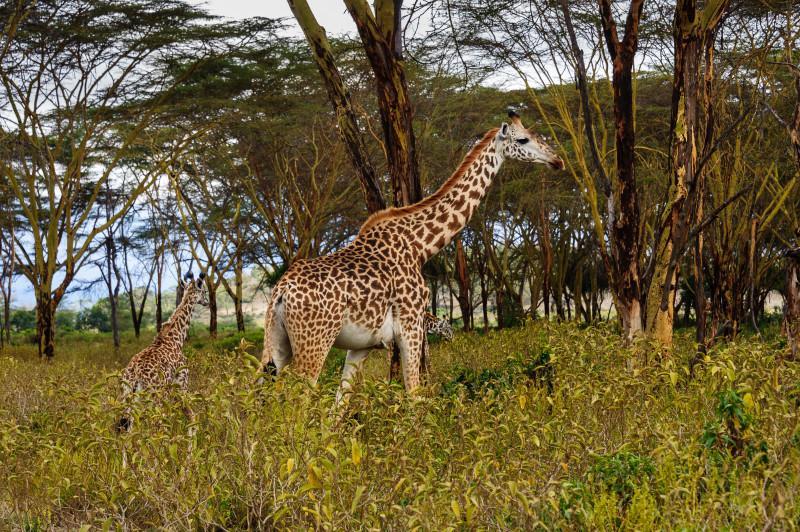
Tsavo West has elephants, buffalo, lions, leopards, black rhino, giraffe, zebra, hippo, crocodile and many antelope, including lesser kudu. Cheetah and wild dog are recorded in some sources but are uncommon sightings.
What You Are Most Likely to See
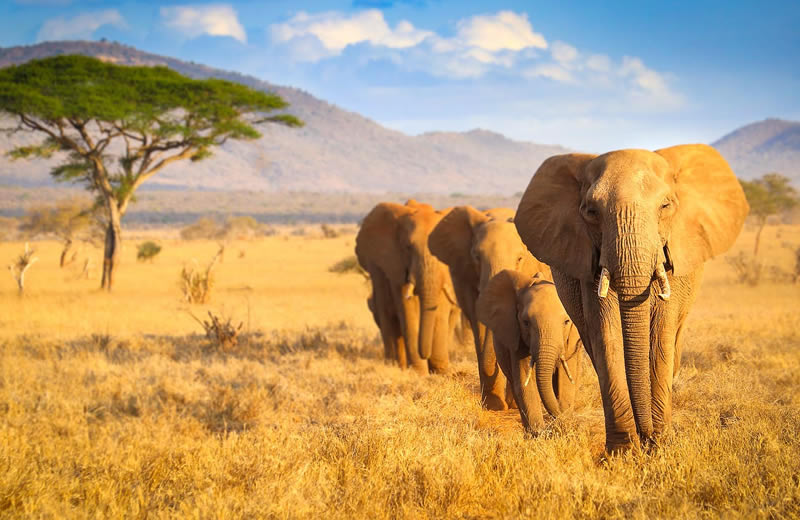
- Elephants: the best-known animals in Tsavo. Their coats often look red from the soil.
- Buffalo, giraffe, zebra, impala
- Hippo and crocodile at Mzima Springs
- Baboons and other primates around the springs
What Is Less Predictable
- Lions: present, but harder to find in thick bush than in open parks.
- Leopard: possible, never guaranteed.
- Rhino: Black rhino live in the Ngulia Rhino Sanctuary, a protected area. Sightings are not guaranteed, and rhino are shy.
What Affects Sightings
- Season (water and vegetation)
- Time of day (early morning and late afternoon)
- Terrain (hills and thick bush limit visibility)
- Your driver-guide
- Luck
Birds: Tsavo West is regularly described as having more than 500 species. Lake Jipe, on the Tanzanian border, is a known birding spot.
How it differs from Tsavo East: Tsavo East has open plains and large elephant herds, so it often delivers easier wildlife viewing. Tsavo West delivers variety in landscape, and animals are harder to see.
Mzima Springs
Shetani Lava Flows
Chaimu Crater
Ngulia Area and Rhino Sanctuary
Poacher's Lookout
A rocky ridge near Kilaguni with wide views over the park. Short stop.
Lake Jipe
On the Kenya–Tanzania border. Mainly birding and quiet water scenery. It is a long way from the northern gates.
Activities
- Game drives (the main activity)
- Guided walks (reported at about KES 3,000 or US$50; confirm)
- Night game drives (reported at about KES 3,000 for citizens and residents; confirm)
- Birdwatching
- Fly-in safaris
KWS lists these gates: Tsavo, Lake Jipe, Mtito Andei (Kamboyo HQ), Chyulu, Maktau and Ziwani. Some guides list fewer or add others. Confirm before you go.
- Mtito Andei Gate: The main entrance from the Nairobi side, right beside the A109. Park HQ at Kamboyo is about 8 km inside. Best for Nairobi travellers, and for Kilaguni, Ngulia, Severin and Finch Hattons.
- Tsavo Gate (Tsavo River Gate): Near Manyani on the A109. Often used by travellers coming from Mombasa.
- Chyulu Gate: The link to Amboseli and the Chyulu Hills. Near Shetani Lava and a public campsite. Use this when combining the parks.
- Maktau Gate: On the Voi–Taveta route. Used by travellers entering from the south and heading to Taita Hills lodges.
- Ziwani Gate: Southern end. Close to Voyager Ziwani. Used for the quiet southern sector.
- Lake Jipe Gate: Far south, for Lake Jipe and the Tanzanian border area.
Tsavo West sits next to the Chyulu Hills, a volcanic range. Rain soaks into the porous lava, then comes out as springs at Mzima. That is why the park has surface water in an otherwise dry region.
Features
How This Affects Your Safari
neither is better. Tsavo West suits scenery and variety. Tsavo East suits open-plain wildlife viewing.
| Factor | Tsavo West | Tsavo East |
|---|---|---|
| Landscape | Hills, lava, springs, crater cones | Flat, open plains, Galana River |
| Size | About 9,065 km² | Larger (about 13,700 km²) |
| Terrain | Thicker bush, rocky | Open, easier visibility |
| Wildlife | Elephants, buffalo, lions, black rhino sanctuary | Large elephant herds, plains game |
| Main attractions | Mzima Springs, Shetani Lava, Chaimu Crater | Galana River, Lugard Falls, Mudanda Rock |
| Gates | Mtito Andei, Chyulu, Tsavo, Maktau, Ziwani, Jipe | Voi, Manyani, Bachuma, Sala and others |
| Safari style | Scenic, varied | Classic game viewing |
| Best for | Geology, springs, Amboseli combos | Easier wildlife, coast access |
| Combining | Possible, takes about 3 hours between lodges | Same |
Who Should Pick Which
- Volcanic scenery, springs, photography: Tsavo West
- Elephants and open views: Tsavo East
- Mombasa or Malindi base: Tsavo East is closer
- Nairobi or Amboseli combos: Tsavo West fits better
- Both: if you have 3 or more days
For its attractions, gates and fees in full, see our Tsavo East National Park safari page.
the combination works well if you have 3 to 4 days and want a mix of landscapes. The drive between them is 3 to 4 hours.
a day trip from the coast is possible from Mombasa, but not recommended. Two nights is the practical minimum from Diani, Watamu or Malindi.
Mombasa
- 3.5 to 5 hours each way to the northern part of the park.
- A 2-day, 1-night trip works. A day trip is mostly driving.
- Gates: Tsavo Gate or Mtito Andei.
Diani
- Add time for the Mombasa crossing and bypass. Estimate 5.5 to 6.5 hours to a lodge.
- Plan 2 nights. Many Diani travellers choose Tsavo East via Bachuma Gate as a shorter alternative.
Watamu
- Long transfer. Estimate 5 to 6 hours.
- Tsavo East via Sala Gate is the realistic alternative.
Malindi
Similar to Watamu. Tsavo East is usually the better pick.
Combining with a Beach Stay
- Safari first, then beach, works well. You finish tired and arrive at the coast.
- Take longer than the map says. Coastal traffic can add time.
- Check these estimated times with your operator.
Planning from the coast? See our safaris from Mombasa, Diani Beach safaris and safaris from Nairobi.
yes, they combine well. Allow 3 days minimum, 4 for a calmer pace.
yes. KWS runs public and special campsites in the park.
- Established in 1948 as part of Tsavo National Park. It was later divided into East and West for administration.
- The railway reached the Tsavo River in 1898. The "Man-Eaters of Tsavo" story dates from construction of the railway bridge.
- After independence in 1963, hunting was banned and the park came under what became KWS.
- Tsavo has been heavily affected by poaching, especially of elephants and rhinos. The Ngulia Rhino Sanctuary is a protected area for black rhino.
- Human-wildlife conflict is an ongoing issue around the park boundaries. Verify specific figures with KWS.
Where is Tsavo West National Park?
Southeastern Kenya, in Taita-Taveta County, west of the Nairobi–Mombasa highway.
What is Tsavo West famous for?
Mzima Springs, the Shetani lava flows, Chaimu Crater and the Ngulia Rhino Sanctuary.
How much is Tsavo West National Park entry?
US$80 per adult per 24 hours for non-residents (US$40 for children). KES 1,350 for residents. KES 1,000 for East African citizens. Confirm with KWS.
How much does a Tsavo West safari cost?
It varies. Published 3-day packages run roughly US$968 to US$1,575 per person. Always check what is included.
What animals are found in Tsavo West?
Elephants, buffalo, lions, leopards, black rhino, giraffe, zebra, hippo, crocodile and many antelope.
Can you see rhinos in Tsavo West?
Black rhinos live in the Ngulia Rhino Sanctuary. Sightings are possible but not guaranteed.
Are there elephants in Tsavo West?
Yes. They are one of the park's best-known animals.
What is the best time to visit Tsavo West?
June to October and January to February for wildlife. November to April for birding and greener scenery.
How far is Tsavo West from Nairobi?
About 240 km to Mtito Andei Gate, around 4 to 4.5 hours by road.
How far is Tsavo West from Mombasa?
About 250 km to Mtito Andei Gate. Some gates are closer. Allow 3.5 to 5 hours.
Can I visit Tsavo West from Diani?
Yes, but plan at least one night. A day trip is a long drive.
Which gate is best for Tsavo West?
Depends on your lodge. Mtito Andei for Nairobi, Tsavo Gate for Mombasa, Chyulu for Amboseli.
What are the main attractions in Tsavo West?
Mzima Springs, Shetani Lava Flows, Chaimu Crater, Ngulia Rhino Sanctuary, Poacher's Lookout and Lake Jipe.
Is Mzima Springs inside Tsavo West?
Yes, in the northern part of the park.
What are the Shetani Lava Flows?
A field of black volcanic rock that formed a few hundred years ago, near Chyulu Gate.
Is Tsavo West better than Tsavo East?
Neither is better. West has more varied scenery. East has easier wildlife viewing.
Can I combine Tsavo East and Tsavo West?
Yes. Three days minimum.
Can I combine Amboseli and Tsavo West?
Yes, via Chyulu Gate. The drive takes 3 to 4 hours.
Where should I stay in Tsavo West?
Kilaguni Serena and Ngulia for the northern sector, Severin and Finch Hattons for more remote stays. Check current status.
Can you camp in Tsavo West?
Yes, at KWS public and special campsites.
How many days do you need in Tsavo West?
Two nights is a practical minimum. Three nights is more relaxed.