Kenya and Tanzania Cultural Safaris: Maasai, Samburu, Hadzabe and Swahili Experiences
Last updated: October 2026.
Kenya and Tanzania offer more than game drives. The two countries are home to many communities, languages and heritage sites. A cultural safari adds that human side to a wildlife trip.
This guide covers four distinct experiences: the Maasai in both countries, the Samburu of northern Kenya, the Hadzabe around Lake Eyasi in Tanzania, and the Swahili Coast. It explains where each one fits, how to combine them with parks and beaches, what they cost and how to visit respectfully. If you are comparing Kenya and Tanzania cultural safaris, start here.
These are living communities, not exhibits. Each one is different, and each is changing. The best trips treat them that way.
Why Choose a Kenya and Tanzania Cultural Safari?
A cultural safari gives context to the landscape you drive through. Much of the land around Kenya’s and Tanzania’s parks is home to pastoral and coastal communities. Understanding them makes the wildlife part of the trip richer.
Reasons travellers add culture to a safari:
- Learn about different traditions, languages and histories.
- Understand how communities and conservation share land.
- Try local food and see how it is prepared.
- Meet craftspeople, such as beadworkers, blacksmiths and boat builders.
- Hear music, dance and storytelling in context.
- Break up a long run of game drives with a different pace.
Cultural stops pair easily with parks. A Maasai visit fits near the Maasai Mara, Amboseli or Ngorongoro. A Samburu visit fits a northern Kenya safari. A Hadzabe visit sits on the road between Ngorongoro and the Serengeti. Swahili heritage works as a coastal finish.
A personalized itinerary matters here. Group tours often rush a cultural stop into a short roadside visit. A private plan lets you choose who you meet, how long you stay and how the fees are paid.
Maasai Cultural Experiences in Kenya and Tanzania
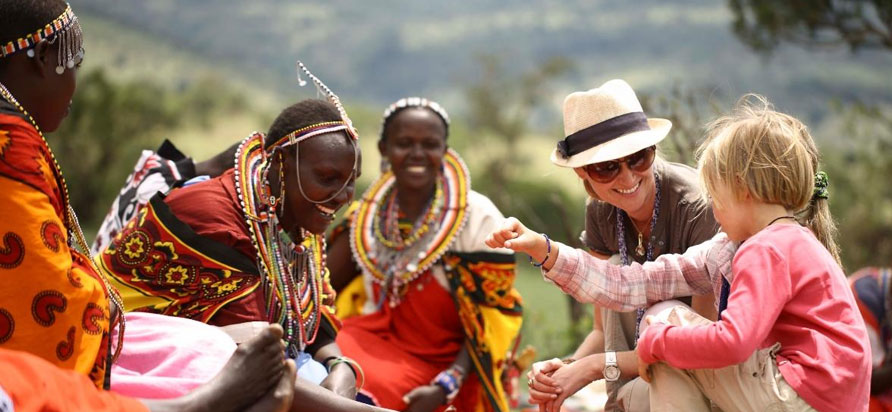
The Maasai are a Maa-speaking, largely pastoral people. They live in southern Kenya, mainly in Narok and Kajiado counties, and in northern Tanzania, including the Arusha and Manyara regions, Ngorongoro Conservation Area, Monduli, Longido and the Lake Natron area.
Cattle matter in Maasai life, as a source of food, wealth and social ties. Beadwork, dress and age-sets carry meaning. Communities differ by region and by family. Some are fully pastoral. Others combine herding with farming, conservation work, tourism and formal jobs. Do not expect every community to look or live alike.
Where to experience Maasai culture
| Area | Country | What to know |
|---|---|---|
| Maasai Mara region | Kenya | Many Maasai-owned conservancies border the reserve. Community-hosted visits are common |
| Amboseli region | Kenya | Community land in Kajiado County around the park, with views toward Kilimanjaro |
| Kajiado County | Kenya | Closer to Nairobi, with markets and community projects |
| Ngorongoro region | Tanzania | Visits are arranged in and around the conservation area. Land-use and residency questions are an ongoing issue. Ask your operator for current information |
| Northern Tanzania | Tanzania | Monduli, Longido and Lake Natron areas offer visits away from the main safari road |
Three different things are often confused
| Type | What it is | What to expect |
|---|---|---|
| Structured village visit | A short, pre-set programme at a homestead (boma) | Often 1 to 3 hours. May include a welcome dance, a tour and a craft stall. A fee is charged |
| Community-led experience | A visit planned with a host or community group | Smaller groups, more conversation, agreed fees. Can include a meal, a guided walk or an overnight stay |
| Safari in Maasai landscapes | A wildlife drive through community land or conservancy | No cultural exchange by itself. The land is community-owned, which is worth understanding |
Tanzania village visits are commonly quoted from about US$25 to 75 per person, and some bomas charge per vehicle instead. Fees vary and are not fixed. Ask what the fee covers and who receives it.
How to arrange a respectful visit
- Book through an operator like Silent Plains Africa Safaris that works with the host in advance.
- Ask how the fee is shared.
- Keep groups small.
- Ask before taking photos.
- Avoid a rushed stop of ten minutes. It is poor value for you and for the host.
Samburu Cultural Experiences in Northern Kenya
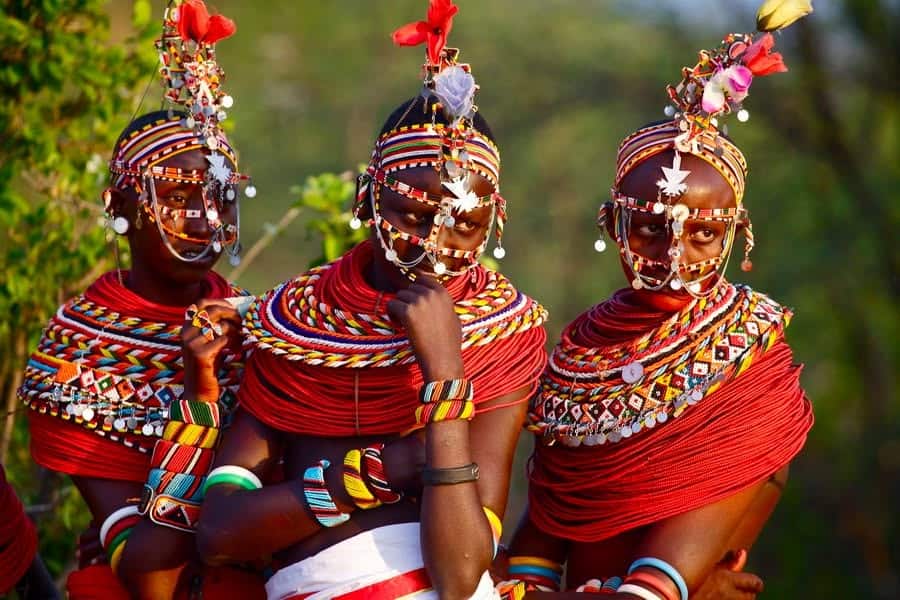
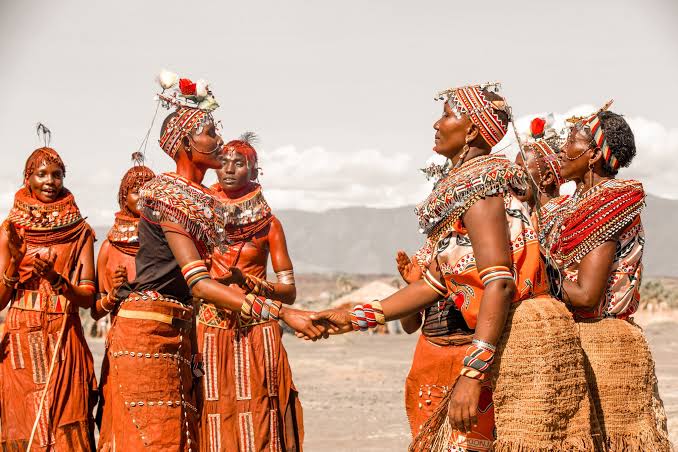
The Samburu are semi-nomadic pastoralists who live across Samburu County and nearby areas of northern Kenya. They speak a language related to Maasai, and they have their own identity, customs and history.
Samburu life centres on livestock, especially cattle, goats and camels. Women and men wear layered bead necklaces and adornments, and the patterns carry social meaning. Songs, dances and oral stories are shared at community gatherings.
Where to go
Archer’s Post is the usual gateway. This small town sits on the Ewaso Nyiro River near Samburu National Reserve, Buffalo Springs National Reserve and Shaba National Reserve. Community conservancies such as Kalama and Namunyak, and Mount Ololokwe, lie nearby.
Examples of community-linked visits include women-led villages near Archer’s Post and the community-run Reteti Elephant Sanctuary. Opening times, fees and rules change, so ask your operator to confirm before you go.
Getting there
By road from Nairobi, the drive runs via Nanyuki, Isiolo and Archer’s Post and takes roughly 5 to 6 hours or more. Scheduled flights also serve the area. Check current services with your operator.
Wildlife and culture together
Northern Kenya has species less common in the south, such as Grevy’s zebra, reticulated giraffe, Somali ostrich, beisa oryx and gerenuk. A day can combine a morning game drive with an afternoon community visit.
Booking tips
- Visit with a Samburu guide or a host agreed in advance.
- Do not walk into a settlement unannounced.
- Ask whether photography is allowed and whether there is a fee.
- Buy crafts directly from the makers when possible.
Hadzabe Cultural Experiences in Tanzania
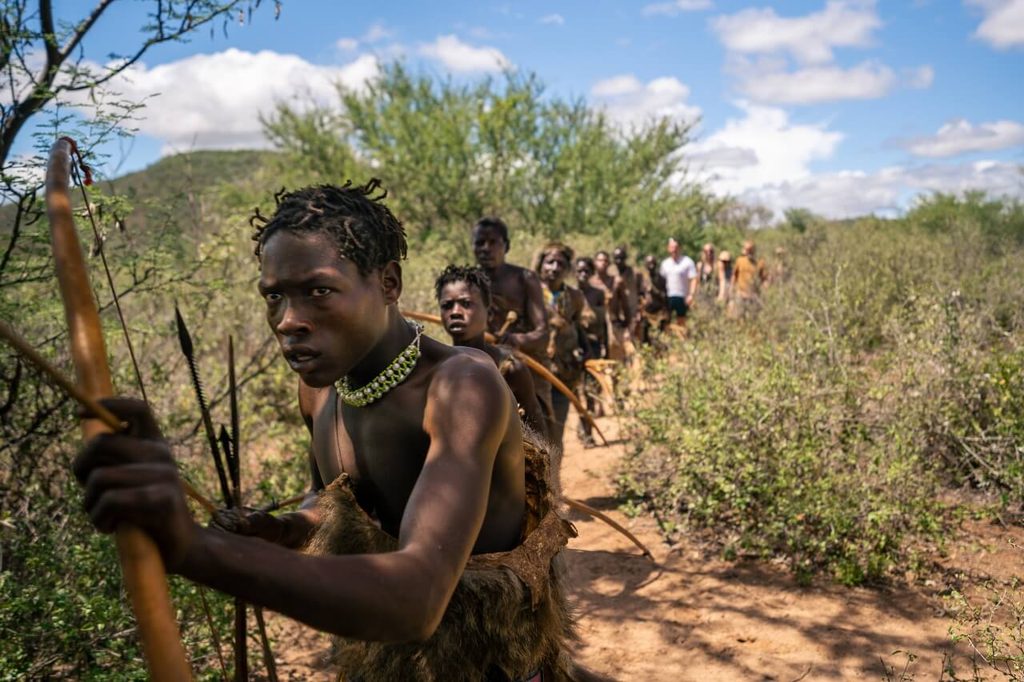
The Hadzabe, also called the Hadza, are one of the few remaining hunter-gatherer peoples in East Africa. They live in the Lake Eyasi basin and nearby areas of northern Tanzania. They have their own language and a deep knowledge of the land, its plants and its animals.
Lake Eyasi is a seasonal soda lake in the Rift Valley, below the Ngorongoro highlands. It can look dry in some months. The Datoga, known for metalwork, and other communities also live in the area.
Hadzabe people are not frozen in the past. Their way of life is shaped by land pressure, tourism, schooling and the wider economy. Not every Hadzabe person lives the same way.
What a visit may involve
A visit is usually arranged for early morning. If the community agrees, guests may walk with a small group of hunters or foragers and learn about tools, plants and food. A hunt cannot be promised. Activities depend on the community, the season and the day.
This is not a performance. Visitors should follow the guide’s lead, keep numbers low and not demand specific activities.
Getting there
| Route | Approximate time | Notes |
|---|---|---|
| Karatu to Lake Eyasi | About 1.5 to 2 hours | Partly unpaved. A 4×4 is advised, especially in rain |
| Arusha to Lake Eyasi | About 3.5 to 5 hours | Long for a same-day dawn visit |
| Lake Eyasi to Ngorongoro or Karatu area | About 1.5 to 2.5 hours | Easy pairing |
| Lake Eyasi to central Serengeti | Roughly 4 hours or more | Allow time for gates and road conditions |
Most travellers sleep in or near Karatu, or near Lake Eyasi, the night before. Eyasi is a dead-end road, so you return the way you came. The dry months from about June to October make travel easier.
Responsible tourism note
Some travel writers report that visit fees do not always reach the community. Ask your operator how fees are paid, who gets them and whether the community has agreed to the visit.
Swahili Cultural Experiences Along the East African Coast
Swahili culture is a coastal culture of East Africa, centred on a Bantu language, Kiswahili, and shaped by centuries of trade across the Indian Ocean. It reflects African, Arabian, Persian and Indian influences. Swahili people are not a single nationality, and their towns stretch across Kenya, Tanzania and beyond. Kiswahili itself is widely spoken across both countries.
What to experience:
- Coral-stone architecture and carved wooden doors.
- Narrow lanes, markets and old mosques.
- Swahili food, including coconut-based dishes, spiced rice, seafood and street snacks.
- Taarab music and festivals.
- Dhow sailing and boat-building traditions.
- Craft work such as woodcarving and weaving.
Key destinations
| Destination | Country | Why visit |
|---|---|---|
| Lamu Old Town | Kenya | UNESCO World Heritage Site. Described as the oldest and best-preserved Swahili settlement in East Africa. Coral stone and mangrove timber houses, car-free lanes and a dhow culture |
| Mombasa Old Town and Fort Jesus | Kenya | Historic port area. Fort Jesus is a UNESCO World Heritage Site |
| Diani and the south coast | Kenya | Beach base with day trips to coastal heritage and local communities |
| Stone Town, Zanzibar | Tanzania | UNESCO World Heritage Site. Architecture shaped by Omani rule and Indian Ocean trade, markets and historic buildings |
| Bagamoyo | Tanzania | Historic coastal trading town on the mainland |
A beach holiday and a cultural coast trip are different. A beach stay is about rest. A cultural stay includes guided old-town walks, a cooking lesson, a dhow trip and time in markets.
Swahili heritage also works as the end of a safari. Fly from the Mara or Serengeti to Lamu, Mombasa, Diani or Zanzibar and spend several nights there.
Best Places to Experience Culture in Kenya and Tanzania
| Community or heritage | Destination | Country | Main cultural experiences | Safari combination |
|---|---|---|---|---|
| Maasai | Maasai Mara region and conservancies | Kenya | Hosted homestead visits, conservancy briefings, markets | Maasai Mara game drives |
| Maasai | Amboseli region | Kenya | Community visits, craft markets | Amboseli National Park |
| Maasai | Ngorongoro, Monduli, Longido, Lake Natron | Tanzania | Boma visits, walks, community programmes | Ngorongoro Crater, Serengeti |
| Samburu | Archer’s Post and Samburu County | Kenya | Community visits, beadwork, conservancy activities | Samburu, Buffalo Springs and Shaba reserves |
| Hadzabe | Lake Eyasi | Tanzania | Early-morning visit with foragers and hunters, if the community agrees. Datoga metalwork nearby | Ngorongoro, Serengeti |
| Swahili | Lamu Old Town | Kenya | Old-town walks, dhow trips, food | Mara or Amboseli, then fly to the coast |
| Swahili | Mombasa, Fort Jesus, Diani | Kenya | Heritage sites, food, coastal villages | Tsavo or Amboseli, then coast |
| Swahili | Stone Town, Zanzibar | Tanzania | Markets, architecture, spice and food experiences | Serengeti or Ngorongoro, then Zanzibar |
Kenya and Tanzania Cultural Safari Itineraries
These are illustrative concepts, not confirmed bookable packages. Silent Plains Africa Safaris can build and price a version around your dates, budget and interests.
Option 1: Kenya Cultural and Wildlife Safari (about 8 to 9 days)
Nairobi, then Samburu region, then Maasai Mara. Include a Samburu community visit and a hosted Maasai experience. Samburu and the Mara are far apart by road, so a flight between them saves a full day.
Option 2: Tanzania Cultural and Northern Circuit Safari (about 7 to 8 days)
Arusha, then Karatu and Lake Eyasi for a Hadzabe dawn visit, then Ngorongoro Conservation Area, then Serengeti National Park. Add a Maasai experience where a community arranges it.
Option 3: Kenya and Tanzania Multi-Country Cultural Safari (about 12 to 14 days)
Nairobi, Samburu, Amboseli, Namanga border, Arusha, Lake Eyasi, Ngorongoro and Serengeti. Fly Samburu to Nairobi. Cross by road at Namanga between Amboseli and Arusha.
Option 4: East African Safari and Swahili Coast Holiday (about 10 to 12 days)
Maasai Mara, Amboseli, then a flight to Lamu, Diani, Mombasa or Zanzibar. Or fly into Zanzibar after the Serengeti.
What shapes the route
- Travel time. Cut back on long road days. Use flights where distances are large.
- Border crossings. Road crossings are commonly at Namanga (Amboseli to Arusha) or at Isebania and Sirari (Mara and Serengeti side). A change of vehicle and guide at the border is standard. Ask how the handover works.
- Entry rules. Check visa or travel authorisation, health and vaccine requirements for each country. Do not assume one visa covers both.
- Days available. Seven days suits one country with one or two cultural stops. Ten to fourteen days suits two countries.
How Much Does a Kenya and Tanzania Cultural Safari Cost?
Prices vary widely. They depend on accommodation, season, group size and how much you fly.
Factors that change the price:
- Number of days.
- Number of travellers.
- Accommodation category.
- Private or shared vehicle.
- Domestic and regional flights.
- Park, conservancy and conservation fees. Kenya and Tanzania charge separately.
- Cultural visit fees and community contributions.
- Meals.
- Season.
- Cross-border arrangements, including vehicle changes and visas.
Indicative market estimates
These figures come from published operator guides and are for a Kenya safari. They are not Silent Plains Africa Safaris quotations.
| Travel style | Indicative cost per person, per day | Notes |
|---|---|---|
| Budget | About US$250 to 350 | Shared vehicle, simple camps |
| Mid-range | About US$350 to 600 | Tented camps or lodges |
| Luxury | About US$700 to 1,500 or more | Luxury camps, often conservancies |
Cultural visits are usually extra. In Tanzania, Maasai village visits are commonly quoted at about US$25 to 75 per person, though some are priced per vehicle. Hadzabe, Samburu and Swahili Coast experiences vary by host and arrangement. Ask for an itemized price.
Per person or per group? Group safaris are priced per person. Private safaris often show a per-person price based on group size. Ask which one your quote uses.
What Is Included in a Kenya and Tanzania Cultural Safari Package?
Inclusions differ between operators. Common items are:
- Airport pickup and transfers.
- A 4×4 safari vehicle and a driver-guide.
- Accommodation.
- Meals as stated.
- Game drives.
- Park fees, if the quote says so.
- Arranged cultural visits, if listed.
- A local guide or community host.
- Bottled water on drives.
Cultural visits are not automatically included in every safari. Check the itinerary for each visit and each fee. Check the exclusions too: flights, visas, insurance, drinks, tips and optional activities.
Best Time to Experience Cultural Safaris in Kenya and Tanzania
Many cultural experiences run all year, subject to community arrangements and local conditions. Do not assume a visit is available on any given day. Confirm in advance.
| Period | Wildlife and weather | Cultural travel notes |
|---|---|---|
| January to March | Mostly dry. Good game viewing | Good for Samburu, Amboseli and the Mara. The coast is hot |
| April to June | Long rains. Green and quiet | Some roads are difficult. Fewer visitors. Coastal rain is often heaviest around April and May. Lake Eyasi becomes easier from around June |
| July to October | Dry. Migration in the Mara and northern Serengeti | Busiest period. Book early. Lake Eyasi is drier and easier to reach |
| November to December | Short rains. Green landscape | Herds move south. Roads can be intermittent. Good coastal period for many travellers |
About the Great Wildebeest Migration. The herds move through the Serengeti and Mara ecosystem all year. They are in Kenya’s Maasai Mara mostly from about July to October. River crossings are unpredictable and cannot be guaranteed.
Responsible and Ethical Cultural Tourism in East Africa
How you visit matters as much as where you go.
Core principles:
- Consent. The community should agree to the visit and to its terms.
- Fair payment. Ask how fees are paid and who receives them.
- Work with community representatives. Choose operators who have an existing relationship with the host.
- Respect privacy. Do not enter homes or spaces without an invitation.
- Ask before taking photos. A fee or a refusal is the host’s decision.
- Respect religion. This matters especially in Swahili towns. Dress modestly and follow local customs, including at mosques.
- Avoid staged performances for their own sake. Prefer experiences that show daily life and knowledge-sharing.
- Buy crafts directly from makers.
- Avoid giving sweets or money to children. Ask the host about gifts.
- Remember that communities are diverse and changing.
Done well, community visits can support local income and keep skills and knowledge in use. Impact varies by arrangement, so ask questions rather than assume.
Visiting the Hadzabe is not the same as visiting a Maasai boma. It needs a guide who can explain the context and keep numbers small.
How to Choose the Right Kenya and Tanzania Cultural Safari Operator
Ask these questions before you pay a deposit:
- Has the operator organized multi-country safaris before?
- Is the quote itemized, with inclusions and exclusions?
- Which community or host runs each visit, and how is the fee shared?
- How does the border handover work?
- Is the vehicle private, and how many people share it?
- How are accommodation standards matched in both countries?
- How flexible is the itinerary?
- How long do cultural visits last, and how many people attend?
- How will you communicate before and during the trip?
Silent Plains Africa Safaris can plan personalized Kenya and Tanzania itineraries that combine wildlife, community visits and the coast. Tell the team which experiences you want, and they can propose a route with realistic travel times and a clear quote.
Frequently Asked Questions About Kenya and Tanzania Cultural Safaris
1. What is the best cultural safari in Kenya and Tanzania?
It depends on your interests. Maasai visits suit most first-timers. Samburu suits northern Kenya. Hadzabe suits travellers heading to Ngorongoro and the Serengeti. Swahili heritage suits a coastal finish.
2. Where can you experience Maasai culture in Kenya?
Around the Maasai Mara and Amboseli, and in Narok and Kajiado counties. Conservancy-based, hosted visits tend to be the more considered option.
3. Can you visit Maasai communities in Tanzania?
Yes. Visits are arranged around Ngorongoro, Monduli, Longido and Lake Natron. Fees are commonly quoted from about US$25 to 75 per person, but they vary.
4. Where do the Samburu people live in Kenya?
Mainly in Samburu County in northern Kenya, around Archer’s Post and the Ewaso Nyiro River, and in nearby areas.
5. Where can tourists meet the Hadzabe people in Tanzania?
Around Lake Eyasi, usually as a visit from Karatu or the Ngorongoro area, arranged through an operator.
6. What can you experience during a Hadzabe cultural visit?
An early-morning visit, where the community agrees, may include walking with foragers or hunters and learning about plants, tools and food. Specific activities cannot be guaranteed.
7. Where can you experience Swahili culture in Kenya?
Lamu Old Town, Mombasa Old Town and Fort Jesus, and the south coast around Diani.
8. Is Stone Town a good destination for cultural tourism?
Yes. Stone Town in Zanzibar is a UNESCO World Heritage Site with historic architecture, markets and a long trading history.
9. Can you combine cultural experiences with wildlife safaris?
Yes. Most cultural stops are planned around parks, with a visit near the Mara, Amboseli, Samburu or Ngorongoro.
10. How much does a Kenya and Tanzania cultural safari cost?
Published Kenya safari estimates run from about US$250 to 350 per person per day for budget travel to over US$700 for luxury. Cultural visits and cross-border costs are extra. Ask for an itemized quote.
11. How many days do you need for a Kenya and Tanzania cultural safari?
Seven days is a workable minimum for one country with one or two cultural stops. Ten to fourteen days suits both countries and a coast extension.
12. Are cultural visits included in safari packages?
Not always. Some packages include one. Check the itinerary and the exclusions.
Plan Your Kenya and Tanzania Cultural Safari with Silent Plains Africa Safaris
A good cultural safari is built around people as well as parks. Pick the communities that interest you. Match them to the right season and route. Keep travel days realistic. Ask how each visit is arranged and paid for.
Silent Plains Africa Safaris can help you plan a customized Kenya and Tanzania safari with Maasai, Samburu, Hadzabe or Swahili experiences, plus wildlife in the Mara, Amboseli, Serengeti or Ngorongoro, and a coastal extension to Lamu or Zanzibar. Explore our Kenya and Tanzania safari packages, request a personalized cultural safari itinerary, or contact the team for a tailored quotation.
Silent Plains Africa Safaris
Silent Plains Africa Safaris is a Nairobi-based safari tour company planning Kenya and Tanzania safaris around you. We run private and group trips to the Maasai Mara, Amboseli, Tsavo East and Tsavo West, the Serengeti and beyond, with beach extensions on the Kenyan coast if you want them. Every itinerary is tailored to your dates, budget and travel style, from budget camping to luxury lodges. We arrange your 4x4 safari vehicle, an experienced local driver-guide, park fees, accommodation and airport transfers. Couples, families and small groups are all welcome.
Plan Your Kenya and Tanzania Safari with us today. Get Free Quote