- Nairobi – Maasai Mara – Serengeti – Ngorongoro – Arusha
- Kenya and Tanzania
- Best for the classic northern circuit
9 Days Maasai Mara, Serengeti and Ngorongoro Safari
Nairobi / Maasai Mara / Serengeti / Ngorongoro / Arusha / From about USD 4,900 per person for two
Price per person for two travellers sharing, mid-range, January–June. All scheduled flights, the border transfer, park fees and the crater service fee included.
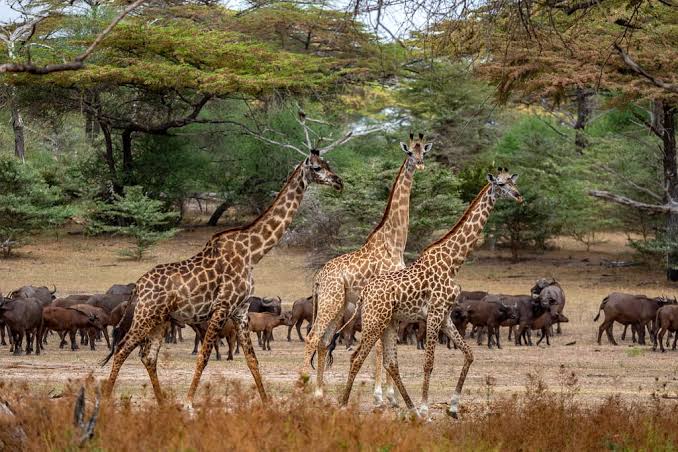
This is East Africa’s classic safari circuit, done at a pace that leaves time to enjoy it. You start with three nights in Kenya’s Maasai Mara, Kenya’s best big-cat country. A short fly-drive connection then takes you across the border into Tanzania’s Serengeti for three more nights, on the other side of the same great migration ecosystem. To finish, you spend a night on the rim of the Ngorongoro Crater. At dawn, you descend into the huge volcanic basin, where lion, buffalo, hippo and black rhino live on the crater floor. From there, it’s a short drive to Arusha or Kilimanjaro Airport for your flight home.
Quick facts
- Duration: 9 days / 8 nights
- Start: Nairobi (JKIA arrival)
- End: Arusha or Kilimanjaro International Airport (JRO)
- Safari type: Fly-in safari in Kenya, then guided safari in Tanzania with a Tanzanian vehicle for the Serengeti and Ngorongoro
- Route and nights: Nairobi: 1 night. Maasai Mara: 3 nights. Serengeti: 3 nights (northern from about July to October; central or southern at other times). Ngorongoro rim: 1 night.
- Travel: Wilson to the Mara: about 45–75 minutes by air. Mara to the Serengeti: fly-drive via the Isebania border (a long morning). Serengeti to Ngorongoro: by road from the central Serengeti (about 2.5–3 hours), or a short flight plus a road transfer from the north. Ngorongoro to Arusha: about 3–4 hours by road.
- Accommodation: Mid-range or luxury camps and lodges, plus a Nairobi hotel
- Meals: Full board on safari; bed and breakfast in Nairobi
- Highlights: Three nights in the Mara, three nights in the Serengeti, migration herds in season, dawn on the crater floor, and optional balloon flights
- Best for: Travellers who want the classic northern circuit, first-time visitors and photographers
- Not ideal for: Tight budgets, or travellers with heavy luggage
- Indicative price: From about USD 4,900 per person for two (mid-range, January–June). See the price table below.
Why this route works
The classic trio
- The Mara: big cats
- The Serengeti: vast plains and seasonal herds
- Ngorongoro: one of the most wildlife-dense places in Africa
Three nights in each main park
You get full days on both sides of the ecosystem, not quick stopovers.
Flights where they help
You fly into the Mara, and a fly-drive link crosses the border, so there’s no long road day between the two parks.
Short final transfers
After the Crater, you’re 3–4 hours from Arusha. That fits well with evening international flights.
A seasonal Serengeti
We place your camp where the herds are most likely to be, then plan the Ngorongoro leg to match.
Serengeti to Ngorongoro: how it works by season
From about December to June (central or southern Serengeti)
You drive from your camp to the Ngorongoro rim (about 2.5–3 hours from the central Serengeti), with a game drive on the way out and an optional stop at Olduvai Gorge.
From about July to October (northern Serengeti)
The north is a long drive from Ngorongoro. Instead, you take a short scheduled flight south, usually to the Lake Manyara airstrip. Your Tanzanian guide meets you there for the drive of about 1 hour up to the rim.
Either way, you arrive at the rim in time for sunset over the Crater.
Where are the migration herds?
- July to October: Usually in the northern Serengeti and the Maasai Mara. River crossings are possible on both sides.
- November: The herds move south.
- December to March: Usually in the southern Serengeti, with calving often around February.
- April to June: The herds move through the central and western Serengeti.
The Mara and the Crater have resident wildlife all year round.
Day-by-day itinerary
Timings depend on airline schedules and the season. They’re confirmed in your final itinerary.
- Meet and greet at JKIA, then transfer to your hotel.
- Morning transfer to Wilson Airport for your scheduled flight.
- Game drive from the airstrip to camp, then lunch.
- Afternoon game drive.
- Full-day game drive with a picnic lunch, looking for lion, cheetah, leopard, elephant and buffalo.
- From about July to October, head towards the Mara River. Crossings can’t be predicted.
- Optional sunrise hot-air balloon flight with breakfast in the bush. Children must be at least 8 years old and 1.2 m tall.
- Or take an early morning game drive.
- Afternoon game drive.
- Morning flight from the Mara to Migori.
- Road transfer through the Isebania–Sirari border to Tarime.
- Early-afternoon flight into the Serengeti.
- Late-afternoon game drive.
- Full-day game drive with a picnic lunch.
- North (July–October): spend time near the Mara River for possible crossings.
- Centre or south: explore the kopjes and the Seronera River valley, or the calving plains.
- Morning and afternoon game drives.
- Optional sunrise balloon flight (extra cost, where available).
- Farewell sundowner.
- Central or southern Serengeti: game drive out of the park, an optional stop at Olduvai Gorge, then up to the Ngorongoro rim.
- Northern Serengeti: short scheduled flight south (usually to the Lake Manyara airstrip), then about an hour’s drive up to the rim with your Tanzanian guide.
- Sunset over the Crater.
- Early descent to the crater floor.
- Morning game drive. Look for lion, buffalo, hippo, flamingos (when present) and black rhino.
- Picnic lunch, then climb out.
- Drive to Arusha (about 3–4 hours) or Kilimanjaro International Airport (about 4–5 hours).
Crossing from Kenya to Tanzania
There’s no direct tourist border between the Mara and the Serengeti. The Bologonja (Sand River) crossing has been closed to tourists since 1977. Instead, you cross at Isebania–Sirari, a one-stop border post where Kenyan exit and Tanzanian entry are handled in the same building.
How the fly-drive crossing works
- A morning flight from the Mara to Migori
- A road transfer of about 40 km through the border to Tarime
- An early-afternoon flight from Tarime into the Serengeti
This takes a long morning. You reach your Serengeti camp by mid-afternoon. We confirm the full connection before you book.
Entry requirements for two countries
- Kenya: Most visitors need an approved Kenya eTA. This trip ends in Tanzania, so a standard single-entry eTA is enough. See our Kenya visa and eTA requirements page.
- Tanzania: Most visitors need a Tanzania visa. Check the official Tanzania immigration portal.
- Yellow fever: Tanzania may ask travellers arriving from Kenya for a certificate. Check with your doctor and official sources.
- Insurance: Tanzania has announced a mandatory inbound insurance scheme for the mainland. Check the current position before you travel.
9 days Maasai Mara, Serengeti and Ngorongoro safari prices
Indicative prices in US dollars, per person, two people sharing.
Prices include
- A Nairobi night
- All scheduled flights and the border transfer
- Accommodation and meals on safari
- Game drives
- The Tanzanian vehicle and guide for the Ngorongoro leg
- Park, concession and conservation fees
- The crater service fee
| Season | Price |
|---|---|
| January–June | 4,900–6,200 |
| July–December | 6,000–7,800 |
| Season | Price |
|---|---|
| January–June | 7,800–11,000 |
| July–December | 9,500–13,800 |
- Why July–December costs more: The Mara reserve fee rises to USD 200 per adult per 12-hour entry, and migration-season camp rates apply in both countries.
- Arusha night on Day 9: Added at cost if your flight leaves before late evening.
Other costs
- Private vehicle in the Mara: supplement where camps normally share vehicles
- Solo travellers: single supplement (ask for a quote)
- Festive dates: camps add supplements
All prices are indicative. Your final price depends on your dates, camps, room types, flight schedules and group size.
Get an exact quote for your dates
Park and conservation fees explained
Kenya
- Maasai Mara National Reserve: USD 100 per non-resident adult per 12-hour entry from January to June, and USD 200 from July to December. Children aged 9–17 pay a reduced rate, and children aged 8 and under enter free.
Tanzania
- Serengeti National Park: about USD 83 per non-resident adult per 24 hours, plus VAT. A concession fee of about USD 60–71 per night also applies when you stay inside the park.
- Ngorongoro Conservation Area: about USD 70.80 per non-resident adult per 24 hours. This applies when transiting and when staying.
- Ngorongoro Crater service fee: about USD 295 per vehicle, per descent.
We list every fee in your quotation.
What’s included
- Arrival transfer from JKIA, plus one Nairobi hotel night (bed and breakfast)
- Transfer to Wilson Airport
- Scheduled flight from Wilson to the Maasai Mara
- 3 nights at a Mara camp, full board, with game drives
- Fly-drive crossing: Mara to Migori flight, road transfer via Isebania to Tarime, then Tarime to Serengeti flight
- 3 nights at a Serengeti camp, full board, with game drives
- Serengeti to Ngorongoro transfer, by road or by short flight plus road, depending on the season
- Tanzanian 4x4 vehicle and guide for the Ngorongoro leg
- 1 night on the Ngorongoro rim, full board
- Ngorongoro Crater game drive
- Drop-off in Arusha or at Kilimanjaro International Airport
- Mara, Serengeti and Ngorongoro fees, the crater service fee and applicable VAT
What’s not included
- International flights
- Kenya eTA and Tanzania visa
- Yellow fever vaccination or certificate
- Travel insurance (strongly recommended), plus any mandatory Tanzania inbound insurance
- Meals in Nairobi other than breakfast
- Hot-air balloon flights (optional)
- Olduvai Gorge entry (optional)
- Arusha night, unless added
- Private vehicle supplement in the Mara
- Drinks, unless included by your camp or lodge
- Tips for guides and staff in both countries
- Laundry and personal purchases
- Excess baggage on light aircraft
- Changes to government fees or airfares after booking
Optional extras
- Balloon flights: over the Mara or the Serengeti
- Fourth night in either park: more time near the river in migration season
- Mara conservancy camp: fewer vehicles, night drives and walks
- Lake Manyara or Tarangire: add a night before Arusha
- Zanzibar beach finish: fly from Arusha or Kilimanjaro to Zanzibar (Zanzibar’s mandatory insurance applies)
Wildlife you may see
No sighting can be guaranteed.
Maasai Mara
- Likely: lion, elephant, buffalo, giraffe, zebra, wildebeest, topi, hippo, hyena
- Possible: leopard, cheetah, crocodile
- Seasonal: migration herds, usually around July to October
Serengeti
- Likely: lion, hyena, giraffe, zebra, gazelle, topi, hippo
- Possible: leopard, cheetah, serval
- Seasonal: migration herds (see the migration section above)
Ngorongoro Crater
- Likely: lion, buffalo, zebra, wildebeest, hippo, hyena
- Possible: black rhino, elephant (mainly older bulls), flamingos (depending on lake levels)
Big Five
All five are possible, with rhino most likely in the Crater. None can be guaranteed.
Best time to go
- July–October: The herds are usually in the northern Serengeti and the Mara. River crossings are possible. This is the busiest and most expensive time, so book early.
- December–March: Calving season in the southern Serengeti, with excellent predator action. The Mara is quieter and better value.
- April–May: The long rains. Some camps close, and the weather can affect flights.
- June and November: Transition months, and good value.
The Ngorongoro rim is cold at night all year round.
What to pack
- Soft duffel bag (essential for light aircraft)
- Warm layers (early mornings, and cold nights on the Ngorongoro rim)
- Neutral-coloured clothing
- Hat, sunglasses and high-SPF sunscreen
- Binoculars and a camera with a zoom lens
- Insect repellent and personal medication
- A small bag for the border, with your passport and documents
- Passport with blank pages, Kenya eTA, Tanzania visa, and a yellow fever certificate if required
Frequently asked questions
By a fly-drive connection: a flight from the Mara to Migori, a road transfer through the Isebania–Sirari border to Tarime, then a flight into the Serengeti. It takes a long morning.
From the central or southern Serengeti, by road (about 2.5–3 hours from the centre). From the northern Serengeti, by a short flight south and a drive of about an hour up to the rim.
Usually a morning on the crater floor, with a picnic lunch. Time limits on the floor may apply. We confirm the current rules when you book.
Yes, if it leaves late in the evening. Otherwise, add a night in Arusha.
Black rhino is possible in the Ngorongoro Crater, but sightings can’t be guaranteed. Rhinos are rare in the Mara and the Serengeti.
Expect roughly USD 4,900–7,800 per person for two at mid-range camps, depending on the season. All flights, the border transfer and park fees are included.
Most visitors need a Kenya eTA and a Tanzania visa. A single-entry eTA is enough, because the trip ends in Tanzania. A yellow fever certificate may also be required.
Plan your Maasai Mara, Serengeti and Ngorongoro safari
Tell us your dates, the number of travellers, your preferred camp level, and when your flight home leaves. We’ll match your Serengeti camp to the season, plan the Crater leg and send an itemised quote.
Request a quote