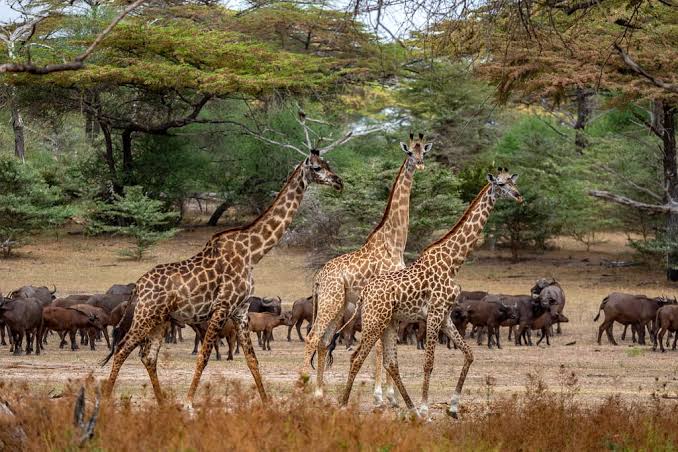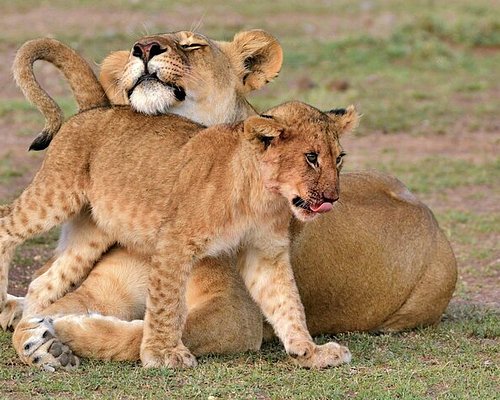
- Arusha – Tarangire – Lake Manyara – Ngorongoro – Serengeti – Ruaha – Nyerere – Dar es Salaam
- Northern and Southern Tanzania
- Best for repeat visitors and travellers wanting contrast
14 Days Northern and Southern Tanzania Safari
Arusha / Tarangire / Lake Manyara / Ngorongoro / Serengeti / Ruaha / Nyerere / Dar es Salaam / From about USD 8,000 per person for two
Price per person for two travellers sharing, mid-range, June–October. Park and conservation fees, all flights in the south and one night in Dar es Salaam included.
Most visitors to Tanzania see only the north. This 14-day private safari covers both halves of the country. You start with the classic northern circuit: Tarangire’s baobabs and elephant herds, Lake Manyara’s forest and lake shore, a dawn descent into the Ngorongoro Crater and three nights in the Serengeti. Then you fly south to two of Africa’s great wilderness areas, where you’ll see far fewer vehicles. In Ruaha, big lion prides roam baobab-studded hills along the Great Ruaha River. In Nyerere National Park (formerly the Selous Game Reserve), you swap the vehicle for a boat on the Rufiji River and explore on foot with a guide. Short flights link each region, and each part of the trip gets enough nights to settle in.
Quick facts
- Duration: 14 days / 13 nights
- Start: Arusha. Pick-up from Kilimanjaro International Airport (JRO) is available.
- End: Dar es Salaam (Julius Nyerere International Airport)
- Safari type: North: private road safari with your own Tanzanian 4x4 and guide. South: fly-in safari with camp guides, vehicles and boats.
- Route and nights: Tarangire: 1 night. Lake Manyara or Karatu area: 1 night. Ngorongoro rim: 1 night. Central Serengeti: 3 nights. Ruaha: 3 nights. Nyerere: 3 nights. Dar es Salaam: 1 night.
- Accommodation: Mid-range or luxury lodges and camps, then a Dar es Salaam hotel
- Meals: Full board on safari; bed and breakfast in Dar es Salaam
- Travel: North: road legs of about 3 hours or less, except Ngorongoro to the Serengeti (about 2.5–3 hours plus a game drive). Serengeti to Ruaha: by scheduled flight, direct where operating or via a connection. Ruaha to Nyerere: about 1 hour by air. Nyerere to Dar es Salaam: about 45 minutes by air.
- Highlights: The Ngorongoro Crater, three Serengeti nights, Ruaha’s lion prides and baobab hills, boat safaris on the Rufiji River, and walking safaris in the south
- Best for: Repeat visitors to Africa, travellers wanting contrast, photographers and birdwatchers
- Not ideal for: April–May travel (many southern camps close), or tight budgets
- Indicative price: From about USD 8,000 per person for two (mid-range, June–October). See the price table below.
Northern vs southern Tanzania
Northern Tanzania (Tarangire, Ngorongoro, Serengeti)
- Landscape: open plains, kopjes, a volcanic crater and baobab country
- Wildlife: the Big Five (rhino is most likely in the Crater), big cats, and the migration herds in season
- Experience: classic game drives, with more vehicles at popular sightings
Southern Tanzania (Ruaha and Nyerere)
- Landscape: Ruaha has baobab-dotted hills and the Great Ruaha River. Nyerere has the Rufiji River, lakes and channels, and miombo woodland.
- Wildlife: large lion prides, big elephant herds, greater and lesser kudu, sable and roan antelope, and a good chance of African wild dog
- Experience: very few vehicles, plus boat safaris and walking safaris that the north rarely offers
Together, they show you two very different sides of the same country.
Why this route works
- The classic north first: You see Tanzania’s famous parks on short road legs, with a dawn Crater descent and three nights in the Serengeti.
- Flights where they matter: The south is far from the north by road. Scheduled flights link the Serengeti, Ruaha, Nyerere and Dar es Salaam.
- Three nights in each southern park: There’s time for game drives, a walking safari and a river boat trip without rushing.
- A logical finish: Nyerere is a short flight from Dar es Salaam, so you end near an international airport, with a night in the city to protect your connection.
- Contrast: Busy, iconic parks are followed by remote wilderness, which suits travellers who’ve been on safari before.
Day-by-day itinerary
Timings depend on flight schedules and are confirmed in your final itinerary.
- Morning pick-up in Arusha, then drive to Tarangire (about 2–2.5 hours).
- Game drive along the Tarangire River among baobabs and elephant herds.
- Early game drive in Tarangire.
- Drive to Lake Manyara (about 1.5 hours).
- Afternoon in the park’s groundwater forest and along the lake shore.
- Early descent to the Crater floor for a game drive. Look for lion, buffalo, hippo and black rhino.
- Picnic lunch, then climb out.
- Sunset over the Crater.
- Drive across the highlands to the plains. Optional stop at Olduvai Gorge.
- Game drive from Naabi Hill Gate to your camp in the central Serengeti.
- Full days exploring the Seronera River valley, the kopjes and the open plains.
- Your guide follows the herds when they’re within reach.
- Optional: sunrise hot-air balloon flight (extra cost, where available).
- Your northern guide says goodbye at the end of Day 6.
- Transfer to Seronera airstrip for your flight to Ruaha (direct where operating, or via a connection).
- Your Ruaha camp guide meets you.
- Afternoon game drive along the Great Ruaha River.
- Morning and afternoon game drives through baobab hills and along the river.
- Look for large lion prides, elephant herds, greater and lesser kudu, sable and roan antelope, and wild dog.
- Optional: guided walking safari, where your camp offers it.
- Morning game drive on the way to the airstrip.
- Scheduled flight to Nyerere (about 1 hour).
- Afternoon game drive or boat trip.
- Boat safari on the Rufiji River or the lakes, passing hippos, crocodiles, elephants coming to drink and abundant birdlife.
- Guided walking safari, where your camp offers it.
- Game drives in search of wild dog, lion, buffalo and giraffe.
- Final morning activity.
- Scheduled flight to Dar es Salaam (about 45 minutes).
- Transfer to your hotel. The afternoon is free.
- Transfer to Julius Nyerere International Airport for your flight home.
- Or fly on to Zanzibar for a beach extension.
How the flights work
Serengeti to Ruaha
- Direct scheduled flights run on some days. They usually leave from Seronera (central Serengeti) in the morning and arrive in Ruaha before midday.
- These routes often need a minimum number of passengers. On other days, you connect via Arusha or Dar es Salaam.
Ruaha to Nyerere
A scheduled flight of about 1 hour.
Nyerere to Dar es Salaam
A scheduled flight of about 45 minutes.
Luggage
- Light aircraft have strict weight limits, typically around 15 kg per person including hand luggage, in soft bags.
- Your northern vehicle carries extra luggage only until the Serengeti, so pack light for the whole trip.
Seasonal flights
Some southern routes reduce or stop during the long rains (around mid-March to May).
We confirm every flight and connection before you book.
Entry requirements
- Tanzania visa: Most visitors need one. Check the official Tanzania immigration portal.
- Yellow fever: You may need a certificate if you arrive from a country with yellow fever risk. Check with your doctor and official sources.
- Insurance: Tanzania has announced a mandatory inbound insurance scheme for the mainland. Check the current position before you travel.
- Adding Zanzibar? Zanzibar’s own mandatory insurance applies (USD 44 per adult).
14 days northern and southern Tanzania safari prices
Indicative prices in US dollars, per person, two people sharing.
Prices include
- The private northern road safari
- All scheduled flights in the south
- Accommodation, meals and activities on safari
- All park, concession and conservation fees, including the Crater service fee
- One night in Dar es Salaam
| Season | Price |
|---|---|
| June–October | 8,000–10,500 |
| November–March (where southern camps are open) | 6,800–9,000 |
| Season | Price |
|---|---|
| June–October | 12,500–18,500 |
| November–March | 10,500–15,500 |
April–May: many southern camps are closed. Ask us about options.
Solo travellers: single supplement. Ask for a quote.
All prices are indicative. Your final price depends on your dates, camps, room types, flight schedules and group size.
Get an exact quote for your dates
Park and conservation fees explained
Northern Tanzania
- Tarangire and Lake Manyara: about USD 50–60 per non-resident adult per 24 hours, plus VAT where it applies
- Ngorongoro Conservation Area: about USD 70.80 per non-resident adult per 24 hours, plus a crater service fee of about USD 295 per vehicle per descent
- Serengeti: about USD 70.80–82.60 per non-resident adult per 24 hours, including VAT (depending on season), plus a concession fee per night inside the park
Southern Tanzania
- Ruaha: about USD 35.40 per non-resident adult per 24 hours, including VAT
- Nyerere: about USD 70.80–82.60 per non-resident adult per 24 hours, including VAT (depending on season), plus a concession fee when you stay inside the park
TANAPA has proposed annual fee increases from 2026/27. We’ll confirm the rates that apply to your dates and list every fee in your quotation.
What’s included
- Private Tanzanian 4x4 vehicle and professional guide in the north (Days 1–6)
- Pick-up in Arusha
- 6 northern nights, full board: Tarangire 1, Lake Manyara or Karatu 1, Ngorongoro rim 1, Serengeti 3
- Game drives in the north, including the Crater game drive
- Scheduled flights: Serengeti to Ruaha, Ruaha to Nyerere, and Nyerere to Dar es Salaam
- Airstrip transfers in the south
- 3 nights in Ruaha and 3 nights in Nyerere, full board, with camp game drives
- Boat safaris and walking safaris in the south, where offered and included by your camp
- 1 night at a Dar es Salaam hotel (bed and breakfast) and airport transfers
- All park, concession and conservation fees, the Crater service fee and applicable VAT
What’s not included
- International flights
- Tanzania visa
- Yellow fever vaccination or certificate
- Travel insurance (strongly recommended), and any mandatory Tanzania inbound insurance
- JRO arrival transfer, unless added
- Hot-air balloon flight (optional)
- Activities charged separately by southern camps
- Drinks, unless included by your camp
- Tips for guides and staff
- Laundry and personal purchases
- Excess baggage on light aircraft
- Changes to government fees or airfares after booking
Optional extras
- Zanzibar beach finish: fly from Dar es Salaam to Zanzibar for a few nights.
- Extra Ruaha night: more time in one of Tanzania’s wildest parks.
- Northern or southern Serengeti camp: matched to the season.
- Serengeti balloon flight.
- Fly-camping or extended walks in the south, where offered.
Wildlife you may see
No sighting can be guaranteed.
Northern Tanzania
- Likely: lion, elephant, buffalo, giraffe, zebra, wildebeest, hippo
- Possible: leopard, cheetah, black rhino (most likely in the Crater)
- Seasonal: migration herds in the Serengeti
Ruaha
- Likely: lion (often large prides), elephant, giraffe, buffalo, greater and lesser kudu, impala, hippo and crocodile in the river
- Possible: leopard, cheetah, African wild dog, sable and roan antelope
Nyerere
- Likely: hippo, crocodile, elephant, buffalo, giraffe, many water birds
- Possible: African wild dog, lion, leopard
Big Five
All five are possible across the trip, with rhino most likely in the Ngorongoro Crater.
Best time to go
- June–October: The best time for this route. It’s dry season in both north and south, wildlife gathers at the rivers and southern flights run fully.
- November–March: The south is hot and green, with excellent birdlife. Some camps open, and the north has calving season in the southern Serengeti (around December to March).
- April–May: The long rains. Many southern camps close, and some southern flights stop. Not recommended.
What to pack
- Soft duffel bag (essential for light aircraft)
- Warm layers for northern mornings and the cold Ngorongoro rim
- Light, breathable clothing for the hotter south
- Neutral-coloured clothing (avoid dark blue and black, which can attract tsetse flies in some areas)
- Closed walking shoes for walking safaris
- Hat, sunglasses and high-SPF sunscreen
- Binoculars and a camera with a long zoom lens
- Insect repellent and personal medication
- Passport and Tanzania visa
Frequently asked questions
Yes. Much of the former Selous Game Reserve became Nyerere National Park. You’ll still see both names used.
By scheduled flight. On some days there’s a direct service from Seronera. On others, you connect via Arusha or Dar es Salaam.
The Serengeti is famous for open plains and the migration, and it’s busier. Ruaha is wilder and quieter, with baobab hills, large lion prides and species such as greater kudu and sable antelope.
Boat safaris on the Rufiji River and its lakes, and guided walking safaris. Both are offered by many camps.
June to October. Many southern camps close during the long rains, around April and May.
Expect roughly USD 8,000–10,500 per person for two at mid-range camps from June to October. All flights and park fees are included.
In Dar es Salaam, close to the international airport. You can also continue to Zanzibar.
Plan your northern and southern Tanzania safari
Tell us your dates, the number of travellers, your preferred camp level, and where you’re flying home from. We’ll confirm every flight connection and send an itemised quote.
Request a quote